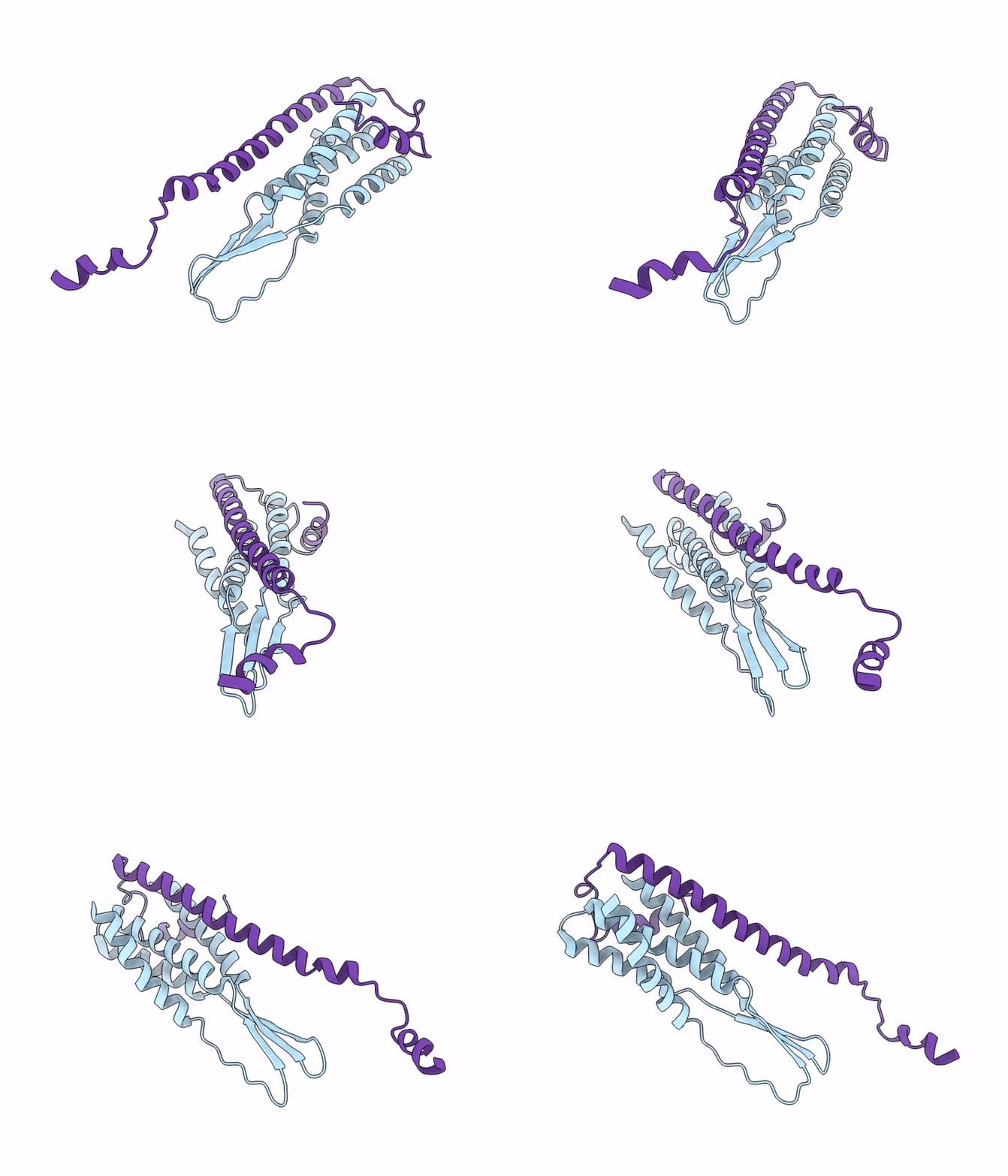
9LGH image
Deposition Date 2025-01-10
Release Date 2025-09-24
Last Version Date 2025-11-19
Entry Detail
PDB ID:
9LGH
Title:
Cryo-EM structure of CotVW filament, bacillus subtilis endospore protein
Biological Source:
Host Organism:
Method Details:
Experimental Method:
Resolution:
3.32 Å
Aggregation State:
HELICAL ARRAY
Reconstruction Method:
HELICAL

Macromolecular Entities
Structures with similar UniProt ID
Protein Blast
Polymer Type:polypeptide(L)
Molecule:Spore coat protein V
Gene (Uniprot):cotV
Chain IDs:A (auth: V)
Chain Length:143
Number of Molecules:1
Biological Source:Bacillus subtilis subsp. subtilis str. 168
Structures with similar UniProt ID
Protein Blast
Polymer Type:polypeptide(L)
Molecule:Spore coat protein W
Gene (Uniprot):cotW
Chain IDs:B (auth: W)
Chain Length:106
Number of Molecules:1
Biological Source:Bacillus subtilis subsp. subtilis str. 168
Ligand Molecules
Primary Citation
Filamentous structure of the CotVW complex, the crust proteins of the Bacillus subtilis endospore.
J.Biol.Chem. 301 110714 110714 (2025)
PMID: 40945727 DOI: 10.1016/j.jbc.2025.110714

Abstact

The endospores of Bacillus subtilis are encased in a multilayered protective structure comprising core, cortex, inner and outer coats, and an outermost crust. Among the proteins required for crust formation, CotV and CotW are unique to B. subtilis and are hypothesized to be instrumental in maintaining spore surface integrity. However, their structural organization and functional mechanisms remain unclear. This study determined the cryogenic electron microscopy (cryo-EM) structure of the CotVW complex and revealed its filamentous helical architecture. Structural analysis showed that CotVW possesses a negatively charged surface that enables pH-dependent binding interactions. Specifically, at pH 6.0, CotVW engages in electrostatic interactions with histidine and positively charged residues, suggesting a potential regulatory mechanism influenced by the environmental pH. Our results elucidate the molecular basis of CotVW function in B. subtilis spore crust formation, highlighting its role in spore surface organization. This study advances our understanding of the spore coat architecture and may inform future research on bacterial spore resilience and structural adaptation.

Legend

Protein

Chemical

Disease

Primary Citation of related structures
Feedback Form
Name
Email
Institute
Feedback