9LGG image
Deposition Date 2025-01-10
Release Date 2025-12-03
Last Version Date 2025-12-10
Entry Detail
PDB ID:
9LGG
Title:
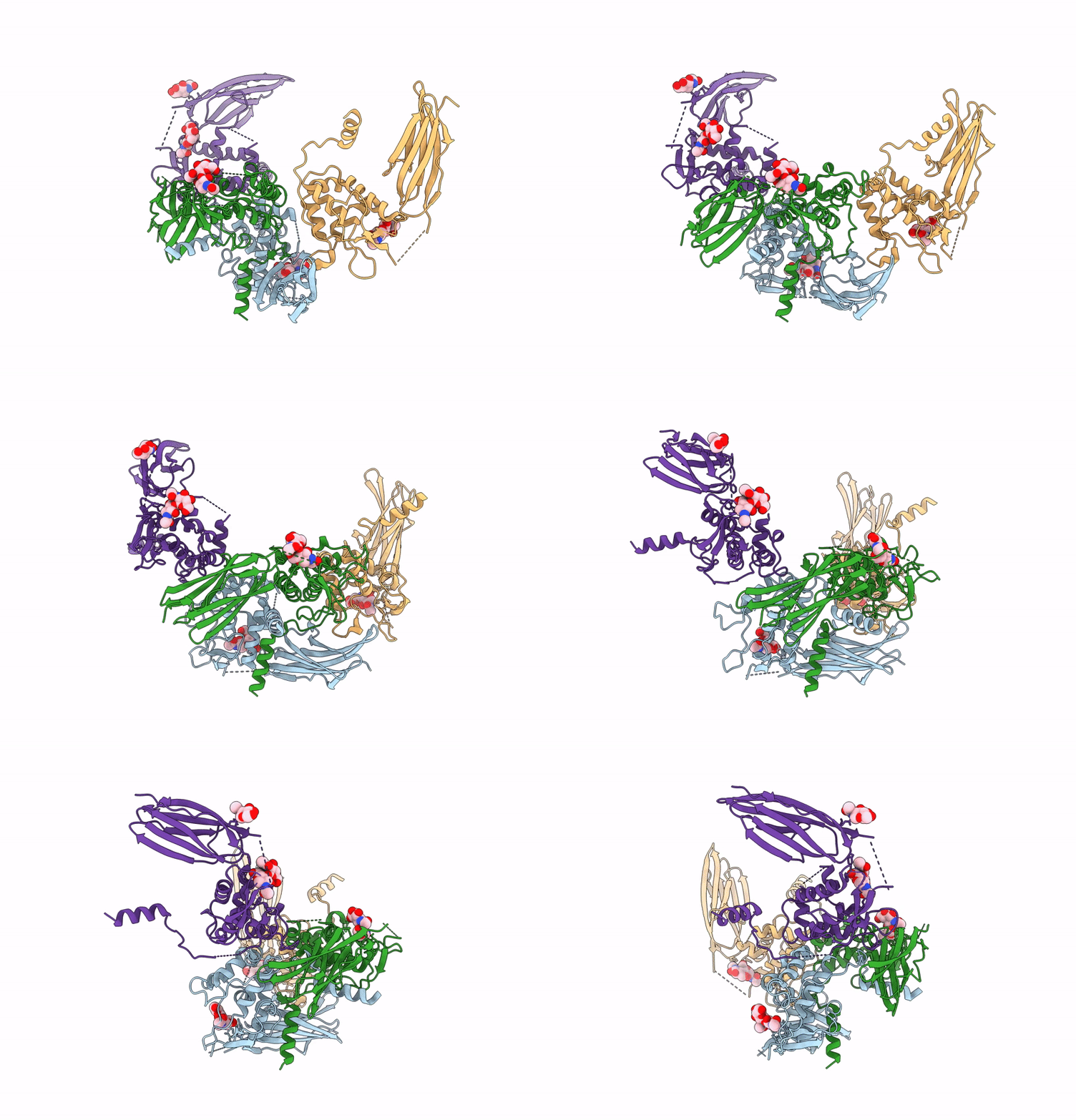
Crystal structure of the human MuSK(Ig3_Fz)/L1 peptide complex
Biological Source:
Source Organism(s):
Expression System(s):
Method Details:
Experimental Method:
Resolution:
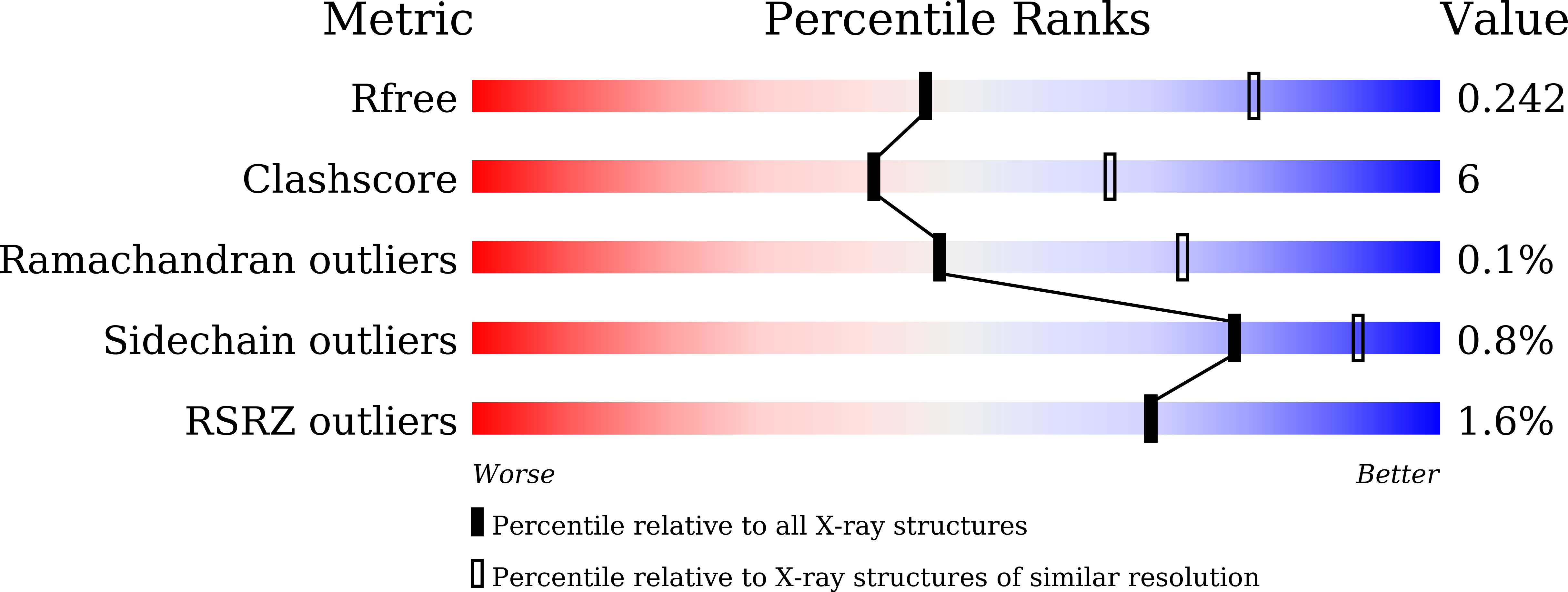
2.69 Å
R-Value Free:
0.24
R-Value Work:
0.20
R-Value Observed:
0.20
Space Group:
P 64
Macromolecular Entities
Structures with similar UniProt ID
Protein Blast
Polymer Type:polypeptide(L)
Molecule:Muscle, skeletal receptor tyrosine-protein kinase,Ig3-Fz domains of hMuSK:L1 peptide
Gene (Uniprot):MUSK
Chain IDs:A, B, C, D
Chain Length:279
Number of Molecules:4
Biological Source:Homo sapiens, synthetic construct
Ligand Molecules
Primary Citation
Muscle-specific tyrosine kinase activation by a peptide-based dimerizer is orientation dependent.
Structure ? ? ? (2025)
PMID: 41290004 DOI: 10.1016/j.str.2025.10.018

Abstact

Muscle-specific receptor tyrosine kinase (MuSK) is a single-pass transmembrane protein expressed on skeletal muscle. MuSK is activated by binding of nerve-derived agrin with the help of muscle coreceptor LRP4, leading to the clustering of acetylcholine receptors (AChR), which is required for the formation and maintenance of functional neuromuscular junctions. The structural mechanism of MuSK activation by physiological and artificial agonistic agents has remained elusive. In this study, we isolated a 27-residue linear peptide (L1) that binds human MuSK with high affinity. Genetic fusion of L1 to either the N or C termini of the human IgG Fc resulted in two different versions of MuSK dimerizers, denoted as L1-Fc and Fc-L1. Only Fc-L1 activated MuSK on myotubes and induced AChR clustering. Crystallographic analysis of MuSK-L1 interactions revealed that MuSK activation requires a particular dimeric conformation, pointing toward the importance of the lateral size of the receptor complex at the muscle cell surface.

Legend

Protein

Chemical

Disease

Primary Citation of related structures
Feedback Form
Name
Email
Institute
Feedback