9LFV image
Deposition Date 2025-01-09
Release Date 2025-05-07
Last Version Date 2025-05-21
Entry Detail
PDB ID:
9LFV
Keywords:
Title:
Crystal structure of mouse RIP3 kinase domain complexed with LK01004
Biological Source:
Source Organism:
Mus musculus (Taxon ID: 10090)
Host Organism:
Method Details:
Experimental Method:
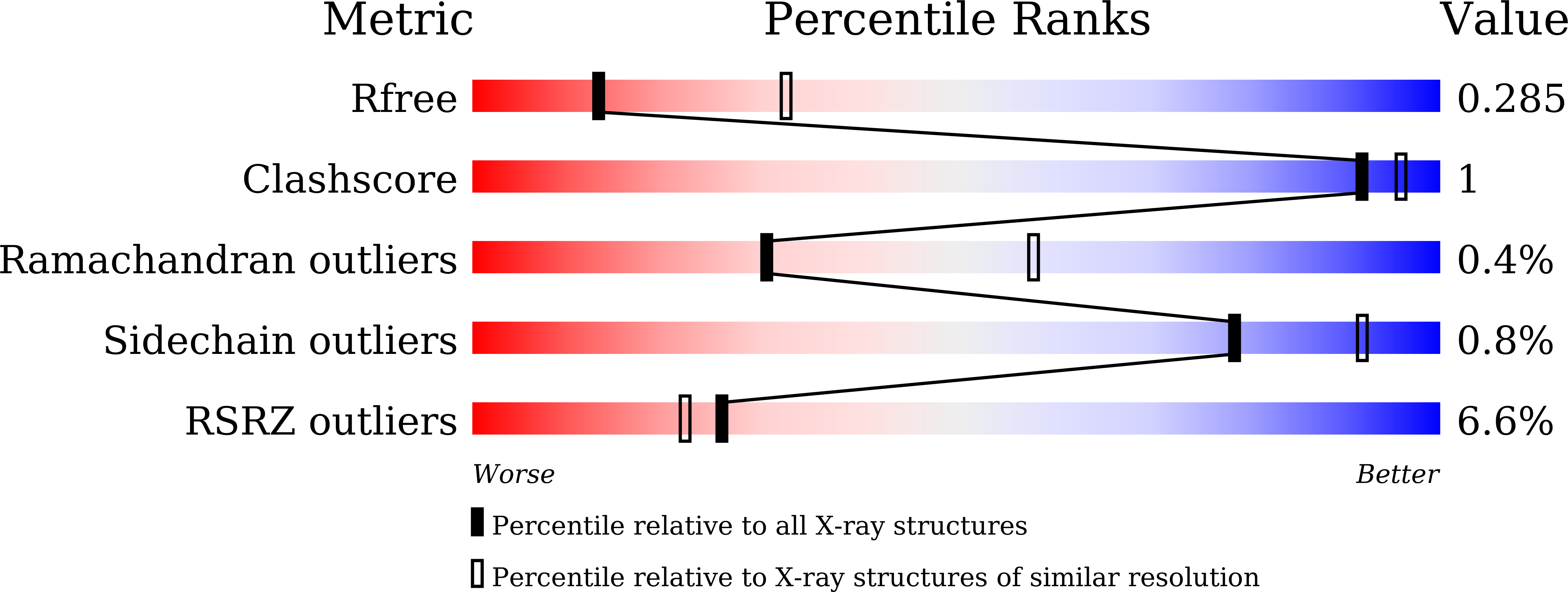
Resolution:
2.78 Å
R-Value Free:
0.28
R-Value Work:
0.24
R-Value Observed:
0.24
Space Group:
P 1 21 1
Macromolecular Entities
Structures with similar UniProt ID
Protein Blast
Polymer Type:polypeptide(L)
Molecule:Receptor-interacting serine/threonine-protein kinase 3
Gene (Uniprot):Ripk3
Chain IDs:A, B, C, D
Chain Length:325
Number of Molecules:4
Biological Source:Mus musculus
Ligand Molecules
Primary Citation
Structure-based design of potent and selective inhibitors targeting RIPK3 for eliminating on-target toxicity in vitro.
Nat Commun 16 4288 4288 (2025)
PMID: 40341069 DOI: 10.1038/s41467-025-59432-8

Abstact

The essential role of RIPK3 in necroptosis makes its inhibition a promising therapeutic strategy. However, the development of RIPK3 inhibitors has been hampered by on-target apoptosis and limited kinase selectivity. Inspired by the R69H mutation, which prevents on-target apoptosis by disrupting RIPK3 dimerization, we design LK-series inhibitors that effectively inhibit RIPK3 in biochemical assays and block TNF-α-induced necroptosis in both mouse L929 and human HT29 cells without inducing apoptosis. The representative compound, LK01003, shows high selectivity across a panel of 379 kinases. Our structural studies reveal that LK compounds act as Type I1/2 inhibitors, engaging a unique hydrophobic site and stabilizing an inactive conformation of RIPK3. Moreover, several type II inhibitors are also revealed to maintain RIPK3 in the inactive conformation and do not induce on-target apoptosis. These findings suggest a promising strategy for rational design of safe and selective inhibitors by locking the inactive conformation of RIPK3.

Legend

Protein

Chemical

Disease

Primary Citation of related structures
Feedback Form
Name
Email
Institute
Feedback