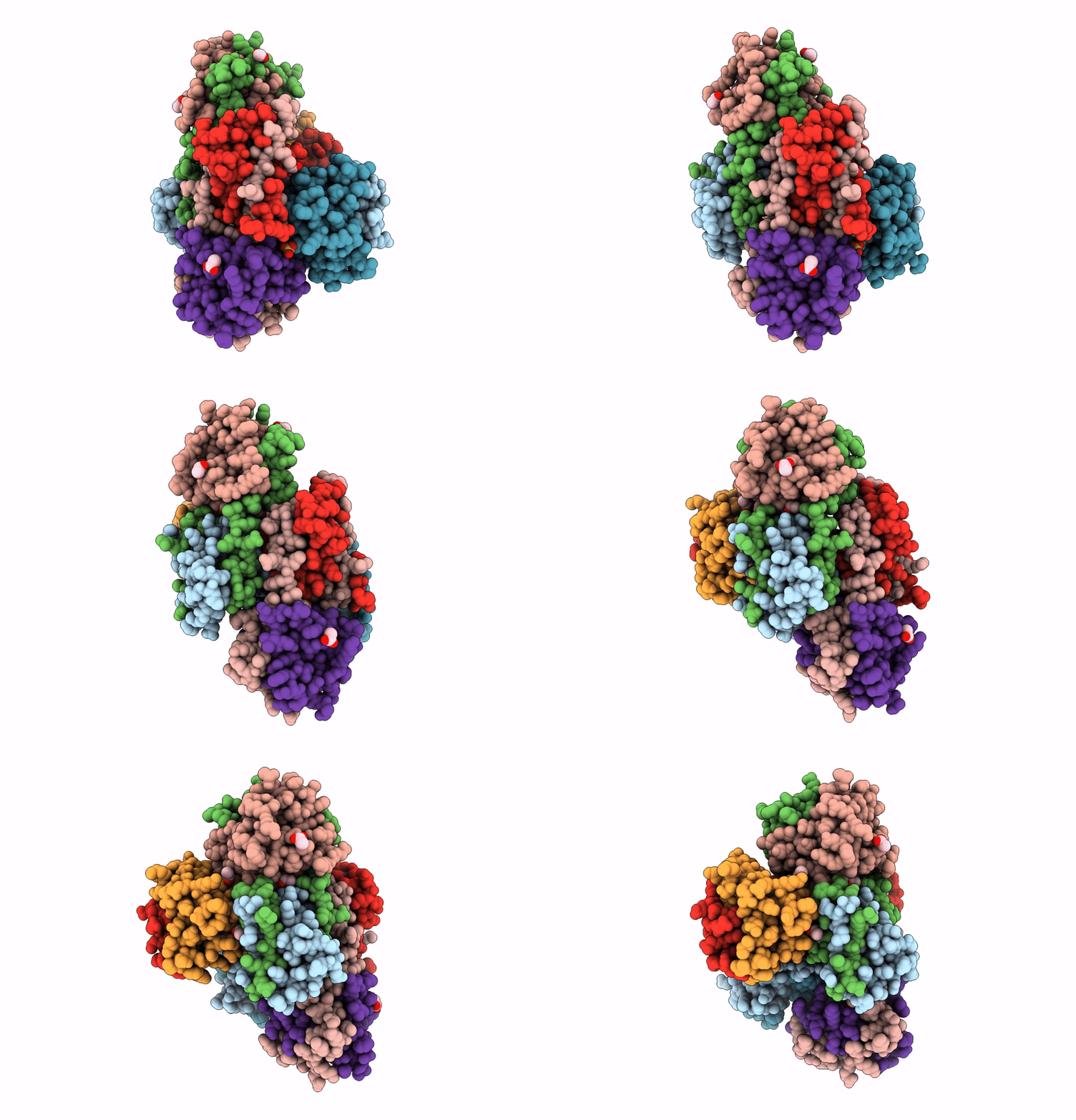
9LEW image
Deposition Date 2025-01-07
Release Date 2025-07-30
Last Version Date 2025-07-30
Entry Detail
PDB ID:
9LEW
Keywords:
Title:
The crystal structure of DinJ-YafQ complex from Vibrio cholerae
Biological Source:
Method Details:
Experimental Method:
Resolution:
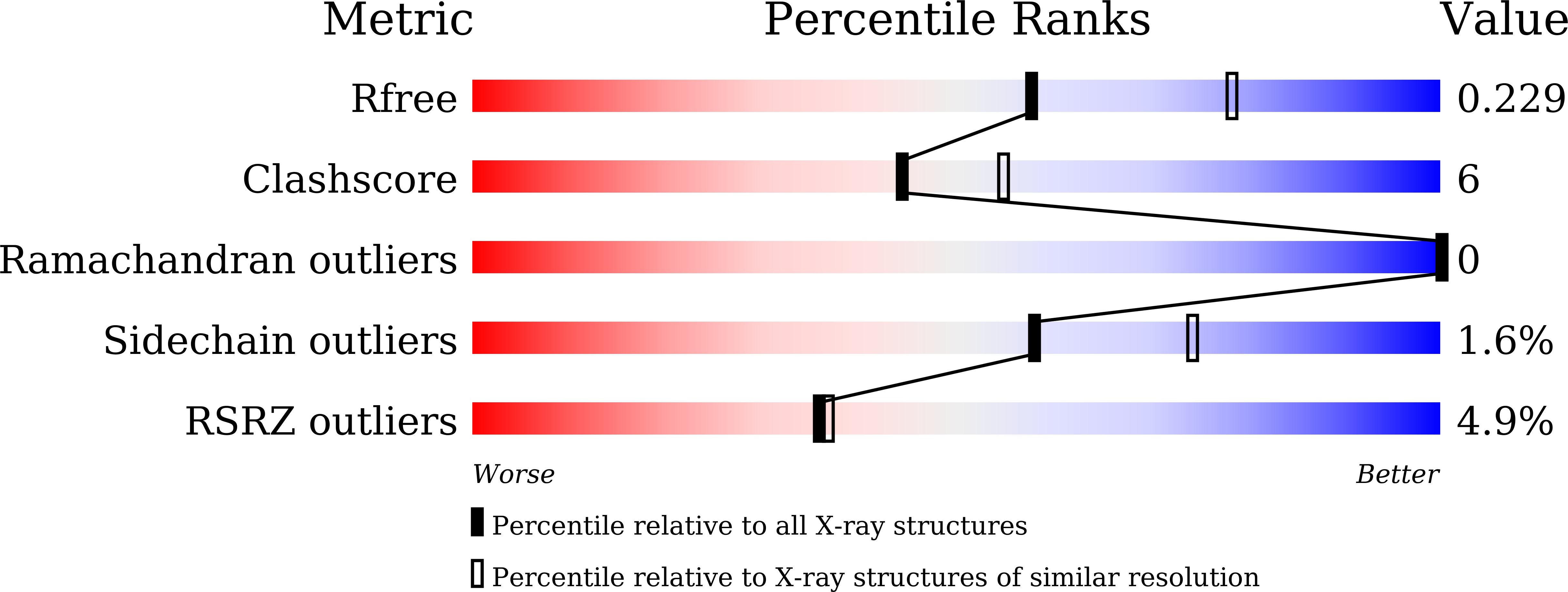
2.30 Å
R-Value Free:
0.23
R-Value Work:
0.20
R-Value Observed:
0.20
Space Group:
P 62 2 2
Macromolecular Entities
Structures with similar UniProt ID
Protein Blast
Polymer Type:polypeptide(L)
Molecule:DNA-damage-inducible protein J
Gene (Uniprot):VC_A0324
Chain IDs:A, C, E, G
Chain Length:94
Number of Molecules:4
Biological Source:Vibrio cholerae serotype O1 (strain ATCC 39315 / El Tor Inaba N16961)
Structures with similar UniProt ID
Protein Blast
Polymer Type:polypeptide(L)
Molecule:Type II toxin-antitoxin system YafQ family toxin
Gene (Uniprot):VC_A0323
Mutagens:H94Q
Chain IDs:B, D, F, H
Chain Length:100
Number of Molecules:4
Biological Source:Vibrio cholerae serotype O1 (strain ATCC 39315 / El Tor Inaba N16961)
Primary Citation
Novel oligomerization state of DinJ-YafQ complex from Vibrio cholerae-Structural and biochemical insights.
Int.J.Biol.Macromol. 320 145865 145865 (2025)
PMID: 40639525 DOI: 10.1016/j.ijbiomac.2025.145865

Abstact

Toxin-antitoxin (TA) systems are widely distributed in archaeal and bacterial genomes and are crucial for maintaining the physiological functions required for cellular homeostasis. The DinJ-YafQ TA system belongs to the well-known RelBE family of Type II TA systems. Vibrio cholerae, the causative agent of cholera, infects humans through the consumption of contaminated, unpurified drinking water. Its genome contains a cassette of 19 TA system-related genes located on chromosome II, six of which are classified under the RelBE family. Herein, we determined the crystal structure of the V. cholerae DinJ (VcDinJ, antitoxin)-YafQ (VcYafQ, toxin) complex at 2.3 Å resolution. The unique orientation of the VcDinJ RHH2 motifs relative to the YafQ molecules promotes the formation of a highly oligomerized hetero-hexadecamer (16-mer) in a concentration-dependent manner. According to biochemical experiments, the VcDinJ-YafQ complex directly binds to the promoter region of its operon, suggesting its role as a transcriptional repressor. An autoregulatory mechanism in which DNA binding induces conformational changes is suggested based on structural modeling through DNA superposition. This finding supports the concentration-dependent and DNA-associated oligomerization of the VcDinJ-YafQ complex.

Legend

Protein

Chemical

Disease

Primary Citation of related structures
Feedback Form
Name
Email
Institute
Feedback