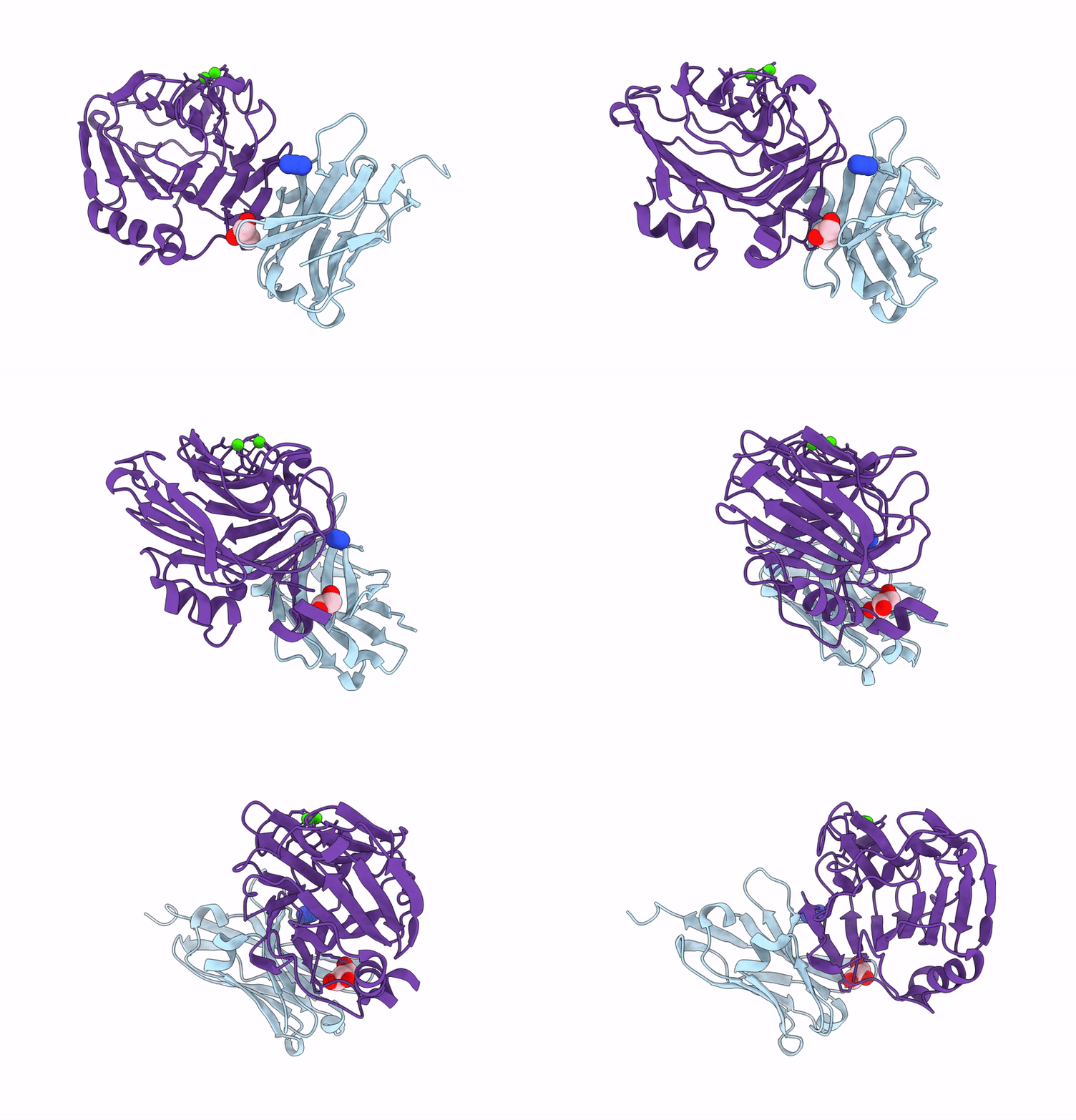
9LAD image
Deposition Date 2025-01-02
Release Date 2025-12-10
Last Version Date 2025-12-10
Entry Detail
PDB ID:
9LAD
Keywords:
Title:
Crystal structure of the complex between Neuronal Pentraxin 2 (NP2 PTX) and antibody fragment VHH N1
Biological Source:
Source Organism:
Vicugna pacos (Taxon ID: 30538)
Homo sapiens (Taxon ID: 9606)
Method Details:
Experimental Method:
Resolution:
2.02 Å
R-Value Free:
0.21
R-Value Work:
0.18
Space Group:
P 21 21 2
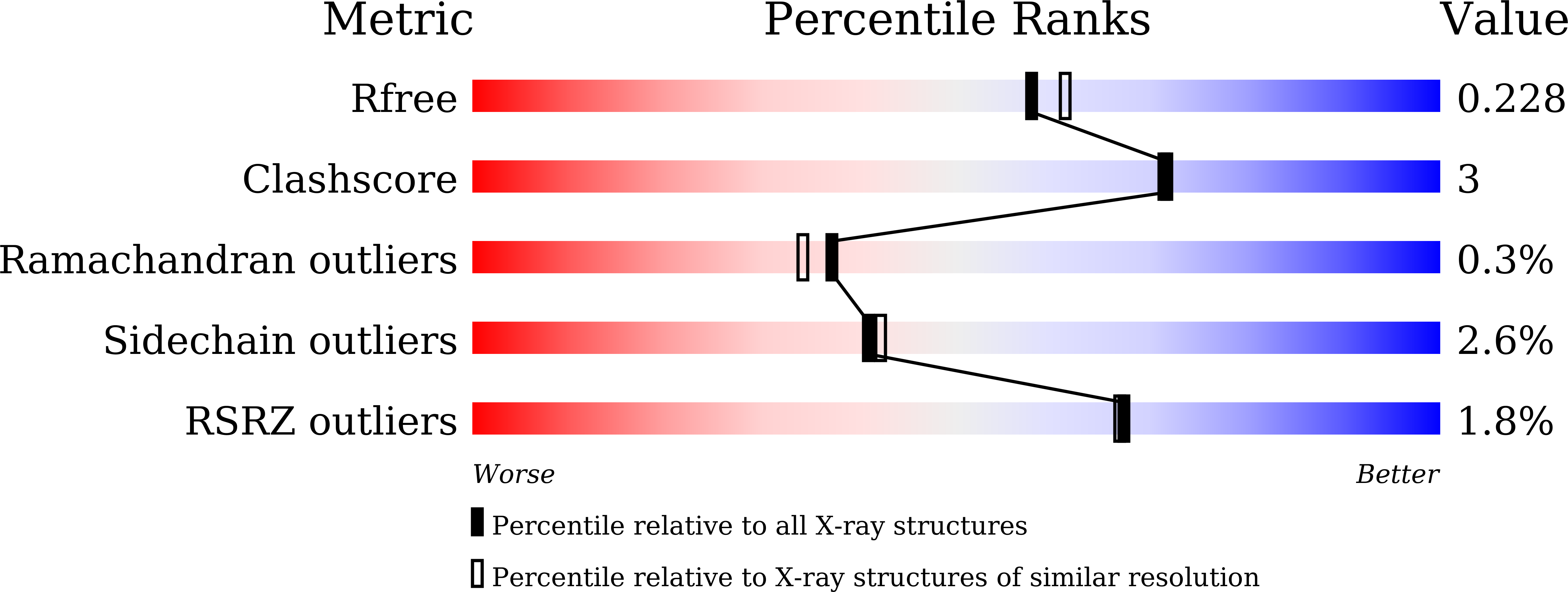
Macromolecular Entities
Polymer Type:polypeptide(L)
Molecule:N1 VHH
Chain IDs:A (auth: B)
Chain Length:126
Number of Molecules:1
Biological Source:Vicugna pacos
Structures with similar UniProt ID
Protein Blast
Polymer Type:polypeptide(L)
Molecule:Neuronal pentraxin-2
Gene (Uniprot):Nptx2
Chain IDs:B (auth: C)
Chain Length:219
Number of Molecules:1
Biological Source:Homo sapiens
Primary Citation
Development of a VHH that inhibits the binding of neuronal pentraxin 2 to a post-synaptic glutamate receptor, AMPAR.
J.Biol.Chem. ? 110975 110975 (2025)
PMID: 41308985 DOI: 10.1016/j.jbc.2025.110975

Abstact

Neurons connect to each other via synapses to form neural circuits. Recent research has shown that neuropsychiatric disorders and neurological disorders such as autism spectrum disorders and Alzheimer's disease (AD) are synaptic diseases caused by abnormality of synapses. Synaptic organizers are molecules responsible for synapse formation. Neuronal pentraxin 2 (NP2) is synaptic organizer and a secreted protein that is expressed mainly in the hippocampus and cerebellum, and it contributes to synaptic plasticity. NP2 forms clusters with its family proteins NP1 and NPR and binds to postsynaptic amino-3-hydroxy-5-methyl-4-isoxazolepropionic acid-type receptors (AMPARs). In recent years, research has revealed the disease relevance of NP2. For example, it can be a biomarker of AD, and its overexpression in the peripheral nervous system has been reported to cause chronic itch. However, the mechanism of NP2 function has not been well described at the molecular level. In this study, we developed a variable domain of heavy chain of heavy chain antibody (VHH) against NP2 to elucidate its molecular mechanism of action and to regulate its function of NP2. The obtained VHH N1 showed high specificity and affinity to NP2, and its binding mechanism was elucidated by X-ray crystallography. Furthermore, VHH N1 inhibited the binding of NP2 to AMPARs, and this inhibitory activity was confirmed in cells. These results provide useful insights into the molecular mechanism of NP2 function and highlight the potential application of VHH N1 as a detection agent for NP2 or as a therapeutic agent for chronic itch.

Legend

Protein

Chemical

Disease

Primary Citation of related structures
Feedback Form
Name
Email
Institute
Feedback