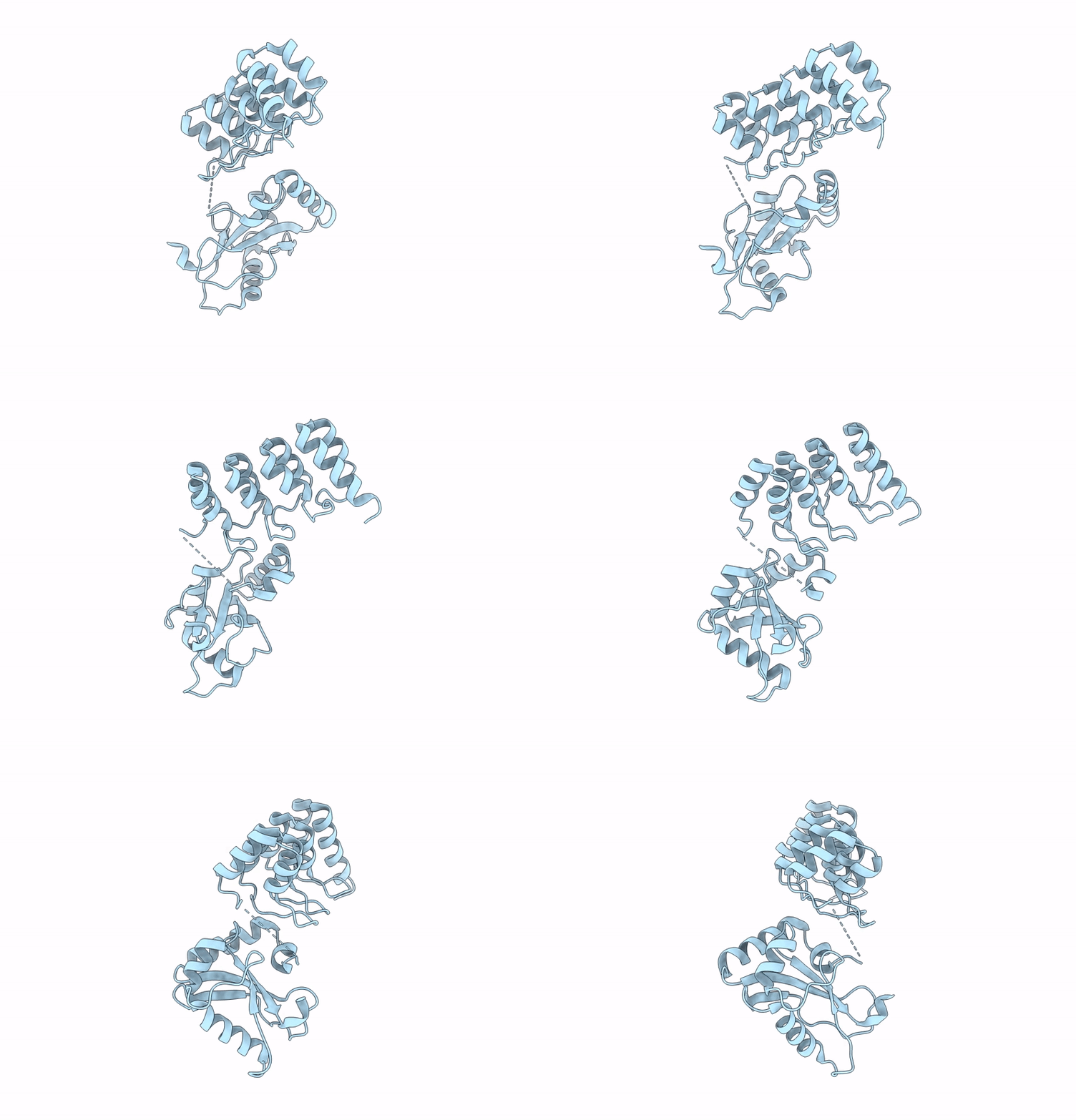
9L9I image
Deposition Date 2024-12-30
Release Date 2025-11-26
Last Version Date 2026-01-21
Entry Detail
PDB ID:
9L9I
Title:
Crystal structure of ARMS 1-4 ARs in complex with GABARAP
Biological Source:
Source Organism(s):
Method Details:
Experimental Method:
Resolution:
2.00 Å
R-Value Free:
0.24
R-Value Work:
0.20
R-Value Observed:
0.20
Space Group:
P 21 21 21
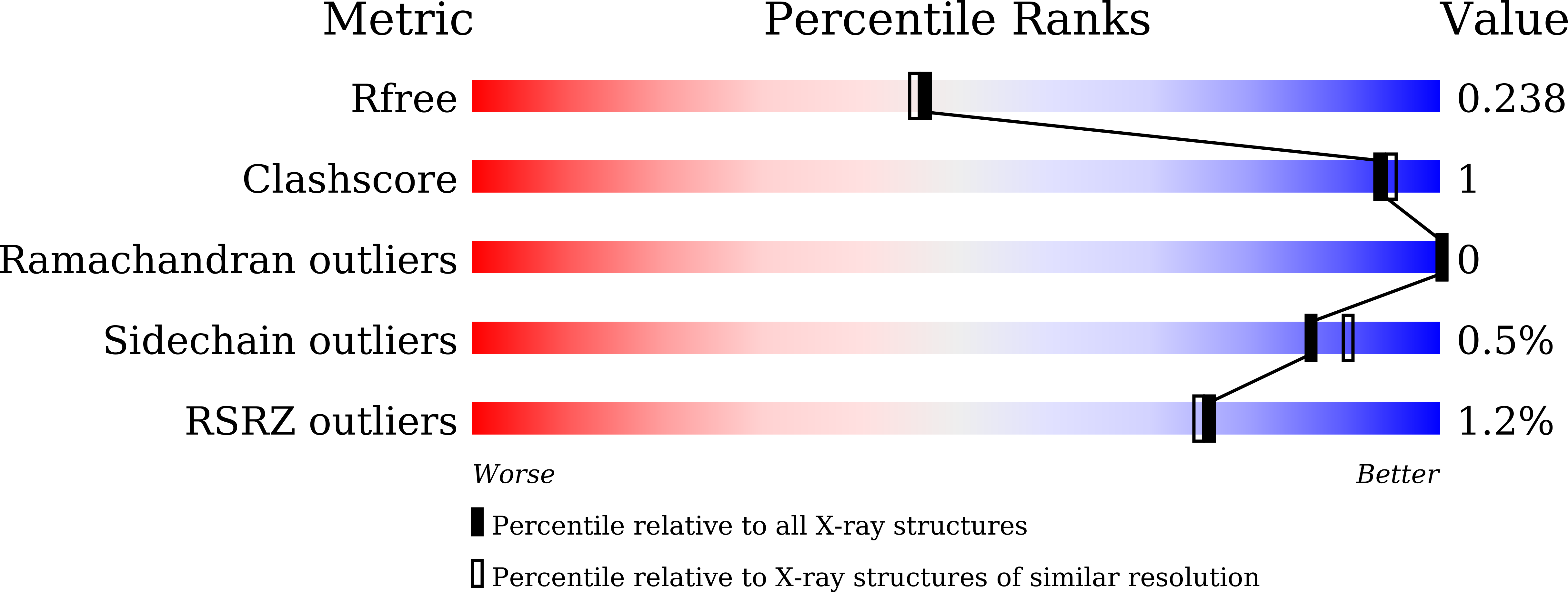
Macromolecular Entities
Protein Blast
Polymer Type:polypeptide(L)
Molecule:Kinase D-interacting substrate of 220 kDa,Gamma-aminobutyric acid receptor-associated protein
Gene (Uniprot):Gabarap, Kidins220
Chain IDs:A
Chain Length:259
Number of Molecules:1
Biological Source:Rattus norvegicus
Primary Citation
A non-canonical ARMS-GABARAP interaction modulates dendritic spine formation and synaptic development.
Embo J. ? ? ? (2026)
PMID: 41507394 DOI: 10.1038/s44318-025-00669-w

Abstact

ARMS (ankyrin repeat-rich membrane spanning) is a scaffold protein essential for neurotrophic signaling, synaptic development, and cytoskeletal remodeling. Despite its central role in neuronal function, how ARMS is regulated at the molecular level remains poorly understood. Here, we identify GABARAP, an Atg8-family autophagy adaptor, as a novel ARMS-binding protein that directly interacts with its N-terminal ankyrin repeats. We present the crystal structure of the ARMS-GABARAP complex, revealing an atypical interaction mode distinct from canonical LIR-dependent Atg8 interactions. Remarkably, ARMS specifically binds to the GABARAP subfamily of Atg8 proteins, setting it apart from the LC3 subfamily. Functional analysis demonstrates that GABARAP negatively regulates ARMS-mediated dendritic spine development and maturation in hippocampal neurons. Additionally, disrupting the ARMS-GABARAP complex using ankyrin-derived peptides alters ARMS subcellular localization, increasing its accumulation in the soma of neurons. Collectively, our findings uncover a novel ARMS-GABARAP interaction mechanism, establish the regulatory role of this complex in neuronal protein homeostasis, and suggest potential therapeutic strategies for targeting scaffold protein interactions in neurodevelopmental and neurodegenerative disorders.

Legend

Protein

Chemical

Disease

Primary Citation of related structures
Feedback Form
Name
Email
Institute
Feedback