9L9A image
Deposition Date 2024-12-29
Release Date 2025-06-04
Last Version Date 2025-07-23
Entry Detail
PDB ID:
9L9A
Keywords:
Title:
Structure of Western equine encephalitis virus McMillan strain in complex with VLDLR LA2-3
Biological Source:
Source Organism:
Host Organism:
Method Details:
Experimental Method:
Resolution:
3.90 Å
Aggregation State:
PARTICLE
Reconstruction Method:
SINGLE PARTICLE
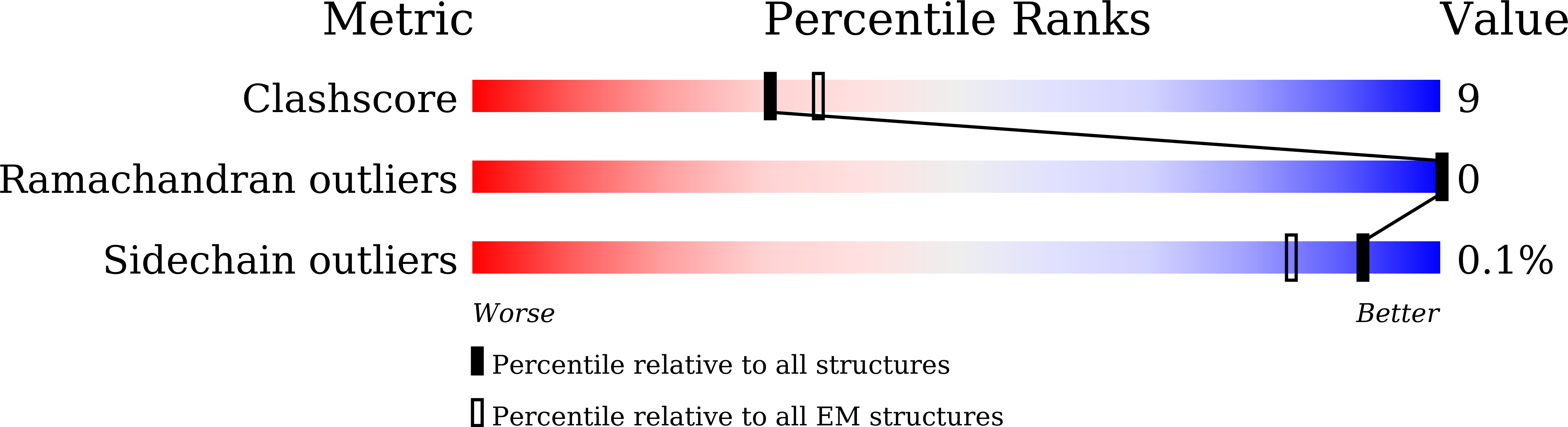
Macromolecular Entities
Structures with similar UniProt ID
Protein Blast
Polymer Type:polypeptide(L)
Molecule:Spike glycoprotein E1
Chain IDs:A, C (auth: G)
Chain Length:411
Number of Molecules:2
Biological Source:Western equine encephalitis virus
Structures with similar UniProt ID
Protein Blast
Polymer Type:polypeptide(L)
Molecule:Spike glycoprotein E2
Chain IDs:B, D (auth: H)
Chain Length:369
Number of Molecules:2
Biological Source:Western equine encephalitis virus
Structures with similar UniProt ID
Protein Blast
Polymer Type:polypeptide(L)
Molecule:Very low-density lipoprotein receptor
Gene (Uniprot):VLDLR
Chain IDs:E (auth: M)
Chain Length:82
Number of Molecules:1
Biological Source:Homo sapiens
Ligand Molecules
Primary Citation
Structural basis for the recognition of two different types of receptors by Western equine encephalitis virus.
Cell Rep 44 115724 115724 (2025)
PMID: 40402741 DOI: 10.1016/j.celrep.2025.115724

Abstact

Western equine encephalitis virus (WEEV) enters cells via various receptors. Here, we report the cryoelectron microscopy (cryo-EM) structures of WEEV in complex with its receptors PCDH10 and very-low-density lipoprotein receptor (VLDLR). Structural analysis shows that PCDH10 binds in the cleft formed by adjacent E2-E1 heterodimers of WEEV through its EC1 ectodomain. Residues of viral envelope proteins involved in the interactions with PCDH10 EC1 are unique to WEEV. The strain-specific receptor VLDLR binds WEEV strain McMillan through two consecutive ecto-LDLR class A (LA) repeats. LA1-2, LA2-3, LA3-4, LA4-5, and LA5-6 of VLDLR all have detectable interactions with WEEV. Detailed structures of WEEV in complex with LA1-2 and LA2-3 show that the N-terminal LA repeat binds in the cleft and that the C-terminal LA repeat is attached to the E2 B domain. The acquisition of a single E2 mutation (V265F) allows WEEV strain 71V-1658, originally unable to bind VLDLR, to gain this receptor-binding ability. The binding of VLDLR to WEEV is in a mode different from those of other alphaviruses.

Legend

Protein

Chemical

Disease

Primary Citation of related structures
Feedback Form
Name
Email
Institute
Feedback