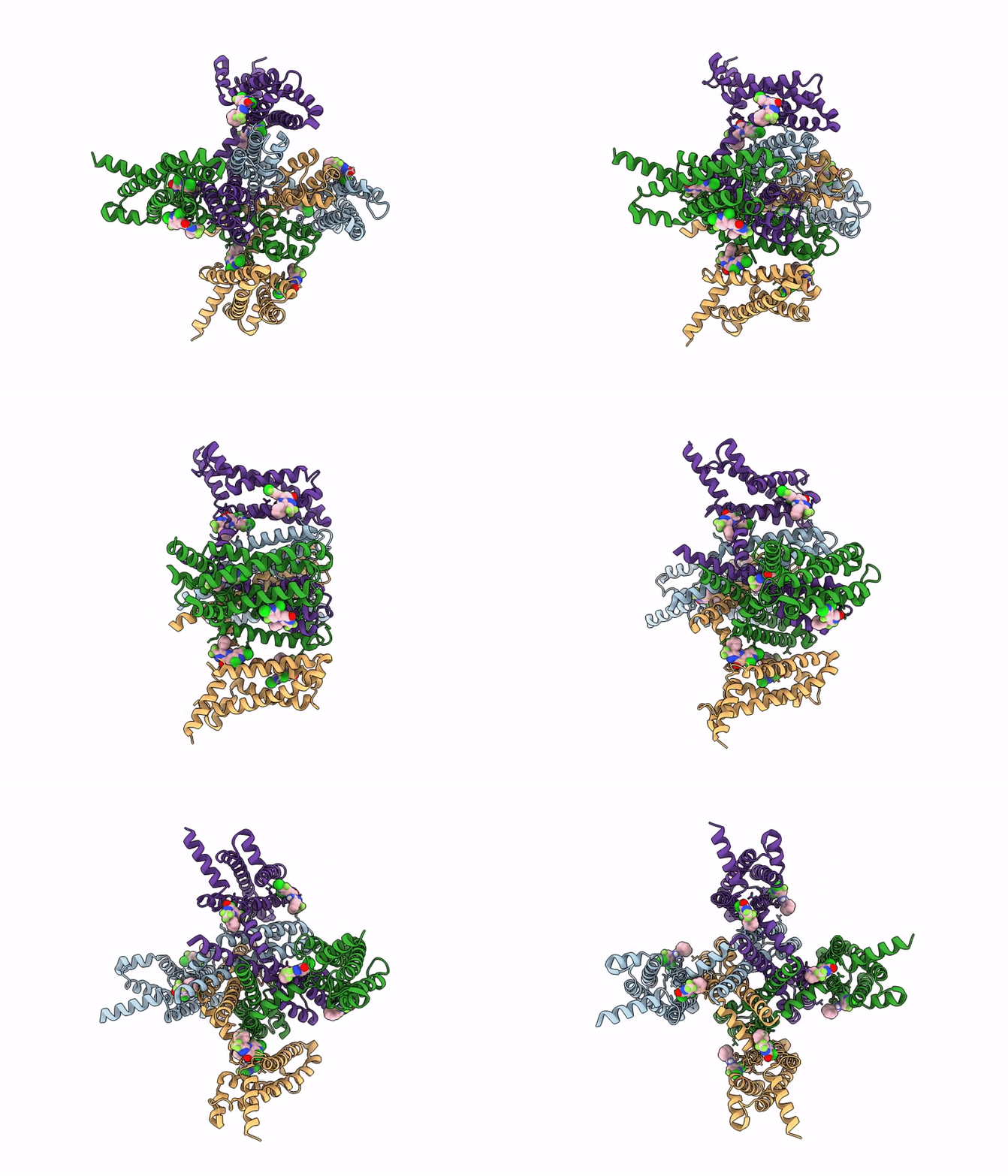
9L8W image
Deposition Date 2024-12-28
Release Date 2026-01-21
Last Version Date 2026-01-21
Entry Detail
PDB ID:
9L8W
Title:
Human KCNQ2-CaM in complex with QO-58
Biological Source:
Source Organism(s):
Homo sapiens (Taxon ID: 9606)
Expression System(s):
Method Details:
Experimental Method:
Resolution:
2.90 Å
Aggregation State:
PARTICLE
Reconstruction Method:
SINGLE PARTICLE
Macromolecular Entities
Structures with similar UniProt ID
Protein Blast
Polymer Type:polypeptide(L)
Molecule:Potassium voltage-gated channel subfamily KQT member 2
Gene (Uniprot):KCNQ2
Chain IDs:A, B, C, D
Chain Length:872
Number of Molecules:4
Biological Source:Homo sapiens
Ligand Molecules
Primary Citation
Structure basis for the activation of KCNQ2 by endogenous and exogenous ligands.
Cell Rep 45 116771 116771 (2025)
PMID: 41442279 DOI: 10.1016/j.celrep.2025.116771

Abstact

The voltage-gated potassium channel KCNQ2 is crucial for stabilizing neuronal membrane potential, and its mutations can cause various epilepsies. KCNQ2 is activated by endogenous ligand phosphatidylinositol-4,5-bisphosphate (PIP2) and exogenous ligands, yet the structural mechanisms underlying these activations remain unclear. Here, we report the cryo-electron microscopy structures of human KCNQ2 in complex with exogenous ligands QO-58 and QO-83 in the absence or presence of PIP2 in either closed or open conformation. While QO-83 binds in the classical fenestration pocket of the pore domain, QO-58 mainly binds at the flank of S4 in the voltage-sensing domain. These structures, along with electrophysiological assays and computational studies, provide mechanistic insights into the ligand activation of KCNQ2 and may guide the development of anti-epileptic drugs targeting KCNQ2.

Legend

Protein

Chemical

Disease

Primary Citation of related structures
Feedback Form
Name
Email
Institute
Feedback