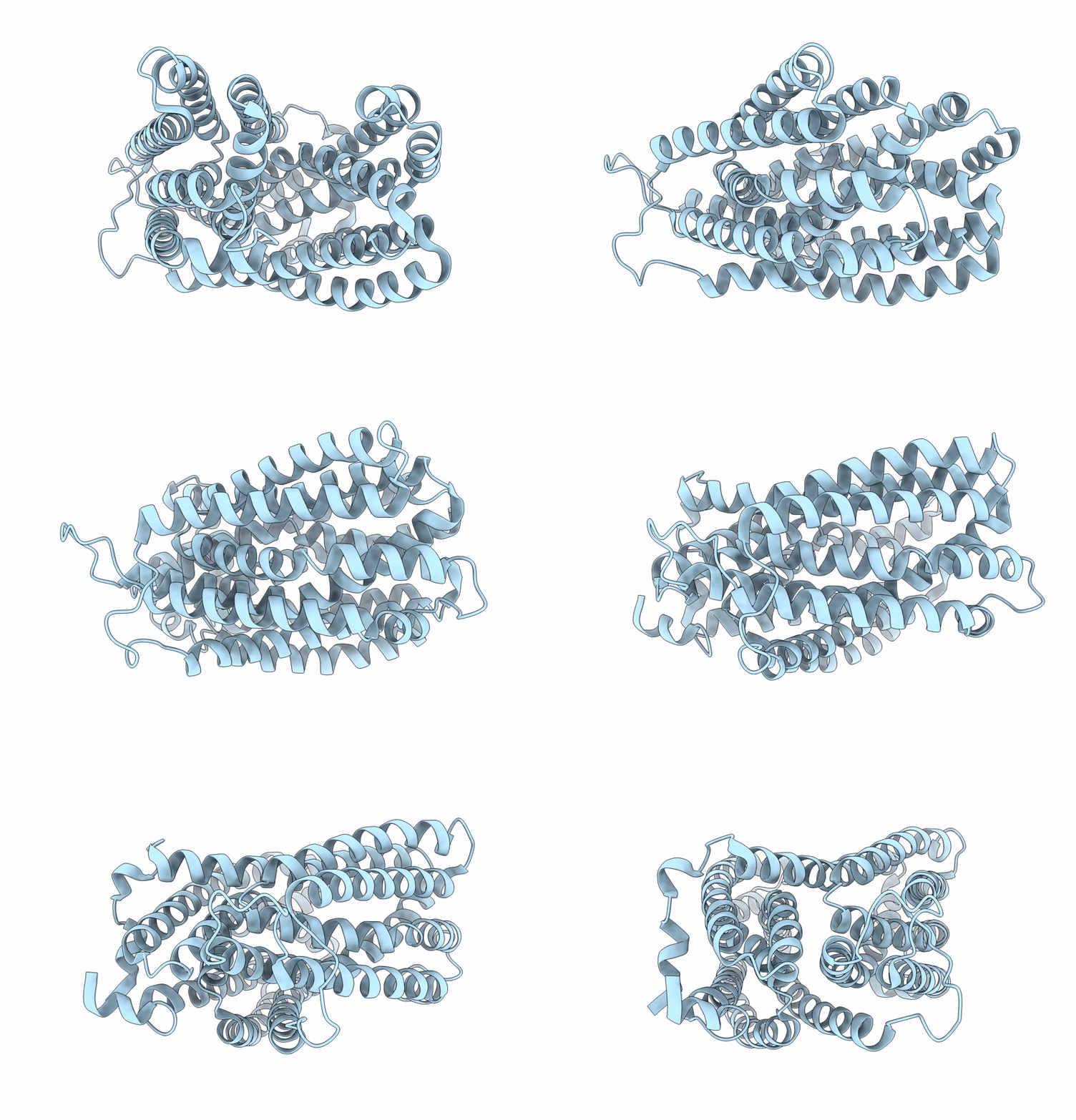
9L7L image
Deposition Date 2024-12-26
Release Date 2025-08-06
Last Version Date 2025-08-27
Entry Detail
PDB ID:
9L7L
Title:
Structure of the MATE family multidrug resistance transporter HvAACT1 from Hordeum vulgare in the outward-facing state
Biological Source:
Source Organism(s):
Hordeum vulgare (Taxon ID: 4513)
Expression System(s):
Method Details:
Experimental Method:
Resolution:
3.21 Å
R-Value Free:
0.30
R-Value Work:
0.26
R-Value Observed:
0.26
Space Group:
P 43 21 2
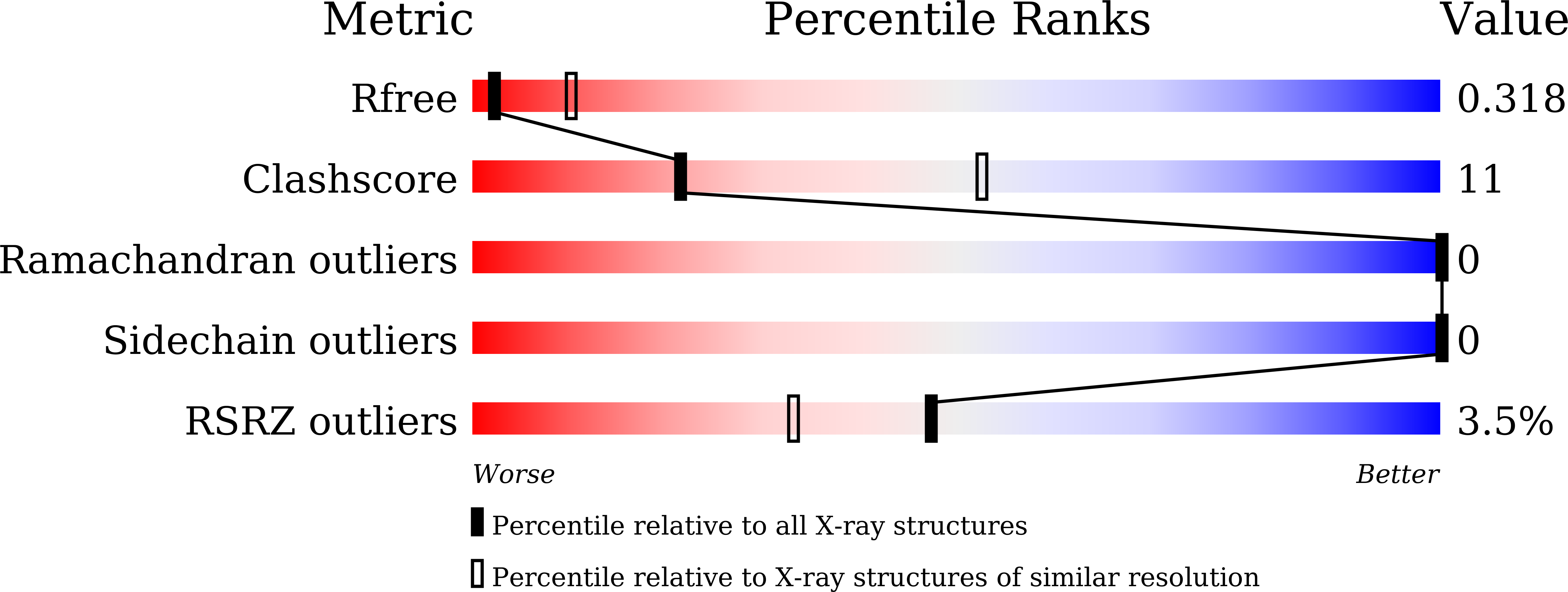
Macromolecular Entities
Structures with similar UniProt ID
Protein Blast
Polymer Type:polypeptide(L)
Molecule:HvAACT1
Chain IDs:A
Chain Length:465
Number of Molecules:1
Biological Source:Hordeum vulgare
Ligand Molecules
Primary Citation
Structural insights into a citrate transporter that mediates aluminum tolerance in barley.
Proc.Natl.Acad.Sci.USA 122 e2501933122 e2501933122 (2025)
PMID: 40763023 DOI: 10.1073/pnas.2501933122

Abstact

HvAACT1 is a major aluminum (Al)-tolerance gene in barley, encoding a citrate transporter that belongs to the multidrug and toxic compound extrusion (MATE) family. This transporter facilitates citrate secretion from the roots, thereby detoxifying external Al ions-a major constraint of crop production on acidic soils. In this study, we present the outward-facing crystal structure of HvAACT1, providing insights into a citrate transport mechanism. The putative citrate binding site consists of three basic residues-K126 in transmembrane helix 2 (TM2), R358 in TM7, and R535 in TM12-creating substantial positive charges in the C-lobe cavity. Proton coupling for substrate transport may involve two pairs of aspartate residues in the N-lobe cavity, one of which corresponds to the essential Asp pair found in prokaryotic H+-coupled MATE transporters belonging to the DinF subfamily. Structural coupling between proton uptake in the N-lobe and citrate extrusion in the C-lobe can be enabled by an extensive, unique hydrogen-bonding network at the extracellular half of the N-lobe. Mutation-based functional analysis, structural comparisons, molecular dynamics simulation, and phylogenic analysis suggest an evolutionary link between citrate MATE transporters and the DinF MATE subfamily. Our findings provide a solid structural basis for citrate transport by HvAACT1 in barley and contribute to a broader understanding of citrate transporter structures in other plant species.

Legend

Protein

Chemical

Disease

Primary Citation of related structures
Feedback Form
Name
Email
Institute
Feedback