Planned Maintenance: Some services may turn out to be unavailable from 15th January, 2026 to 16th January, 2026. We apologize for the inconvenience!

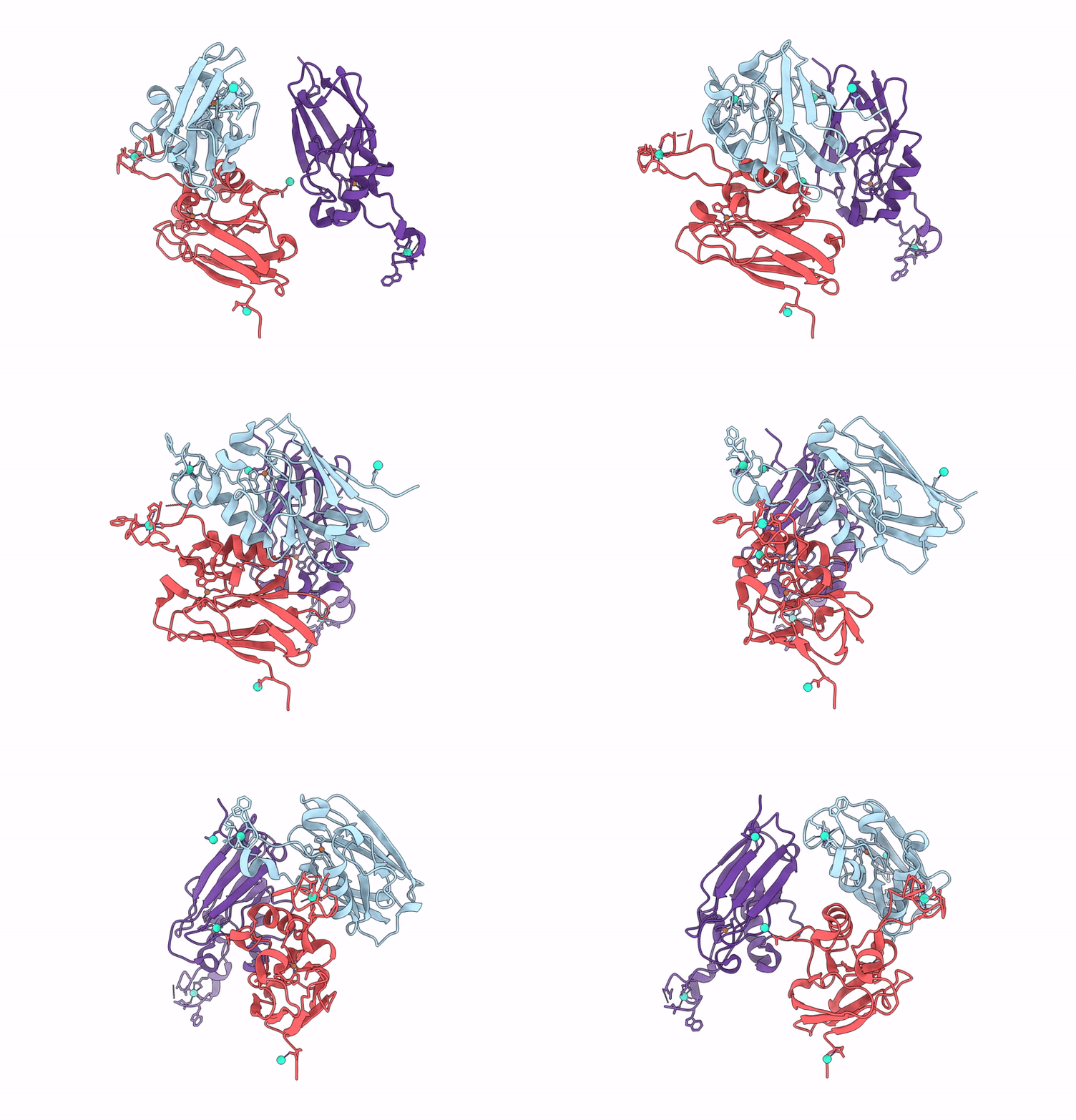
9L6D image
Deposition Date 2024-12-24
Release Date 2025-12-24
Last Version Date 2025-12-24
Entry Detail
PDB ID:
9L6D
Title:
the crystal structure of Azurin-LBT
Biological Source:
Method Details:
Experimental Method:
Resolution:
2.38 Å
R-Value Free:
0.24
R-Value Work:
0.20
R-Value Observed:
0.20
Space Group:
C 1 2 1

Macromolecular Entities
Structures with similar UniProt ID
Protein Blast
Polymer Type:polypeptide(L)
Molecule:Azurin
Gene (Uniprot):azu
Chain IDs:A, B, C
Chain Length:148
Number of Molecules:3
Biological Source:Pseudomonas aeruginosa (strain ATCC 15692 / DSM 22644 / CIP 104116 / JCM 14847 / LMG 12228 / 1C / PRS 101 / PAO1)
Primary Citation
Engineering a Hetero-Bimetallic Azurin Photoenzyme for Photoredox Nitrite Reduction and SNO Adduct Formation.
Chemistry 31 e202500143 e202500143 (2025)
PMID: 40038049 DOI: 10.1002/chem.202500143

Abstact

Photoredox catalysis in protein systems presents exciting opportunities to achieve sustainable and efficient enzymatic reactions driven by light. Here, we report the design and characterization of PhotoNiR, an engineered azurin-based protein incorporating a red copper center and a lanthanide-binding tag (LBT). This dual-metal system enables photoredox reduction of nitrite to nitric oxide via a proposed donor-f-electron-acceptor (D-f-A) electron transfer mechanism. Upon photoirradiation, aromatic residues in the LBT donate electrons to the lanthanide ion, which relays them to the Cu(II) center, reducing it to Cu(I). The reduced Cu(I)-PhotoNiR catalyzes the reduction of NO2 -, and the generated NO subsequently reacts with free cysteine residues to form S-nitrosothiol (SNO) species. Spectroscopic and structural characterization confirmed that the copper center retains the properties of a red copper site and that the lanthanide-binding tag supports efficient electron transfer. This work represents one of the first examples of a D-f-A mechanism in a protein system, demonstrating the potential of integrating metalloprotein engineering with lanthanide photochemistry to develop novel photoenzymes for light-driven catalysis.

Legend

Protein

Chemical

Disease

Primary Citation of related structures
Feedback Form
Name
Email
Institute
Feedback