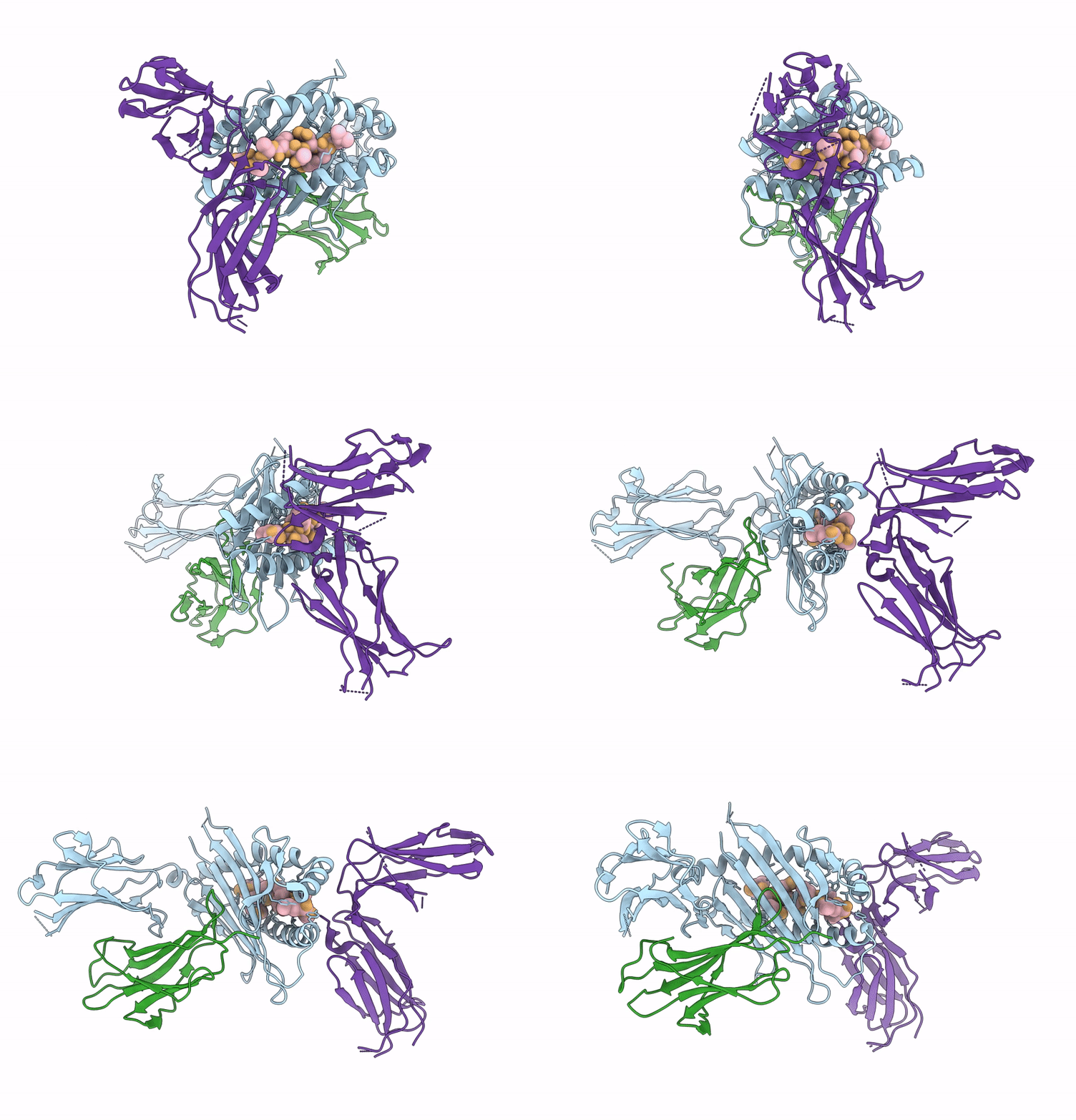
9L4I image
Deposition Date 2024-12-20
Release Date 2025-12-24
Last Version Date 2025-12-24
Entry Detail
PDB ID:
9L4I
Keywords:
Title:
Crystal structure of HLA-C*14:02 complexed with KIR2DL2
Biological Source:
Source Organism:
Homo sapiens (Taxon ID: 9606)
Homo (Taxon ID: 9605)
Host Organism:
Method Details:
Experimental Method:
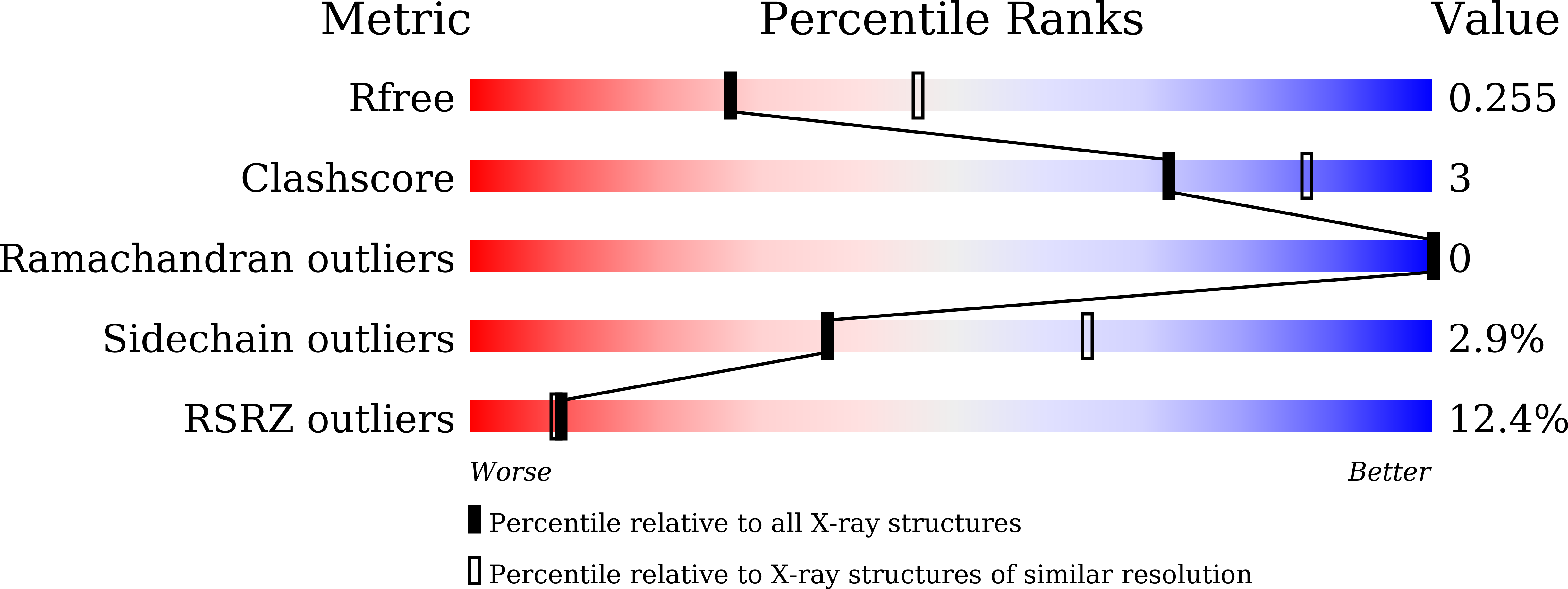
Resolution:
2.50 Å
R-Value Free:
0.25
R-Value Work:
0.22
R-Value Observed:
0.23
Space Group:
I 2 2 2
Macromolecular Entities
Structures with similar UniProt ID
Protein Blast
Polymer Type:polypeptide(L)
Molecule:MHC class I antigen
Gene (Uniprot):HLA-C
Chain IDs:A
Chain Length:273
Number of Molecules:1
Biological Source:Homo sapiens
Structures with similar UniProt ID
Protein Blast
Polymer Type:polypeptide(L)
Molecule:Beta-2-microglobulin
Gene (Uniprot):B2M
Chain IDs:B
Chain Length:100
Number of Molecules:1
Biological Source:Homo sapiens
Polymer Type:polypeptide(L)
Molecule:LL8
Chain IDs:C
Chain Length:8
Number of Molecules:1
Biological Source:Homo
Structures with similar UniProt ID
Protein Blast
Polymer Type:polypeptide(L)
Molecule:Killer cell immunoglobulin-like receptor 2DL2
Gene (Uniprot):KIR2DL2
Chain IDs:D
Chain Length:196
Number of Molecules:1
Biological Source:Homo
Primary Citation
Micropolymorphism outside the peptide-binding groove of human leukocyte antigen (HLA)-C*14 modulates structural stability and shapes immune responses.
Int.J.Biol.Macromol. 309 142772 142772 (2025)
PMID: 40185448 DOI: 10.1016/j.ijbiomac.2025.142772

Abstact

Micropolymorphisms in human leukocyte antigen class I (HLA-I) molecules critically influence antigen presentation and immune recognition. Most studies have focused on variations within the peptide-binding groove (PBG), neglecting the potential impact of residues located outside this region. HLA-C*14:02 and HLA-C*14:03 differ only at position 21 (R21 and H21, respectively), which is situated outside the PBG, yet these two allotypes exhibit distinct clinical associations with HIV control in the context of KIR2DL2, an inhibitory killer cell immunoglobulin-like receptor that modulates natural killer (NK) cell activity. Here, we investigated the molecular mechanisms by which the R21H micropolymorphism shapes immune responses. Structural and biochemical analyses revealed that position 21 indirectly regulates the conformation of the B pocket within the PBG, significantly affecting HLA-C*14 stability and altering the composition of its peptide repertoire, while preserving core peptide motifs and recognition by KIR2DL2. Notably, the R21H variation is evolutionarily conserved across various HLA-I molecules and exhibits similar interactions with neighboring residues, suggesting a broadly conserved role in structural stability and immune regulation. These findings suggest that the stability differences between HLA-C*14 allotypes may influence their differential clinical associations, highlighting the previously underappreciated role of micropolymorphisms outside the PBG in modulating immune responses.

Legend

Protein

Chemical

Disease

Primary Citation of related structures
Feedback Form
Name
Email
Institute
Feedback