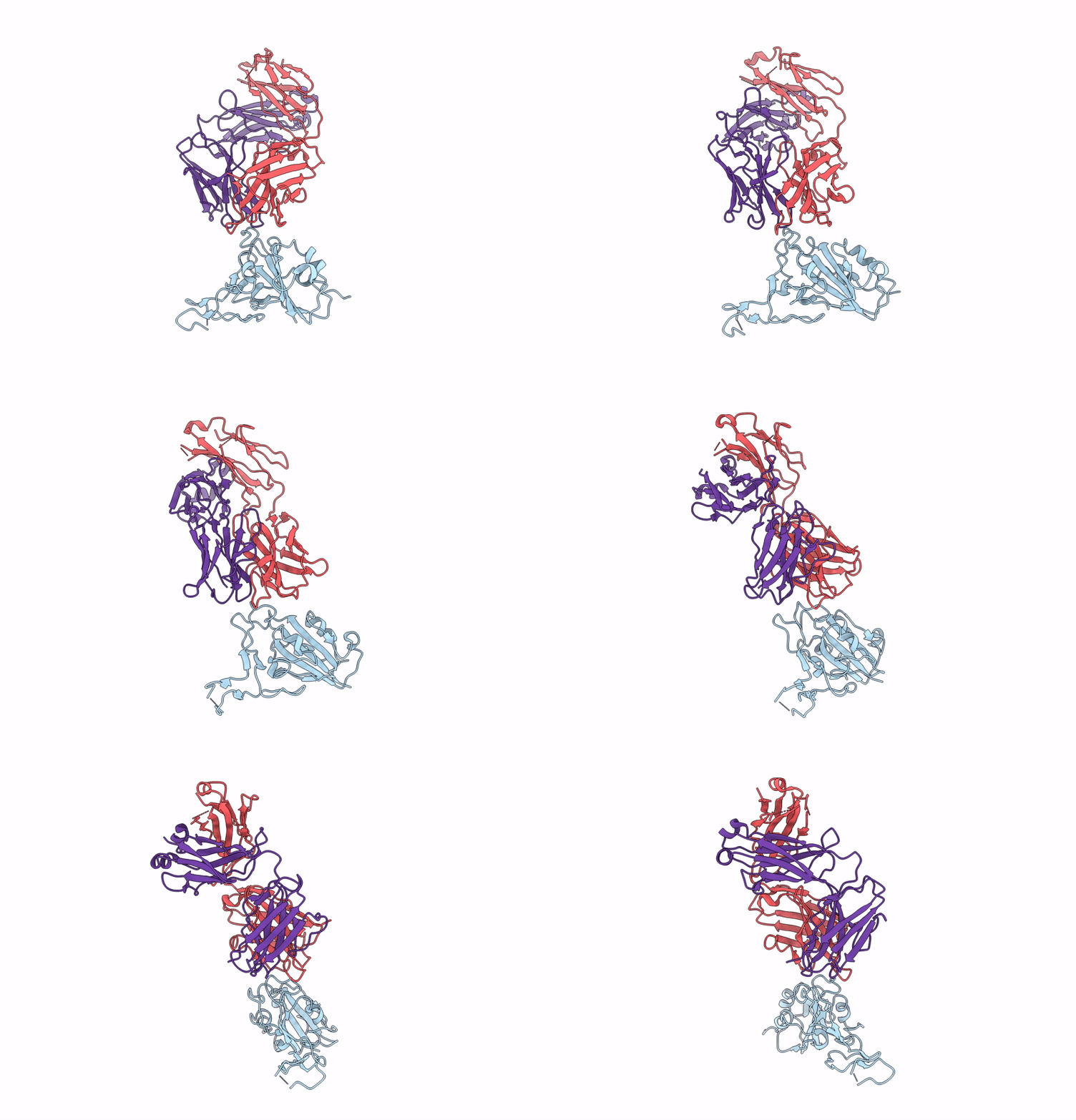
9L05 image
Deposition Date 2024-12-11
Release Date 2025-12-10
Last Version Date 2025-12-10
Entry Detail
PDB ID:
9L05
Title:
The local refined map of SARS-CoV-2 EG.5.1 Variant Spike protein complexed with antibody XGi-198
Biological Source:
Host Organism:
Method Details:
Experimental Method:
Resolution:
3.24 Å
Aggregation State:
PARTICLE
Reconstruction Method:
SINGLE PARTICLE
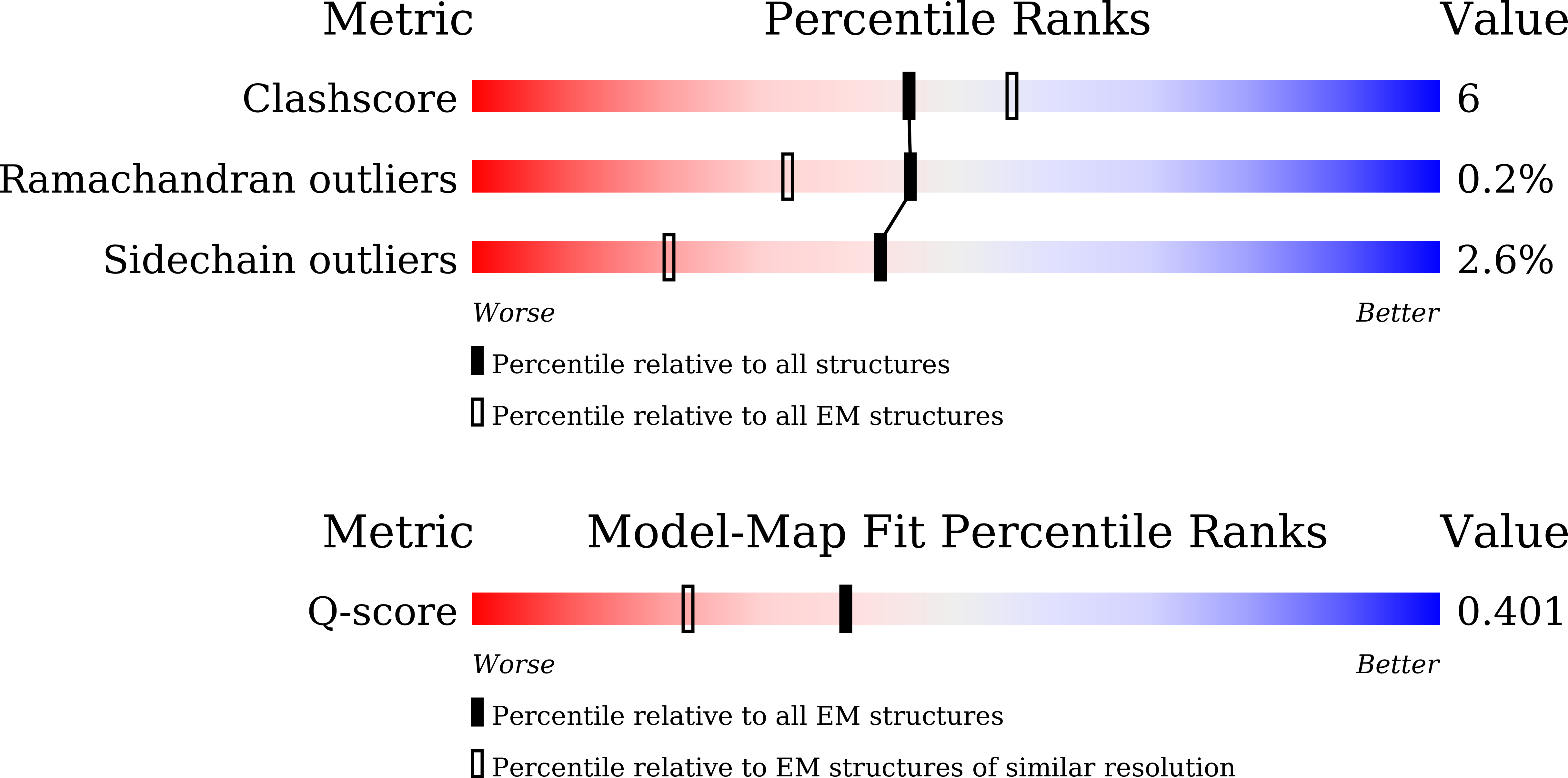
Macromolecular Entities
Structures with similar UniProt ID
Protein Blast
Polymer Type:polypeptide(L)
Molecule:Spike glycoprotein
Gene (Uniprot):S
Chain IDs:C (auth: A)
Chain Length:1295
Number of Molecules:1
Biological Source:Severe acute respiratory syndrome coronavirus 2
Polymer Type:polypeptide(L)
Molecule:XGi-198 heavy chain
Chain IDs:B (auth: H)
Chain Length:453
Number of Molecules:1
Biological Source:Homo sapiens
Polymer Type:polypeptide(L)
Molecule:XGi-198 light chain
Chain IDs:A (auth: L)
Chain Length:217
Number of Molecules:1
Biological Source:Homo sapiens
Ligand Molecules
Primary Citation
Orphan broadly RBD-binding antibodies annotate three remaining conserved RBD epitopes along SARS-CoV-2 evolution.
Nat Commun 16 10566 10566 (2025)
PMID: 41298374 DOI: 10.1038/s41467-025-65596-0

Abstact

The receptor-binding domain (RBD) of the SARS-CoV-2 spike (S) protein continues to evolve, facilitating antibody evasion. It remains unclear whether any conserved RBD epitopes persist across SARS-CoV-2 variants and whether vaccination and/or breakthrough infection (BTI) can elicit antibodies capable of targeting these conserved regions to counter future variants. Here, using a heterogeneous double-bait single B-cell sorting strategy, we identify a subset of antibodies with broad-spectrum RBD binding, including recognition of SARS-CoV-1 and emerging variants such as EG.5.1, BA.2.86, JN.1, and KP.2/3. These broadly binding antibodies (bbAbs) exhibit elevated levels of somatic hypermutation but are infrequently derived from clonally expanded B lymphocytes. Passive transfer of representative bbAbs reduces viral infection in a male hamster model. Structural analyses reveals that these bbAbs primarily target three distinct, highly conserved RBD epitopes, suggesting potential regions of future mutational pressure and highlighting the presence of conserved and immunogenic RBD conformations that may serve as a foundation for the development of broadly protective vaccines.

Legend

Protein

Chemical

Disease

Primary Citation of related structures
Feedback Form
Name
Email
Institute
Feedback