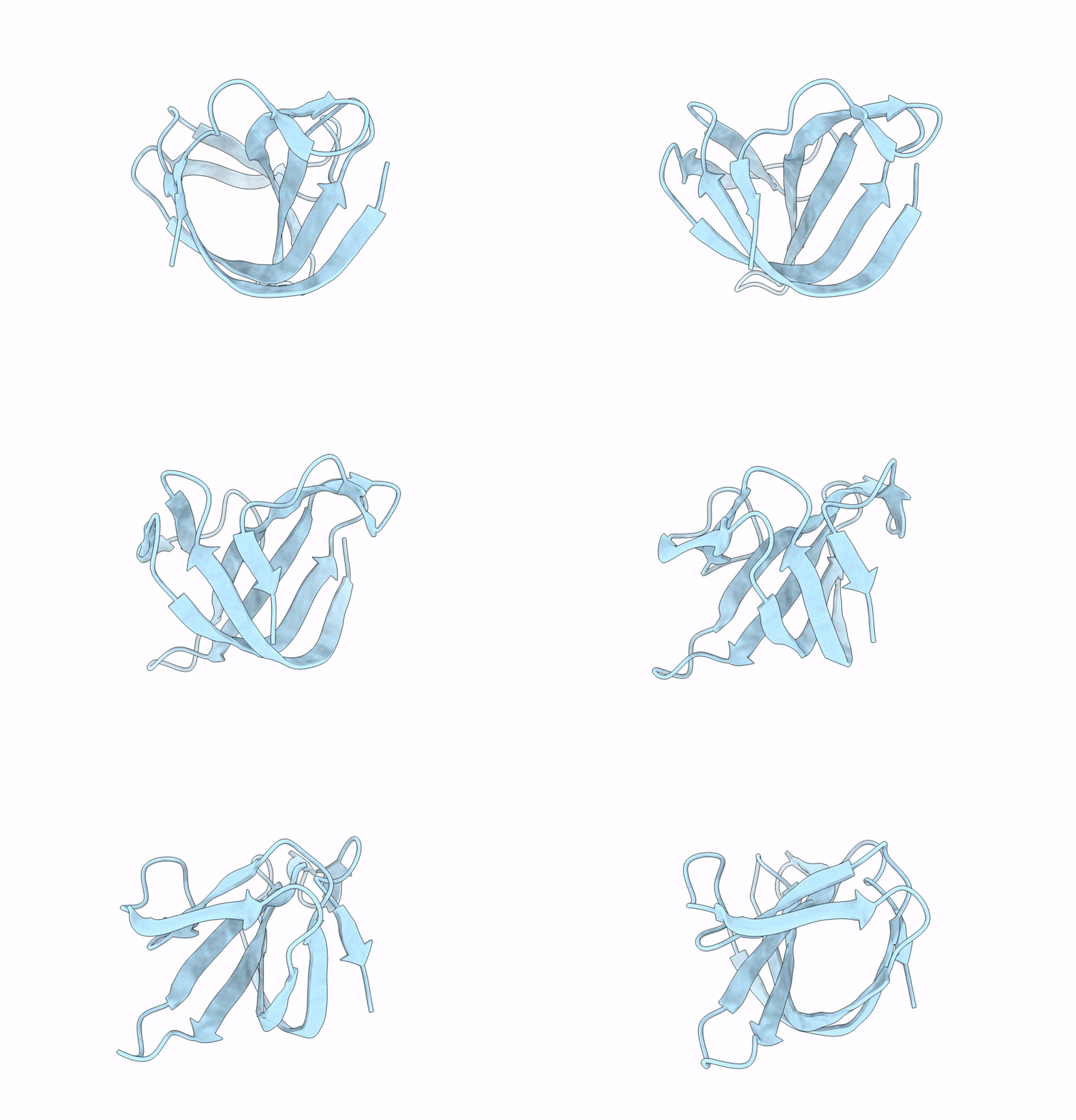
9KZ1 image
Deposition Date 2024-12-09
Release Date 2025-10-22
Last Version Date 2025-10-22
Entry Detail
PDB ID:
9KZ1
Keywords:
Title:
Crystal structure of PlySb from a chimeolysin ClyR
Biological Source:
Source Organism:
Host Organism:
Method Details:
Experimental Method:
Resolution:
1.44 Å
R-Value Free:
0.20
R-Value Work:
0.17
R-Value Observed:
0.17
Space Group:
C 2 2 21
Macromolecular Entities
Polymer Type:polypeptide(L)
Molecule:N-acetylmuramoyl-L-alanine amidase
Chain IDs:A
Chain Length:99
Number of Molecules:1
Biological Source:Streptococcus phage phiLP081102
Primary Citation
Domain Interactions in a Chimeric Dual-domain Lysin Lead to Broad Bactericidal Activity.
J.Mol.Biol. 437 169373 169373 (2025)
PMID: 40769489 DOI: 10.1016/j.jmb.2025.169373

Abstact

Phage-derived lysins represent a novel, non-traditional therapeutic agent against multidrug-resistant bacteria. However, engineering lysins with broad host range remain poorly addressed. Previously, we reported that the chimeric lysin ClyR, which harbors the CHAP catalytic domain of PlyC lysin (PlyCAC) and the SH3b cell-wall binding domain of PlySs2 lysin (PlySb), exhibits an expanded host range. However, the mechanism by which ClyR exhibits expanded bactericidal activity is still not fully understood. Since the structure of PlyCAC is publicly available (PDB code: 4F88), here, we first solve the crystal structure of PlySb using X-ray diffraction, and then use various biophysical methods, such as X-ray diffraction, cross-linking coupled mass spectrometry (CXMS), and small-angle X-ray scattering (SAXS) to analyze the potential full-length structures of ClyR. Our results demonstrate that ClyR exhibits a dynamic conformation supported by multiple inter-domain interactions between the two constituent domains. Mutagenesis and biochemical analysis further support the notion that these inter-domain interactions may modulate the bactericidal activity of ClyR. Altogether, our findings provide novel insights into the action mechanism of ClyR and a better understanding of how inter-domain interactions influence the host range of chimeric lysins.

Legend

Protein

Chemical

Disease

Primary Citation of related structures
Feedback Form
Name
Email
Institute
Feedback