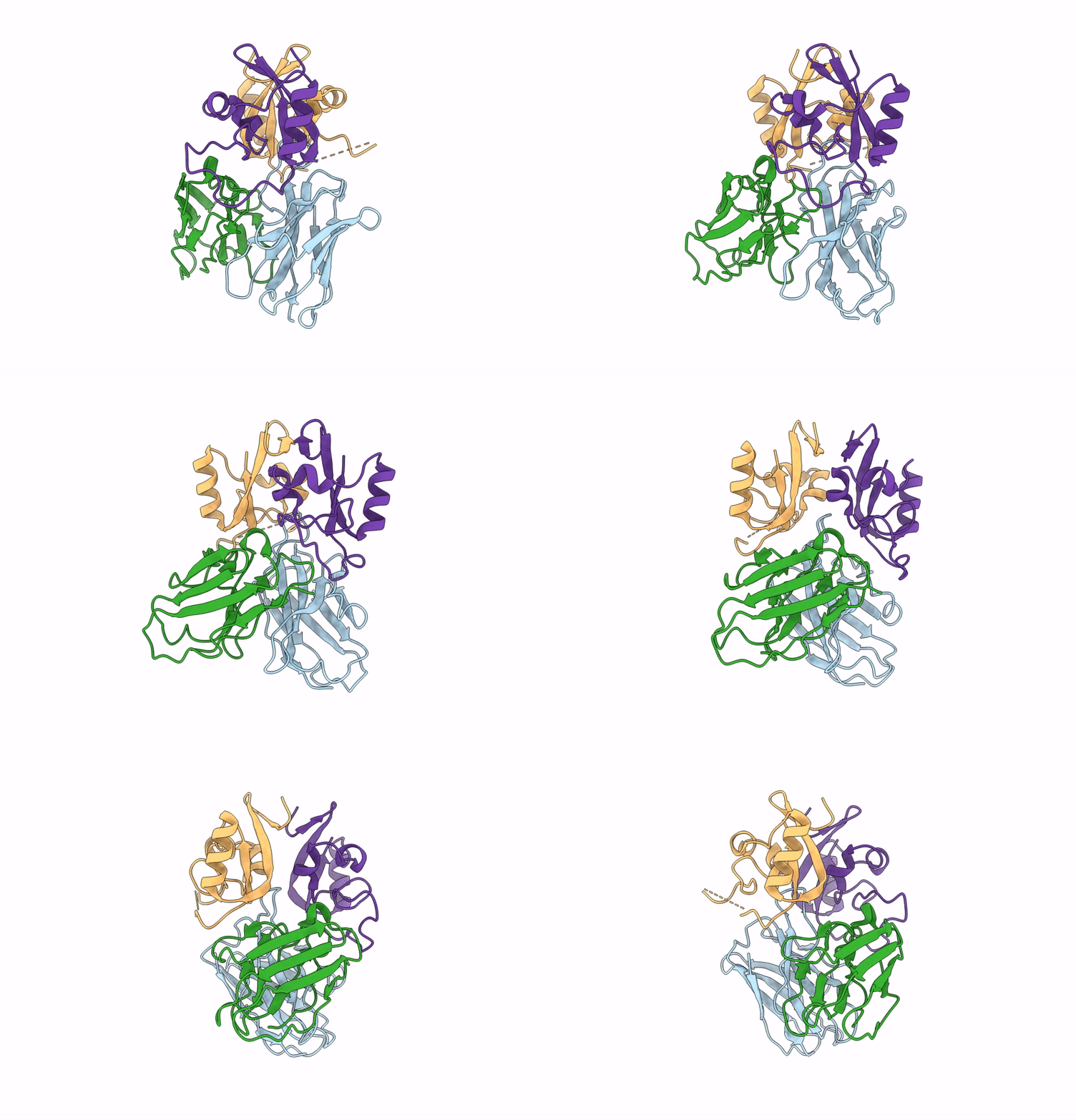
9KYZ image
Deposition Date 2024-12-09
Release Date 2025-08-13
Last Version Date 2025-12-24
Entry Detail
PDB ID:
9KYZ
Title:
A35 of MPXV in complex with mAb975
Biological Source:
Source Organism:
Monkeypox virus (Taxon ID: 10244)
Homo sapiens (Taxon ID: 9606)
Host Organism:
Method Details:
Experimental Method:
Resolution:
3.20 Å
Aggregation State:
PARTICLE
Reconstruction Method:
SINGLE PARTICLE

Macromolecular Entities
Polymer Type:polypeptide(L)
Molecule:mab975HC
Chain IDs:C (auth: A)
Chain Length:121
Number of Molecules:1
Biological Source:Homo sapiens
Polymer Type:polypeptide(L)
Molecule:mab975KC
Chain IDs:D (auth: B)
Chain Length:105
Number of Molecules:1
Biological Source:Homo sapiens
Structures with similar UniProt ID
Protein Blast
Polymer Type:polypeptide(L)
Molecule:Protein OPG161
Gene (Uniprot):OPG161
Chain IDs:A (auth: C), B (auth: D)
Chain Length:82
Number of Molecules:2
Biological Source:Monkeypox virus
Ligand Molecules
Primary Citation
Structurally conserved human anti-A35 antibodies protect mice and macaques from mpox virus infection.
Cell 188 6253 6265.e14 (2025)
PMID: 40865530 DOI: 10.1016/j.cell.2025.08.005

Abstact

The A35 protein, expressed on the enveloped virion of monkeypox (mpox) virus (MPXV), is essential for viral infection and spread within the host, making it an effective antiviral target. In this study, we demonstrated two human anti-A35 monoclonal antibodies (mAbs) displayed potential protection against MPXV in CAST/EiJ mice and rhesus macaques. Using cryo-electron microscopy, we determined two high-resolution structures of the A35 dimer in complex with the fragment of antigen binding of mAb 975 or mAb 981, revealing detailed interactions at the antigen-antibody interfaces. Structural analysis showed that these structurally conserved mAbs bind to a groove region at the interface of A35 dimer. Overall, we provided a proof of concept for a single administration of anti-A35 mAbs mitigating the pathogenic effects of MPXV infection in rhesus macaques. These human-derived mAbs could be served as antibody drug candidates, and their binding models to the A35 dimer will provide valuable insights for future vaccine design.

Legend

Protein

Chemical

Disease

Primary Citation of related structures
Feedback Form
Name
Email
Institute
Feedback