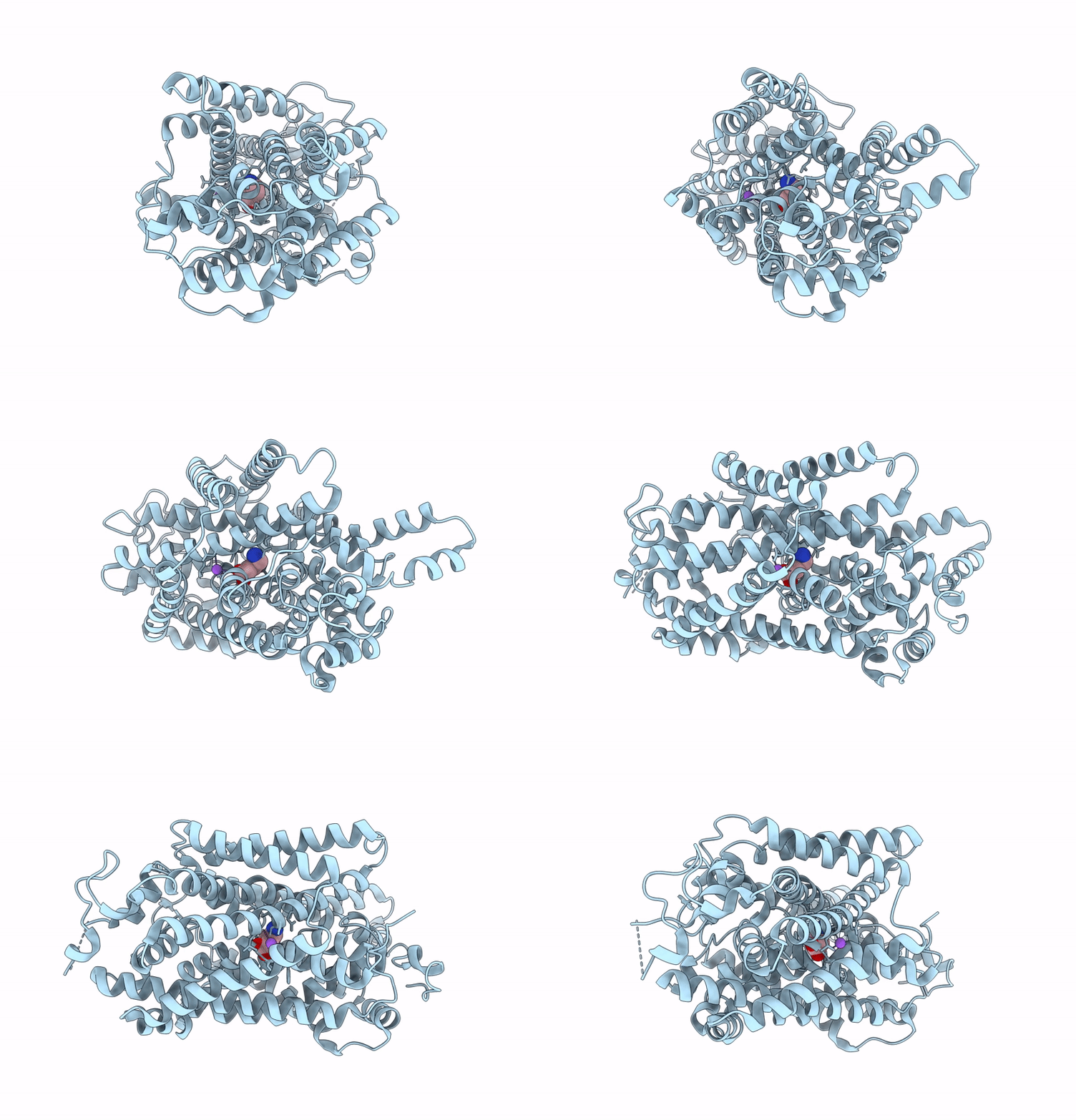
9KTV image
Deposition Date 2024-12-03
Release Date 2025-12-03
Last Version Date 2025-12-03
Entry Detail
PDB ID:
9KTV
Title:
Structure of TauT in complex with GABA
Biological Source:
Source Organism:
Homo sapiens (Taxon ID: 9606)
Host Organism:
Method Details:
Experimental Method:
Resolution:
3.00 Å
Aggregation State:
PARTICLE
Reconstruction Method:
SINGLE PARTICLE
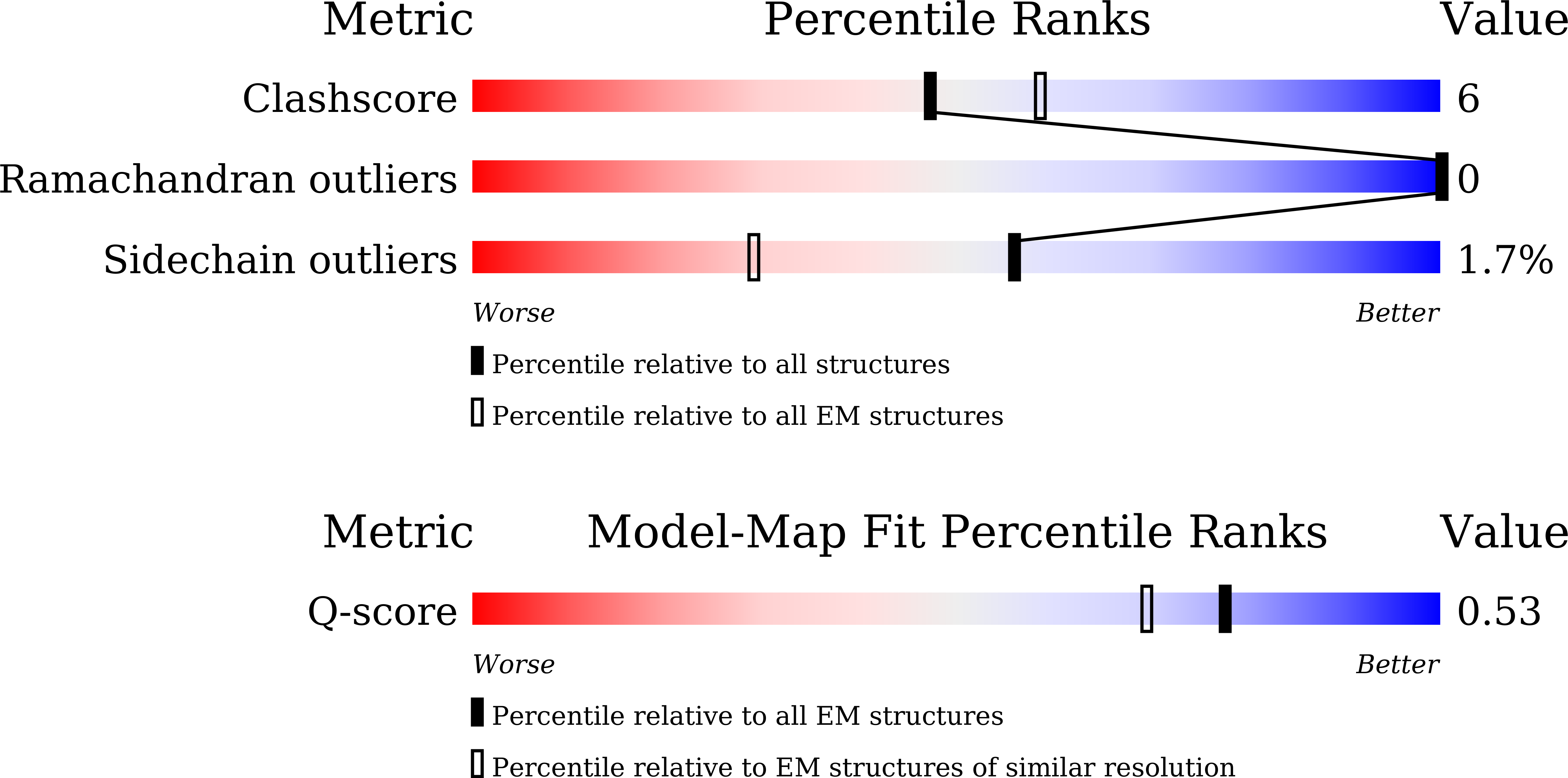
Macromolecular Entities
Structures with similar UniProt ID
Protein Blast
Polymer Type:polypeptide(L)
Molecule:Sodium- and chloride-dependent taurine transporter
Gene (Uniprot):SLC6A6
Chain IDs:A
Chain Length:620
Number of Molecules:1
Biological Source:Homo sapiens
Primary Citation
Structural determination of the human taurine transporter TauT reveals the mechanism of substrate and inhibitor recognition.
Cell Rep 44 116591 116591 (2025)
PMID: 41269860 DOI: 10.1016/j.celrep.2025.116591

Abstact

Taurine, a sulfur-containing amino acid, is vital for human health because of its antioxidant, anti-inflammatory, and osmoregulatory properties. Its homeostasis is maintained by the Na+/Cl--dependent taurine transporter (TauT). Here, we present five atomic structures of human TauT: apo, taurine bound, and complexes with three taurine-mimetic inhibitors, including β-alanine, γ-aminobutyric acid (GABA), and guanidinoethyl sulfonate (GES). The structures of taurine-, β-alanine-, and GABA-bound human TauT (hTauT) in complex with NaCl adopt an occluded conformation, with ligands binding in a central pocket. With KCl, GES-bound hTauT adopts an inward-facing conformation, with two GES positioned along the substrate translocation pathway in a bipartite manner: one in the deep central cavity and the other precluding structural transition to the occluded state. The radioactive taurine uptake analyses clearly demonstrate the impact of residues on taurine recognition and inhibitor selection. These structures provide insights into the overall architecture, substrate coordination, and inhibitor recognition mechanism of TauT.

Legend

Protein

Chemical

Disease

Primary Citation of related structures
Feedback Form
Name
Email
Institute
Feedback