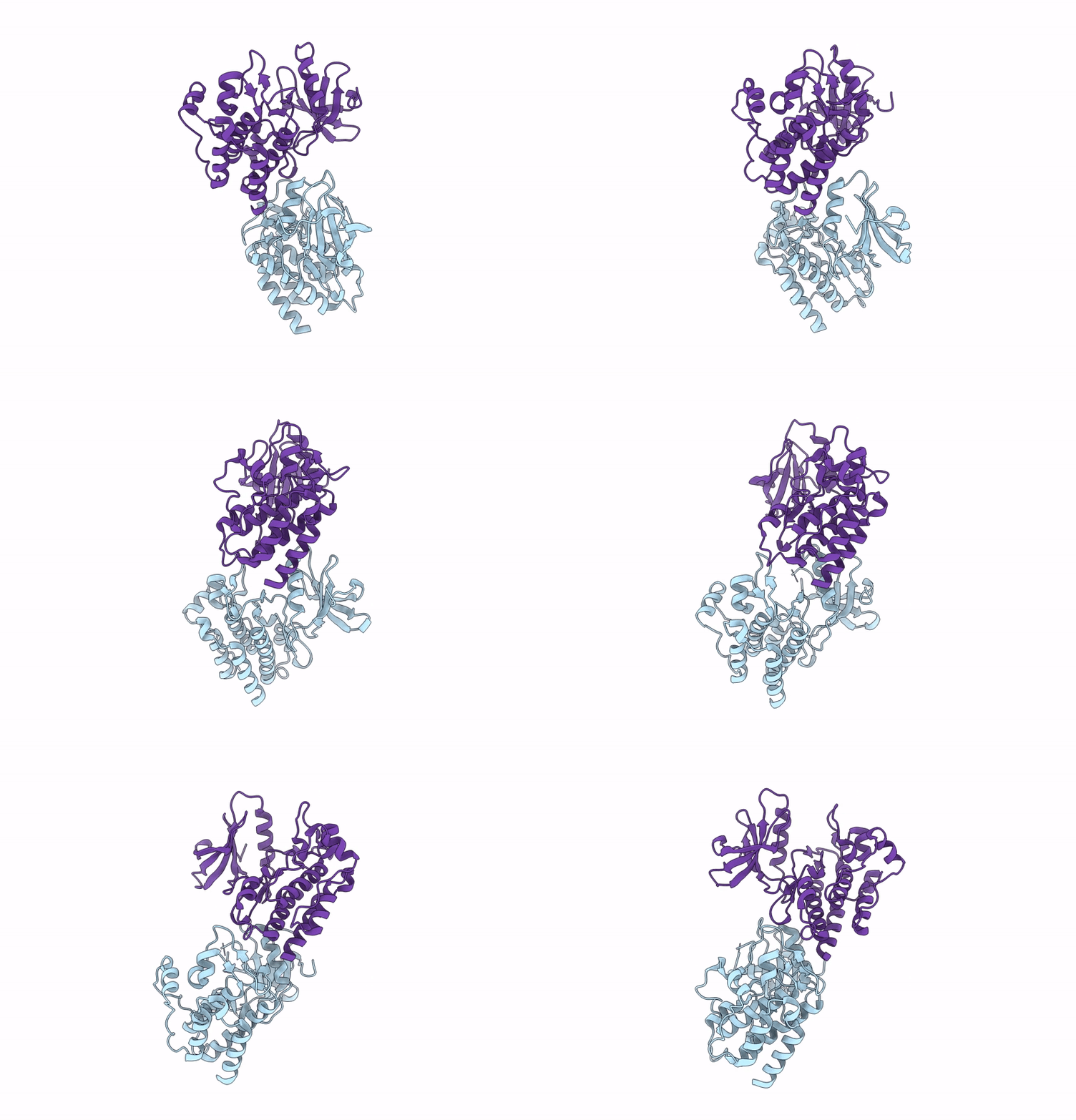
9KS5 image
Deposition Date 2024-11-29
Release Date 2025-12-03
Last Version Date 2025-12-24
Entry Detail
PDB ID:
9KS5
Title:
The crystal structure of ABL1 in complex with K-CNBA-1
Biological Source:
Source Organism(s):
Homo sapiens (Taxon ID: 9606)
Expression System(s):
Method Details:
Experimental Method:
Resolution:
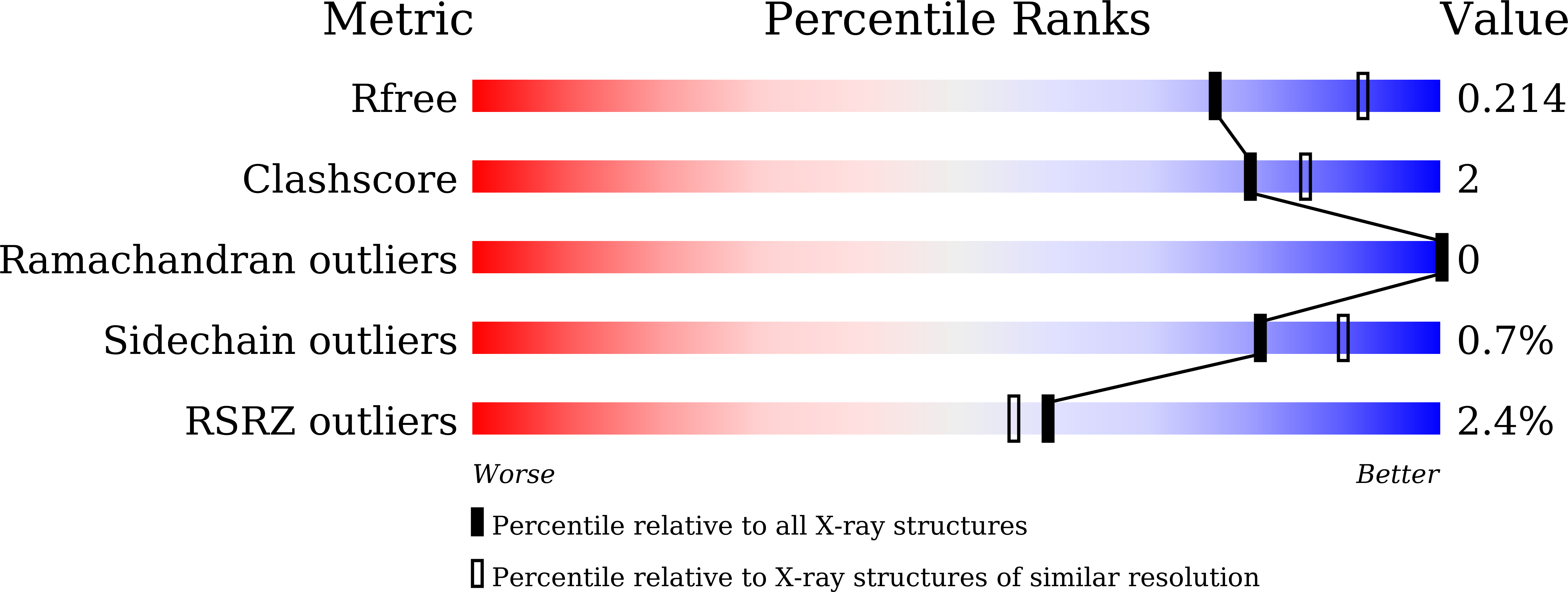
2.20 Å
R-Value Free:
0.21
R-Value Work:
0.17
R-Value Observed:
0.17
Space Group:
P 21 21 2
Macromolecular Entities
Structures with similar UniProt ID
Protein Blast
Polymer Type:polypeptide(L)
Molecule:Tyrosine-protein kinase ABL1
Gene (Uniprot):ABL1
Chain IDs:A, B
Chain Length:272
Number of Molecules:2
Biological Source:Homo sapiens
Modified Residue
Compound ID Chain ID Parent Comp ID Details 2D Image
A1EG1 A LYS modified residue
PTR A TYR modified residue
Primary Citation
O -Cyanobenzaldehydes Irreversibly Modify Both Buried and Exposed Lysine Residues in Live Cells.
J.Am.Chem.Soc. 147 11955 11963 (2025)
PMID: 40150802 DOI: 10.1021/jacs.4c18006

Abstact

Lysine residue represents an attractive site for covalent drug development due to its high abundance (5.6%) and critical functions. However, very few lysines have been characterized to be accessible to covalent ligands and perturb the protein functions, owing to their protonation state and adjacent steric hindrance. Herein, we report a new lysine bioconjugation chemistry, O-cyanobenzaldehyde (CNBA), that enables selective modification of the lysine ε-amine to form iso-indolinones under physiological conditions. Activity-based proteome profiling enabled the mapping of 3451 lysine residues and 85 endogenous kinases in live cells, highlighting its potential for modifying hyper-reactive lysines within the proteome or buried catalytic lysines within the kinome. Further protein crystallography and mass spectrometry confirmed that K271_ABL1 and K162_AURKA are covalently targetable sites in kinases. Leveraging a structure-based drug design, we incorporated CNBA into the core structure of Nutlin-3 to irreversibly inhibit the MDM2-p53 interaction by targeting an exposed lysine K94 on the surface of murine double minute 2. Importantly, we have demonstrated the potential application of CNBA as a lysine-recognized bioconjugation agent for developing new antibody-drug conjugates. The results collectively validate CNBA as a new selective and efficient modifying agent with broad applications for both buried and exposed lysine residues in live cells.

Legend

Protein

Chemical

Disease

Primary Citation of related structures
Feedback Form
Name
Email
Institute
Feedback