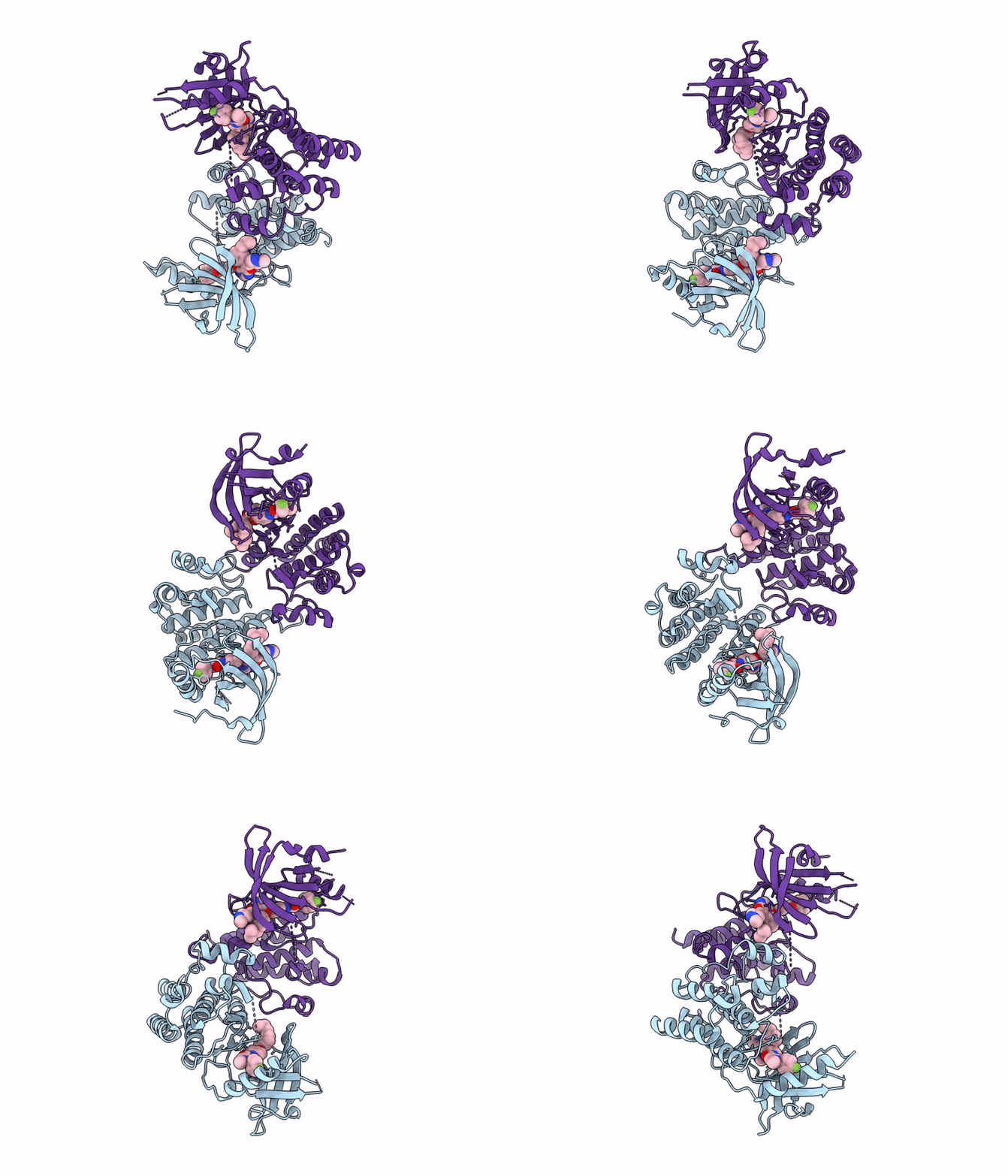
9KRZ image
Deposition Date 2024-11-29
Release Date 2025-10-08
Last Version Date 2025-10-08
Entry Detail
PDB ID:
9KRZ
Keywords:
Title:
Crystal structure Of MerTK kinase domain in complex with compound 11
Biological Source:
Source Organism:
Homo sapiens (Taxon ID: 9606)
Method Details:
Experimental Method:
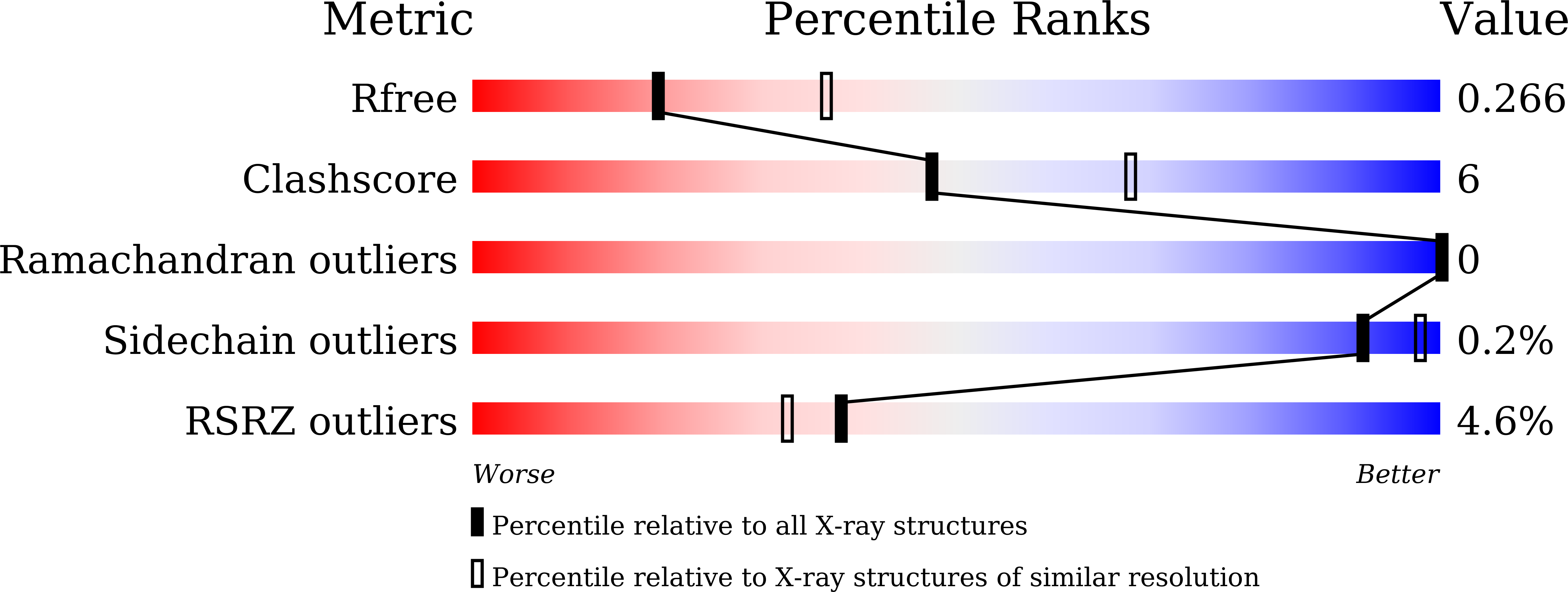
Resolution:
2.60 Å
R-Value Free:
0.26
R-Value Work:
0.22
R-Value Observed:
0.22
Space Group:
P 1 21 1
Macromolecular Entities
Structures with similar UniProt ID
Protein Blast
Polymer Type:polypeptide(L)
Molecule:Tyrosine-protein kinase Mer
Gene (Uniprot):MERTK
Chain IDs:A, B
Chain Length:294
Number of Molecules:2
Biological Source:Homo sapiens
Ligand Molecules
Primary Citation
Structure-Based Design of Potent and Selective MerTK Inhibitors by Modulating the Conformation of alpha C Helix.
J.Med.Chem. 68 10877 10896 (2025)
PMID: 40391976 DOI: 10.1021/acs.jmedchem.4c03092

Abstact

Tumor-associated macrophages play an important role in cancer progression and immunosuppression, making their receptors promising therapeutic targets. MerTK, a TAM receptor, regulates macrophage efferocytosis and polarization, and its inhibition holds potential for tumor growth suppression and immune modulation. However, Tyro3, another TAM receptor, is involved in neurogenesis, highlighting the need to selectively target MerTK while avoiding Tyro3 inhibition to prevent neurotoxicity. In this study, we present a novel strategy for designing MerTK-selective inhibitors by modulating the conformational dynamics of its αC helix. By integrating structural biology, medicinal chemistry, protein stabilization assays, and molecular docking studies, we identified compound 11, which demonstrates potent inhibition and selectivity for MerTK. Pharmacokinetic evaluations and in vivo studies further reveal compound 11 as a promising candidate for further development. Our findings not only advance the understanding of the MerTK-specific mechanism but also propose a strategy for designing selective kinase inhibitors targeting the αC helix conformation.

Legend

Protein

Chemical

Disease

Primary Citation of related structures
Feedback Form
Name
Email
Institute
Feedback