Planned Maintenance: Some services may turn out to be unavailable from 15th January, 2026 to 16th January, 2026. We apologize for the inconvenience!

9KPR image
Deposition Date 2024-11-24
Release Date 2025-11-26
Last Version Date 2026-01-14
Entry Detail
PDB ID:
9KPR
Keywords:
Title:
Crystal structure of a allulose transcriptional regulator from Agrobacterium fabrum
Biological Source:
Source Organism(s):
Method Details:
Experimental Method:
Resolution:
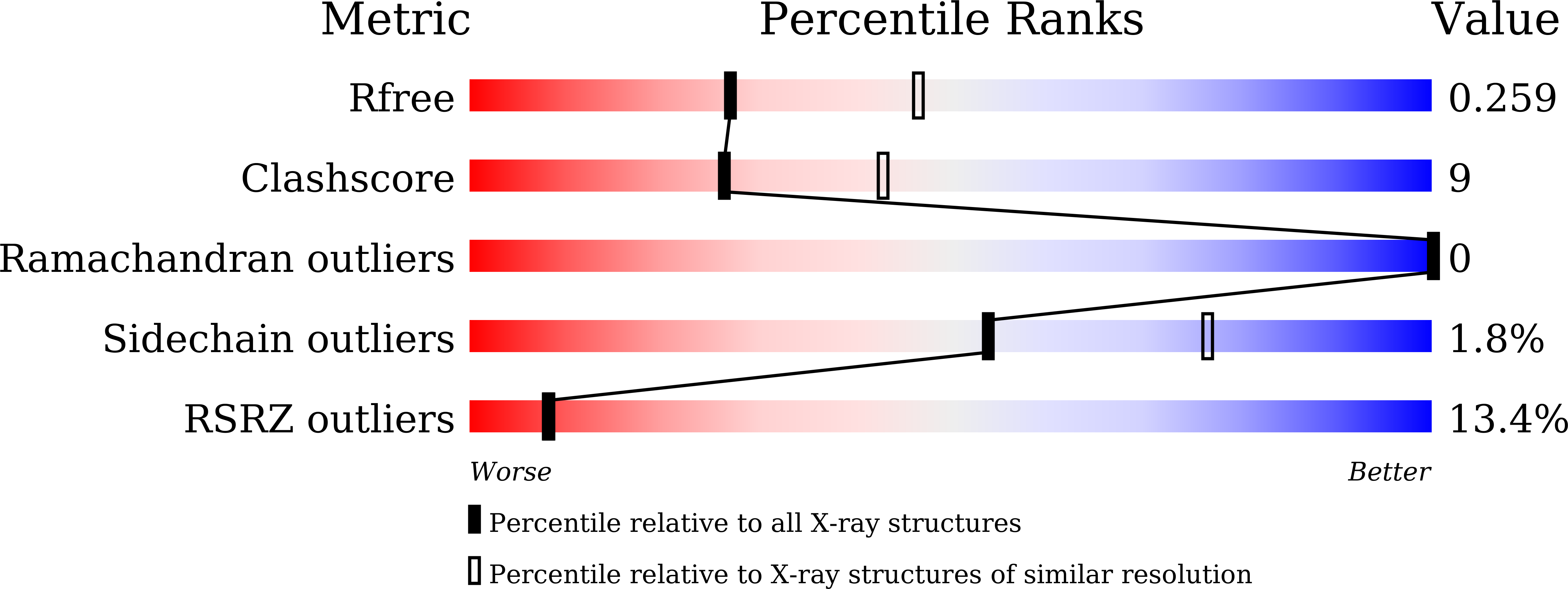
2.53 Å
R-Value Free:
0.26
R-Value Work:
0.23
Space Group:
P 41 21 2
Macromolecular Entities
Structures with similar UniProt ID
Protein Blast
Polymer Type:polypeptide(L)
Molecule:Transcriptional regulator, LacI family
Gene (Uniprot):Atu4743
Chain IDs:A, B
Chain Length:359
Number of Molecules:2
Biological Source:Agrobacterium fabrum str. C58
Ligand Molecules
Primary Citation
Computational design of allulose-responsive biosensor toolbox for auto-inducible protein expression and CRISPRi mediated dynamic metabolic regulation.
Nat Commun 16 11562 11562 (2025)
PMID: 41430049 DOI: 10.1038/s41467-025-67669-6

Abstact

Biosensors based on transcription factors (TFs) have shown extensive applications in synthetic biology. Due to the complex multi-domain structure of effector-TF-DNA, computational design of TFs remains a challenge. Here, we present the successful structure-guided computational design of the access tunnel, ligand binding, allosteric transition process for an allulose-responsive PsiR. It enables a 20-fold increase in sensitivity, reducing the EC50 of PsiR-allulose biosensors (PABs) from 16 mM to 0.8 mM, and delivers a PAB box possessing the detection range from 10 μM to 100 mM. We further validate its broader applicability in enhancing sensitivity of LacI-IPTG biosensor. Based on the developed PABs, we present the inducer-free allulose-mediated auto-inducible protein expression system, and demonstrate an allulose-triggered CRISPR interference circuit for dynamic metabolic regulation. It facilitates a 68% increase in allulose titer and achieves a high yield of 0.43 g/g glucose. This work provides the versatile TF toolbox for developing allulose-triggered regulation circuits in biotechnology application.

Legend

Protein

Chemical

Disease

Primary Citation of related structures
Feedback Form
Name
Email
Institute
Feedback