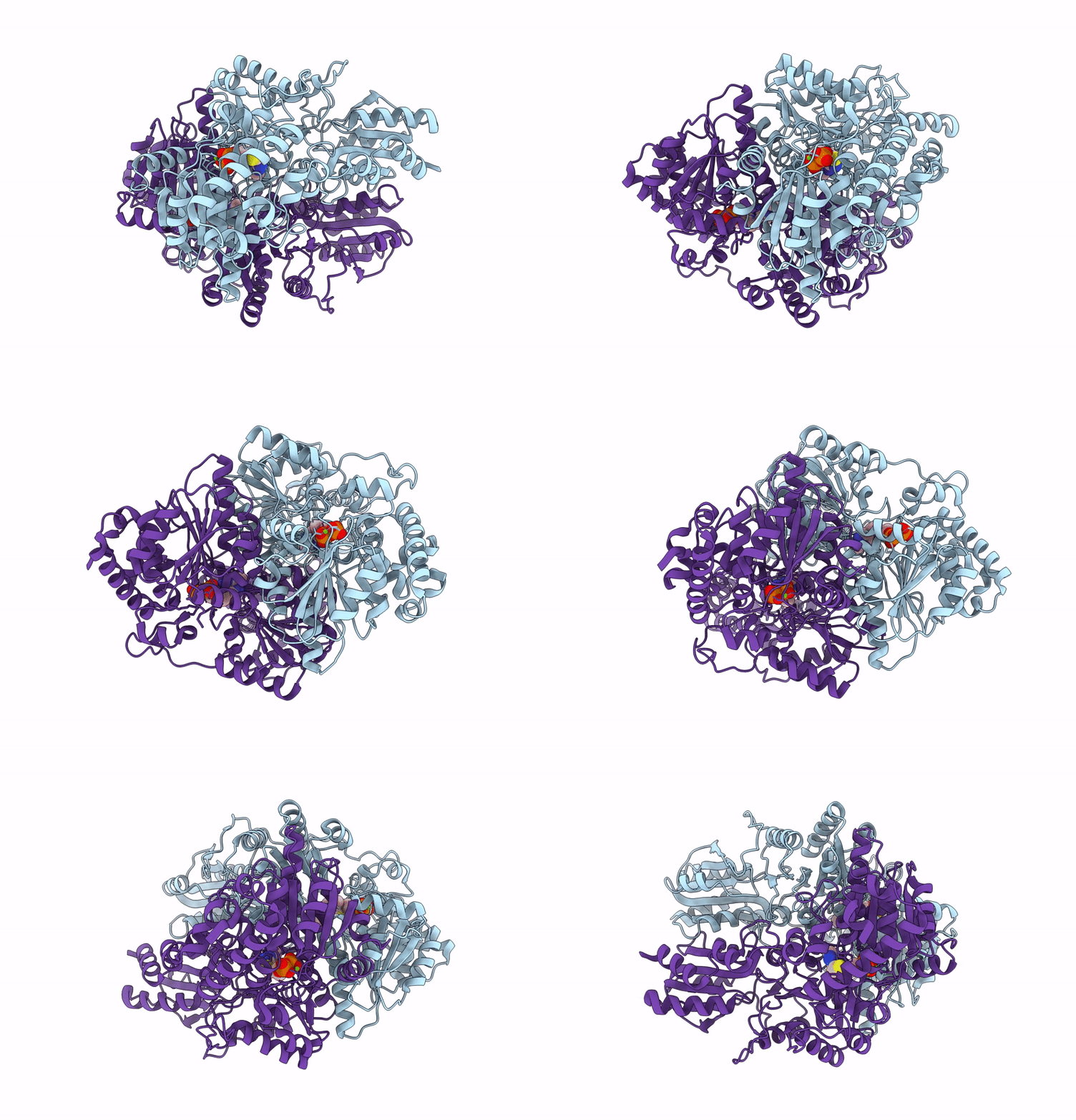
9KPQ image
Deposition Date 2024-11-23
Release Date 2025-08-20
Last Version Date 2025-11-05
Entry Detail
PDB ID:
9KPQ
Title:
A ThDP-dependent enzyme belonging to the 1-deoxy-D-xylulose-5-phosphate synthase (DXPS)-like subfamily
Biological Source:
Source Organism:
Method Details:
Experimental Method:
Resolution:
2.42 Å
R-Value Free:
0.25
R-Value Work:
0.19
R-Value Observed:
0.19
Space Group:
C 1 2 1

Macromolecular Entities
Structures with similar UniProt ID
Protein Blast
Polymer Type:polypeptide(L)
Molecule:1-deoxy-D-xylulose-5-phosphate synthase
Gene (Uniprot):PQ628_06020
Chain IDs:A, B
Chain Length:588
Number of Molecules:2
Biological Source:Bacteroides ovatus
Primary Citation

Abstact

The modifications of bile acids (BAs) are fundamental to their role in host physiology and pathology. Identifying their synthetases is crucial for uncovering the diversity of BAs and developing targeted interventions, yet it remains a significant challenge. To address this hurdle, we developed an artificial intelligence (AI)-assisted workflow, bile acid enzyme announcer unit tool (BEAUT), which predicted over 600,000 candidate BA metabolic enzymes that we compiled into the human generalized microbial BA metabolic enzyme (HGBME) database (https://beaut.bjmu.edu.cn). We identified a series of uncharacterized BA enzymes, including monoacid acylated BA hydrolase (MABH) and 3-acetoDCA synthetase (ADS). Notably, ADS can produce an unreported skeleton BA, 3-acetoDCA, with a carbon-carbon bond extension. After determining its bacterial source and catalytic mechanism, we found that 3-acetoDCA is widely distributed among populations and regulates the microbial interactions in the gut. In conclusion, our work offers alternative insights into the relationship between microbial BAs and the host from an enzymatic perspective.

Legend

Protein

Chemical

Disease

Primary Citation of related structures
Feedback Form
Name
Email
Institute
Feedback