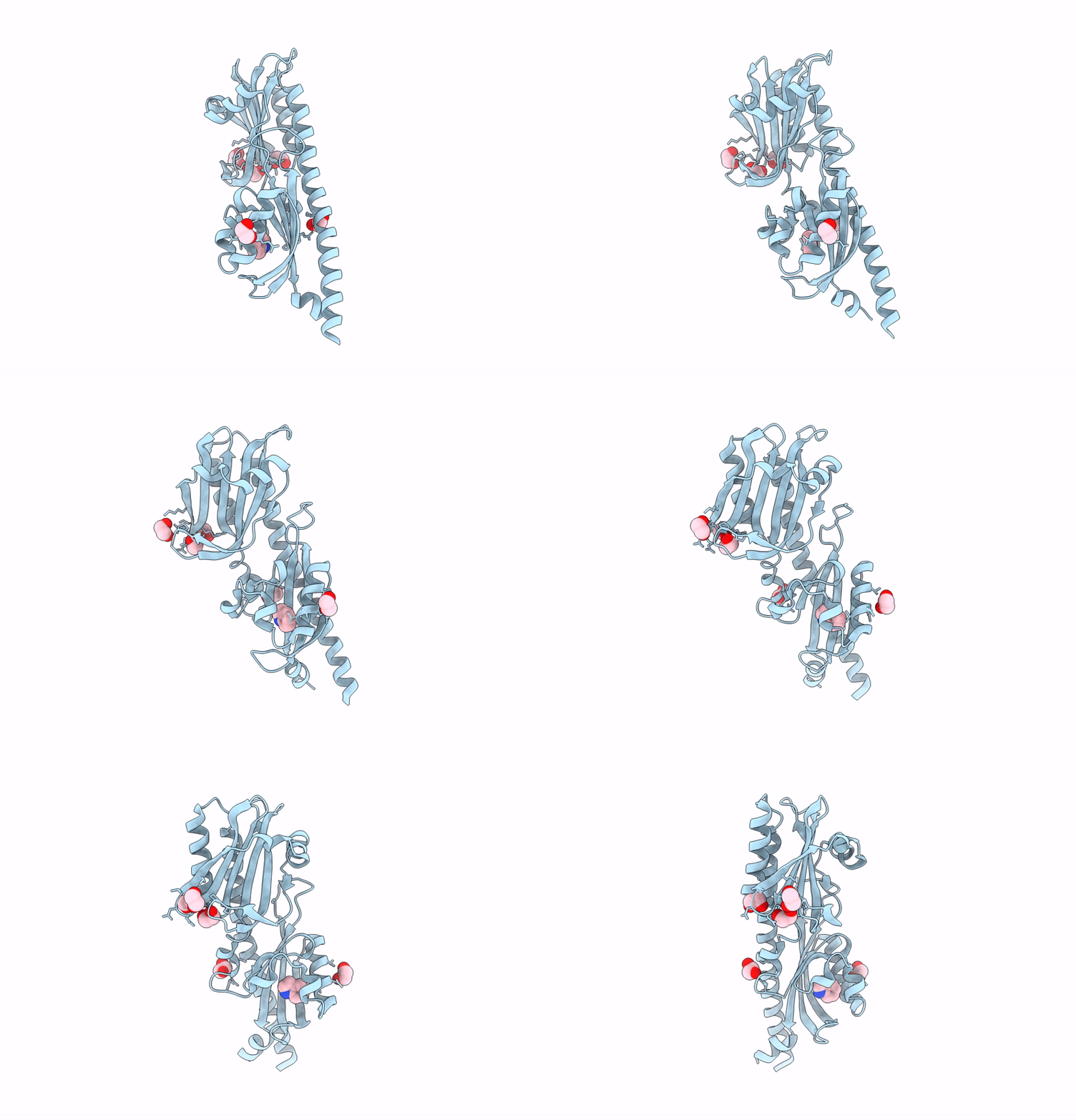
9KPJ image
Deposition Date 2024-11-22
Release Date 2025-10-22
Last Version Date 2025-11-05
Entry Detail
PDB ID:
9KPJ
Title:
Crystal structure of Helicobacter pylori chemoreceptor TlpA ligand-binding domain in complex with indole
Biological Source:
Source Organism:
Host Organism:
Method Details:
Experimental Method:
Resolution:
2.01 Å
R-Value Free:
0.22
R-Value Work:
0.17
R-Value Observed:
0.17
Space Group:
C 2 2 21

Macromolecular Entities
Polymer Type:polypeptide(L)
Molecule:Methyl-accepting chemotaxis protein TlpA
Chain IDs:A
Chain Length:293
Number of Molecules:1
Biological Source:Helicobacter pylori PMSS1
Primary Citation
Discovery of an indole-sensing chemoreceptor in Helicobacter pylori.
Curr.Biol. 35 5018 ? (2025)
PMID: 41033314 DOI: 10.1016/j.cub.2025.09.021

Abstact

Indole has recently been recognized as a ubiquitous interspecies and interkingdom signaling molecule. However, the mechanisms underlying indole sensing in prokaryotes remain largely uncharacterized, and direct binding of indole to bacterial extracellular sensors has not been demonstrated. In this study, we show that the Helicobacter pylori chemoreceptor TlpA, which plays an important role in the host colonization by this gastric pathogen, binds indole and several related compounds, including menadione, through its dCache sensory domain. This binding occurs in the physiological range of indole concentrations and elicits a repellent response. The repellent response to indole mediated by the sensory domain of TlpA was also observed for the chimeric TlpA-Tar receptor in Escherichia coli. While ligands typically bind to the membrane-distal pocket of dCache domains, our structural and biochemical analyses demonstrate that indole binds to the membrane-proximal pocket of TlpA dCache. The TlpA-mediated negative chemotaxis of H. pylori correlates with the inhibitory effects of indole on bacterial growth and biofilm formation. The dCache domain of TlpA thus represents a new high-affinity sensory module for indole and related compounds that may be widespread in bacteria and play an important role in the physiology and pathogenicity of H. pylori.

Legend

Protein

Chemical

Disease

Primary Citation of related structures
Feedback Form
Name
Email
Institute
Feedback