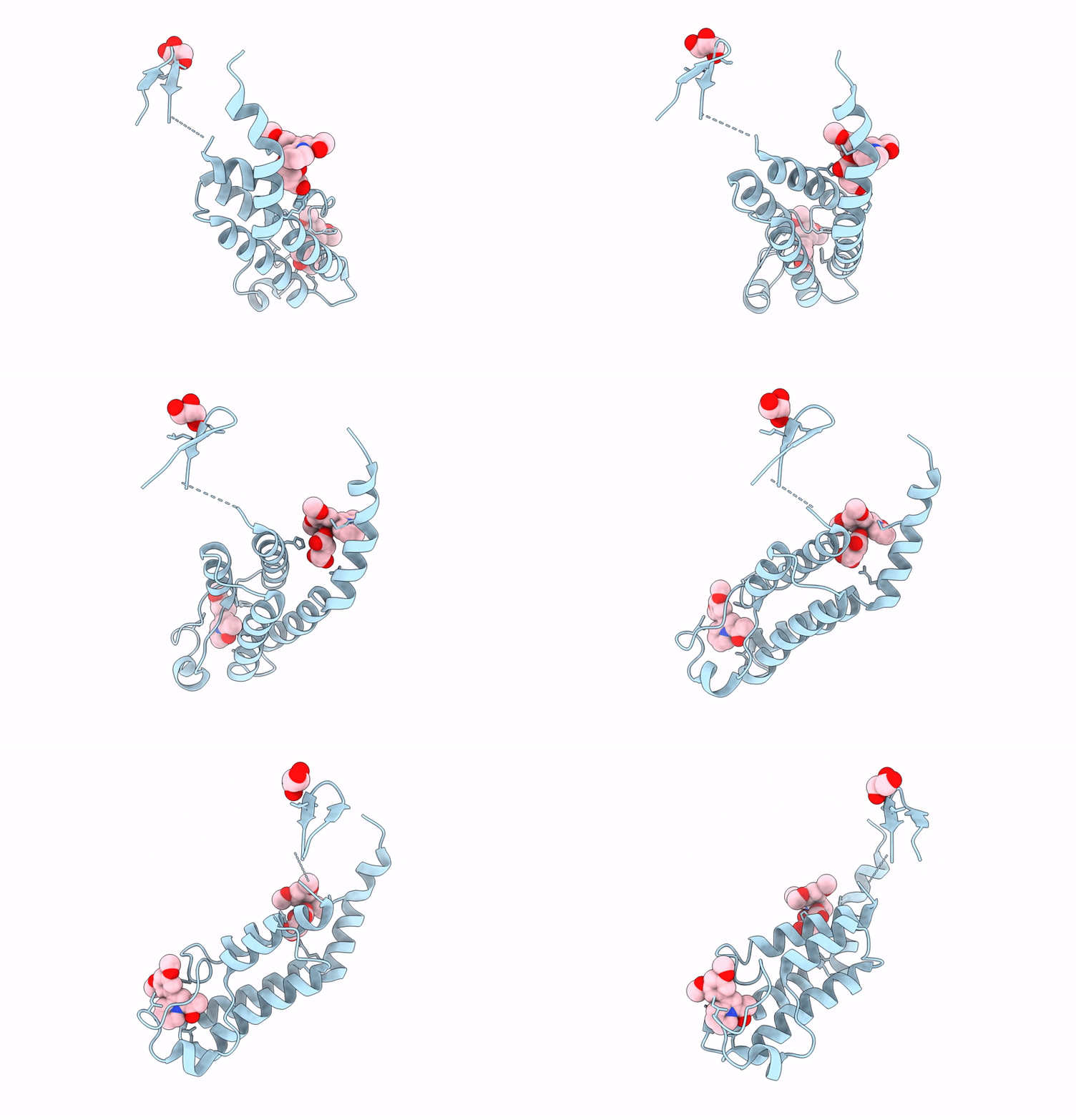
9KLA image
Deposition Date 2024-11-14
Release Date 2025-11-05
Last Version Date 2026-01-14
Entry Detail
PDB ID:
9KLA
Keywords:
Title:
Crystal Structure of the bromodomain of human BRD9 in complex with the inhibitor Y22024
Biological Source:
Source Organism(s):
Homo sapiens (Taxon ID: 9606)
Expression System(s):
Method Details:
Experimental Method:
Resolution:
1.78 Å
R-Value Free:
0.23
R-Value Work:
0.19
R-Value Observed:
0.19
Space Group:
P 31 2 1
Macromolecular Entities
Structures with similar UniProt ID
Protein Blast
Polymer Type:polypeptide(L)
Molecule:Bromodomain-containing protein 9
Gene (Uniprot):BRD9
Chain IDs:A
Chain Length:149
Number of Molecules:1
Biological Source:Homo sapiens
Primary Citation
Key imidazolyl groups that induce phenylalanine flipping enhance the efficacy of oral BRD9 inhibitors for AML treatment.
Acta Pharm Sin B 15 6546 6570 (2025)
PMID: 41477332 DOI: 10.1016/j.apsb.2025.08.006

Abstact

The bromodomain-containing protein 9 (BRD9) is a core subunit of mammalian SWI/SNF chromatin remodeling complex termed ncBAF. BRD9 has emerged as a potential target for anticancer drugs, particularly in the treatment of acute myeloid leukemia (AML). Herein, we reported 10m (Y22073) and 10t as new BRD9 selective bromodomain inhibitors. Crystallographic studies revealed that the key active imidazolyl group discovered from structure-activity relationship (SAR) can induce Phe163 flipping and significantly enhance the cellular potency of the compounds, making 10m the first BRD9 selective inhibitor with significant cellular activity against AML cells. We also validated the critical role of imidazolyl groups by modifying existing BRD9 inhibitors. The representative compounds 10m and 10t demonstrated potent binding affinity, outstanding selectivity toward BRD9 bromodomain, and significantly inhibited the proliferation of AML cell lines. 10m also showed good metabolic stability, solubility and pharmacokinetic properties. Additionally, oral administration of compounds 10m and 10t exhibited potent anti-tumor efficacy in the MV4-11 xenograft mouse model. The potent, selective, and orally available BRD9 bromodomain inhibitors may address the challenges of weak cellular activity and limited phenotypic efficacy faced by BRD9 inhibitors, and serve as new lead compounds for the development of anticancer agents for the treatment of AML.

Legend

Protein

Chemical

Disease

Primary Citation of related structures
Feedback Form
Name
Email
Institute
Feedback