Planned Maintenance: Some services may turn out to be unavailable from 15th January, 2026 to 16th January, 2026. We apologize for the inconvenience!

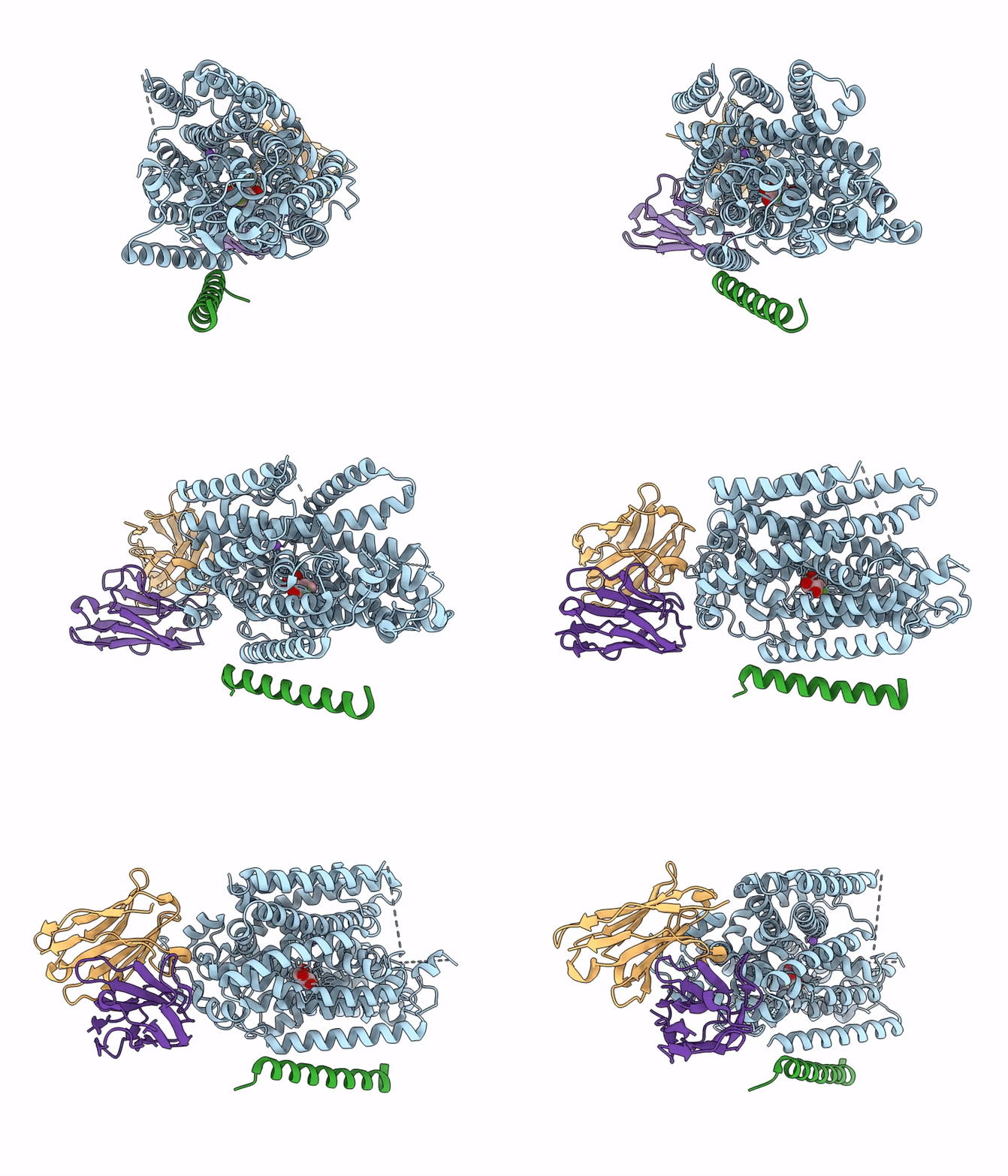
9KKQ image
Deposition Date 2024-11-14
Release Date 2025-09-03
Last Version Date 2025-10-15
Entry Detail
PDB ID:
9KKQ
Title:
Structure of hSGLT2-MAP17 complex in the substrate-bound occluded conformation
Biological Source:
Source Organism(s):
Homo sapiens (Taxon ID: 9606)
Mus musculus (Taxon ID: 10090)
Expression System(s):
Method Details:
Experimental Method:
Resolution:
2.60 Å
Aggregation State:
PARTICLE
Reconstruction Method:
SINGLE PARTICLE
Macromolecular Entities
Structures with similar UniProt ID
Protein Blast
Polymer Type:polypeptide(L)
Molecule:Sodium/glucose cotransporter 2
Gene (Uniprot):SLC5A2
Chain IDs:A
Chain Length:672
Number of Molecules:1
Biological Source:Homo sapiens
Structures with similar UniProt ID
Protein Blast
Polymer Type:polypeptide(L)
Molecule:PDZK1-interacting protein 1
Gene (Uniprot):PDZK1IP1
Chain IDs:B
Chain Length:114
Number of Molecules:1
Biological Source:Homo sapiens
Polymer Type:polypeptide(L)
Molecule:mFab90-H
Chain IDs:C (auth: H)
Chain Length:117
Number of Molecules:1
Biological Source:Mus musculus
Polymer Type:polypeptide(L)
Molecule:mFab90-L
Chain IDs:D (auth: L)
Chain Length:106
Number of Molecules:1
Biological Source:Mus musculus
Primary Citation
Mechanism of substrate recognition and release of human SGLT2.
Nat Commun 16 7140 7140 (2025)
PMID: 40759649 DOI: 10.1038/s41467-025-62421-6

Abstact

Glucose is a vital energy source essential for life and human health. Sodium-glucose cotransporter 2 (SGLT2) is a sodium-glucose symporter that utilizes the electrochemical gradient of sodium to reabsorb glucose from kidney filtrate back into circulation. SGLT2 plays a crucial role in maintaining blood glucose homeostasis and is an important drug target for type 2 diabetes. Despite its significance, the mechanisms by which SGLT2 recognizes and releases substrates during its transport cycle remain largely unknown. Here, we present structures of human SGLT2 in complex with a glucose analogue in the occluded conformation at 2.6 Å resolution, revealing a detailed hydrogen bonding network at the substrate binding site that governs substrate recognition. Additionally, structures of SGLT2 in both the substrate-bound inward-facing conformation and the substrate-free inward-facing conformations illustrate the structural changes that occur during substrate release into cytosol. Our structural analysis, combined with mutagenesis results, identifies specific polar interactions that are essential for maintaining the outer and inner gates in their closed conformations.

Legend

Protein

Chemical

Disease

Primary Citation of related structures
Feedback Form
Name
Email
Institute
Feedback