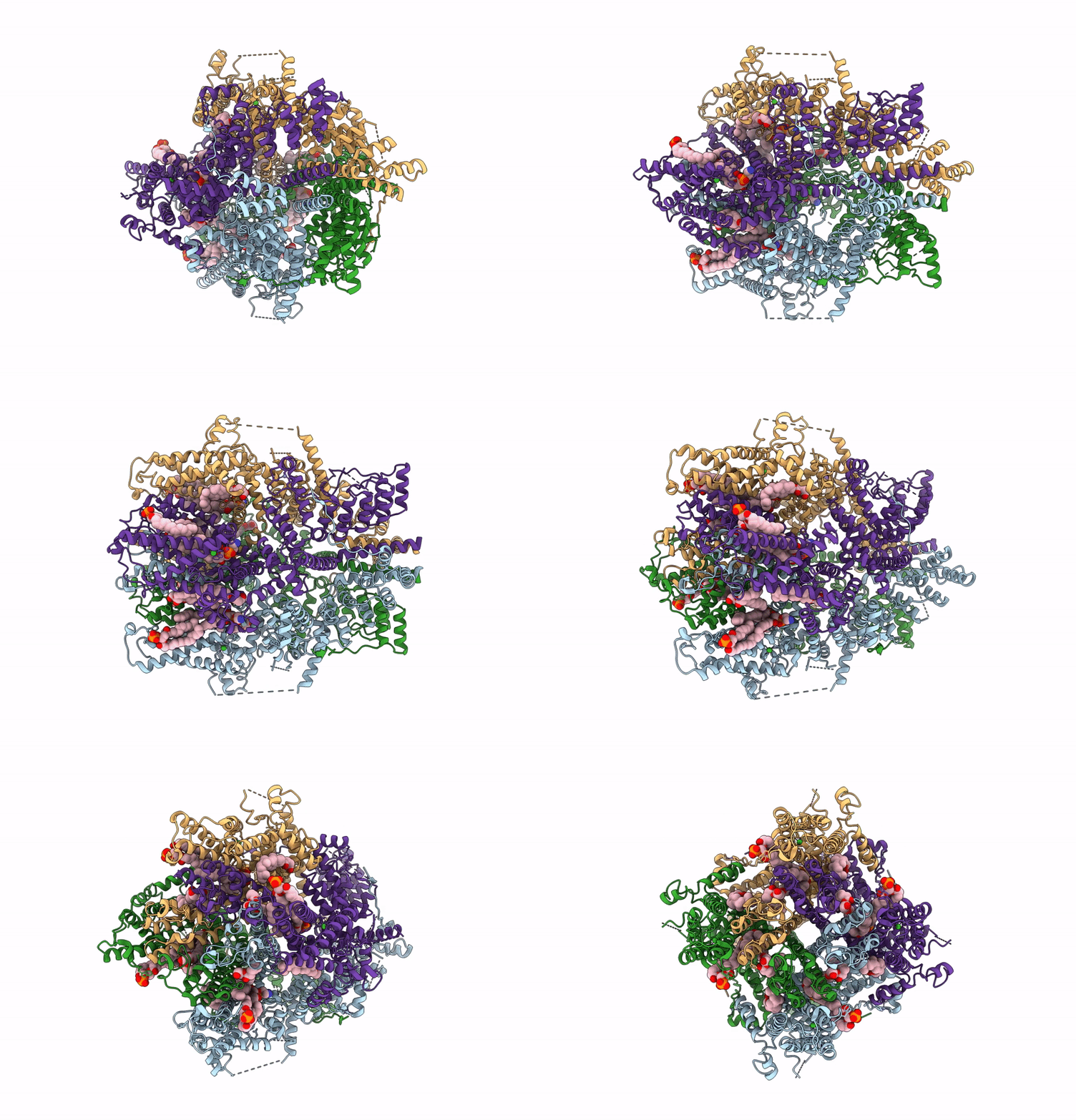
9KHJ image
Deposition Date 2024-11-10
Release Date 2025-11-12
Last Version Date 2026-01-21
Entry Detail
PDB ID:
9KHJ
Title:
Cryo-EM structure of homomeric TRPC channel, class 1
Biological Source:
Source Organism(s):
Homo sapiens (Taxon ID: 9606)
Expression System(s):
Method Details:
Experimental Method:
Resolution:
2.62 Å
Aggregation State:
PARTICLE
Reconstruction Method:
SINGLE PARTICLE
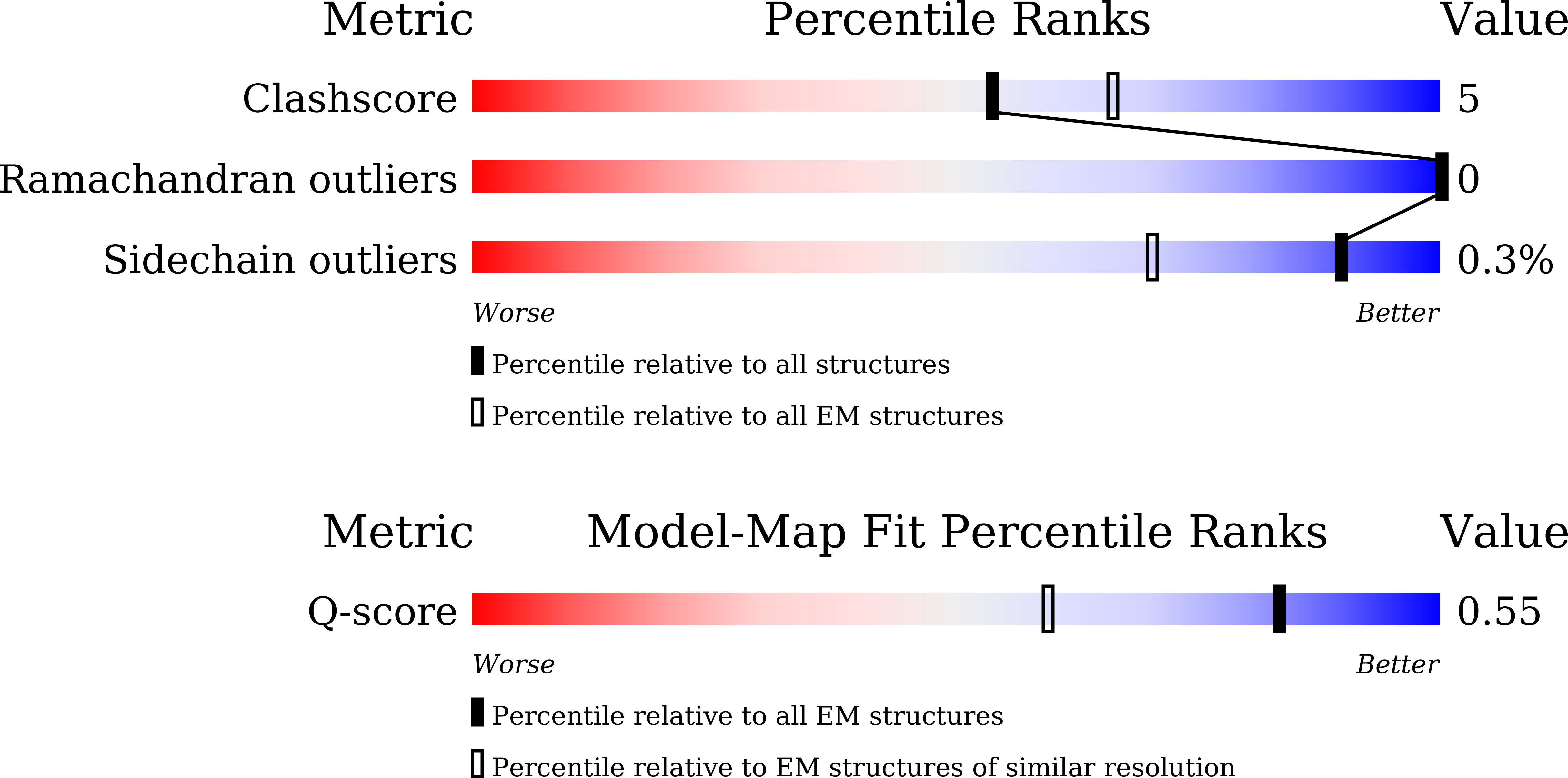
Macromolecular Entities
Structures with similar UniProt ID
Protein Blast
Polymer Type:polypeptide(L)
Molecule:Short transient receptor potential channel 5
Gene (Uniprot):TRPC5
Chain IDs:A, B (auth: C), C (auth: B), D
Chain Length:773
Number of Molecules:4
Biological Source:Homo sapiens
Primary Citation
Molecular architecture of the human TRPC1/C5 heteromeric channel.
Nat Commun 17 317 317 (2025)
PMID: 41372144 DOI: 10.1038/s41467-025-67024-9

Abstact

Transient receptor potential (TRP) ion channels form heteromers through combinatorial associations of distinct subunits, contributing to the diversity of TRP channel functions. Among them, TRPC5, which forms a heteromer with TRPC1, represents an attractive pharmaceutical target for treating anxiety and depression. Here, we present the cryo-electron microscopy structure of the human TRPC1/C5 heteromer, composed of one TRPC1 subunit and three TRPC5 subunits. The incorporation of TRPC1 into the heteromer disrupts the C4 symmetry of the TRPC5 homotetramer, resulting in a distinct ion conduction pathway characterized by an asymmetrically constricted selectivity filter and an asymmetric lower gate. The TRPC1/C5 heteromer displays recognizable structural features compared to the TRPC1/C4 heteromer, including a noncanonically tilted coiled-coil domain and a distinct intersubunit interactions. Furthermore, we elucidate the structures of human TRPC5 bound to the TRPC1/4/5-specific agonist, (-)-Englerin A. Our findings establish a foundation for exploring the diversity of heteromeric TRP channels and pave the way for targeting TRPC1/C5 as a therapeutic strategy.

Legend

Protein

Chemical

Disease

Primary Citation of related structures
Feedback Form
Name
Email
Institute
Feedback