Planned Maintenance: Some services may turn out to be unavailable from 15th January, 2026 to 16th January, 2026. We apologize for the inconvenience!

9KG2 image
Deposition Date 2024-11-07
Release Date 2025-05-21
Last Version Date 2025-12-03
Entry Detail
PDB ID:
9KG2
Title:
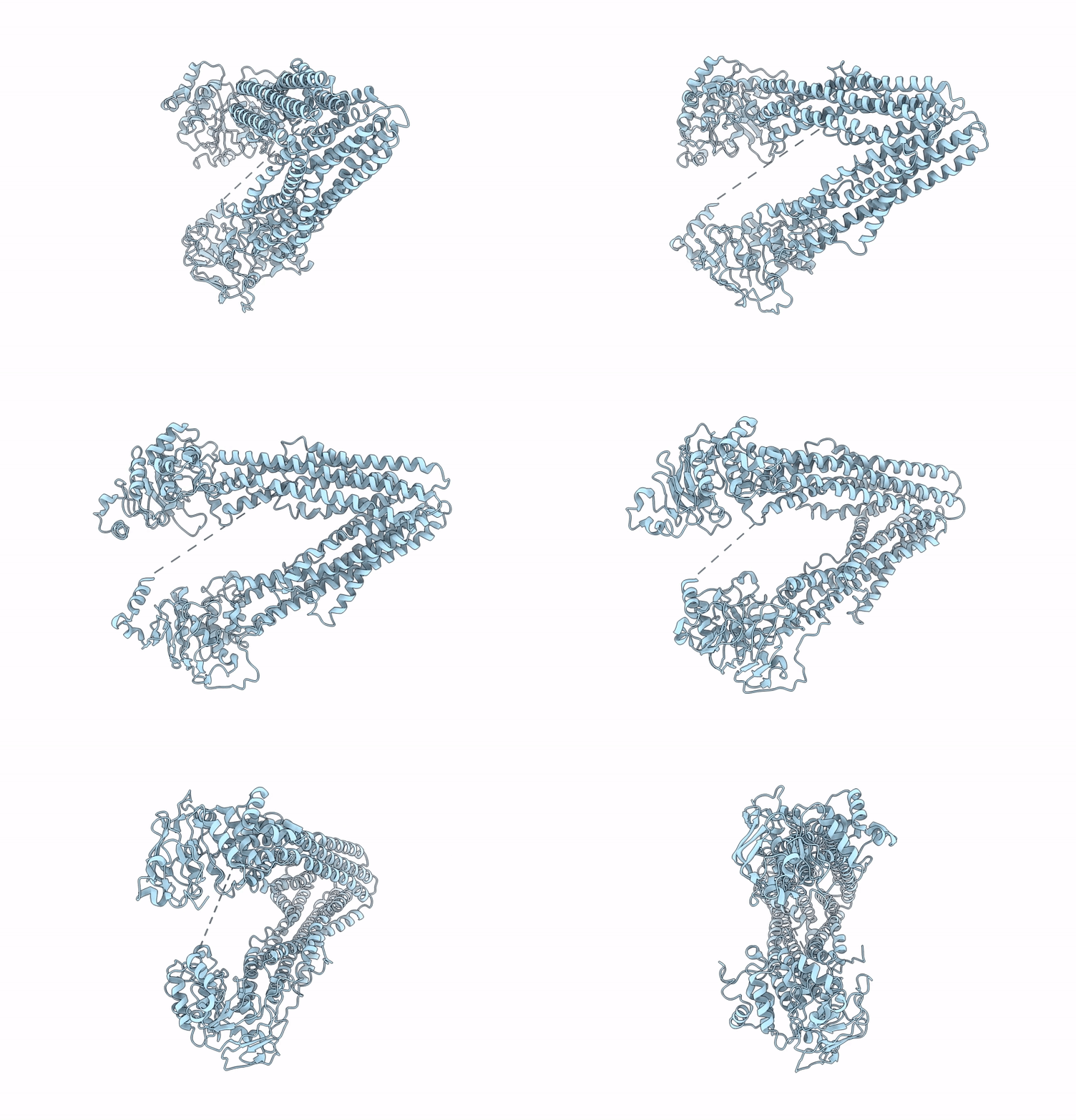
Cryo-EM structure of apo form atABCB19 in lipid nanodisc
Biological Source:
Source Organism(s):
Expression System(s):
Method Details:
Experimental Method:
Resolution:
4.10 Å
Aggregation State:
PARTICLE
Reconstruction Method:
SINGLE PARTICLE

Macromolecular Entities
Structures with similar UniProt ID
Protein Blast
Polymer Type:polypeptide(L)
Molecule:ABC transporter B family member 19
Gene (Uniprot):ABCB19
Chain IDs:A
Chain Length:1252
Number of Molecules:1
Biological Source:Arabidopsis thaliana x Arabidopsis lyrata
Ligand Molecules
Primary Citation
Conformational cycle and small-molecule inhibition mechanism of a plant ABCB transporter in lipid membranes.
Sci Adv 11 eadv9721 eadv9721 (2025)
PMID: 40512840 DOI: 10.1126/sciadv.adv9721

Abstact

In plants, ATP-binding cassette (ABC) transporters are crucial for nutrient uptake, phytohormone transport, and environmental response. It is of great interest to understand the mechanisms of these transporters and develop small-molecule modulators to regulate plant growth. Arabidopsis ABCB19 was recently shown to transport brassinosteroid, shaping hormone dynamics and plant architecture. However, the conformational cycle and inhibitor mechanism of ABCB transporters remain elusive. We reconstituted ABCB19 into lipid nanodiscs, where activity was drastically higher than in detergents, and determined its cryo-electron microscopy structures in substrate-free, substrate-bound, vanadate-trapped, and inhibitor-bound states. Inward-facing ABCB19 moved inward upon substrate binding and fully closed with vanadate trapping, unexpectedly temperature dependent. Two inhibitor molecules locked ABCB19 in the inward-facing conformation. Mutagenesis identified key residues for substrate and inhibitor binding, revealing differential contributions to transporter function and inhibition. These results deepen knowledge of plant ABCB transporters, laying a foundation for targeted manipulation to enhance plant resilience and productivity.

Legend

Protein

Chemical

Disease

Primary Citation of related structures
Feedback Form
Name
Email
Institute
Feedback