Planned Maintenance: Some services may turn out to be unavailable from 15th January, 2026 to 16th January, 2026. We apologize for the inconvenience!

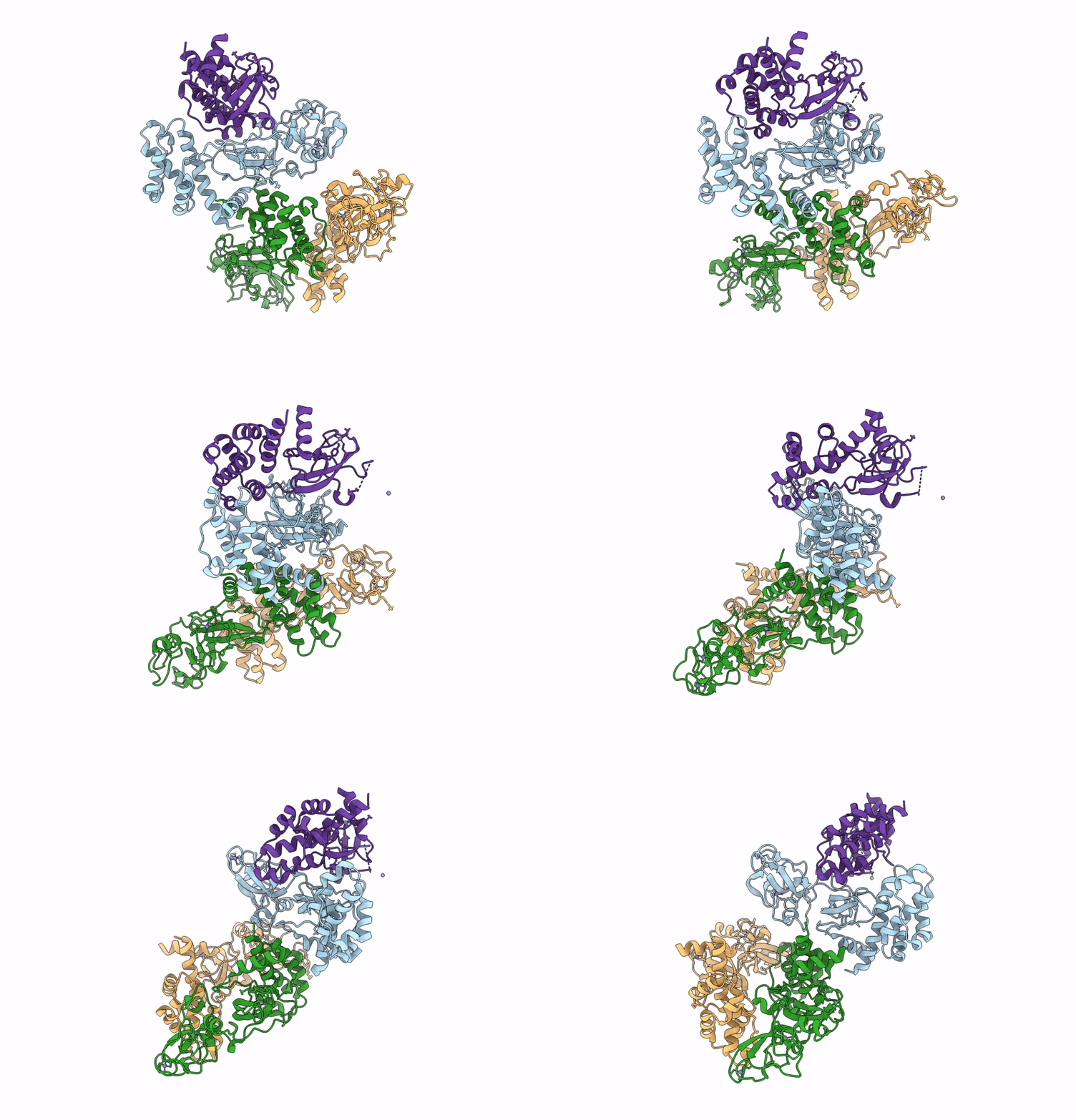
9KBO image
Deposition Date 2024-10-31
Release Date 2025-11-19
Last Version Date 2025-12-31
Entry Detail
PDB ID:
9KBO
Title:
Crystal structure of human Shiftless (SFL) containing phosphorylation sites Ser249, Thr250, Thr253 and Ser256
Biological Source:
Source Organism(s):
Homo sapiens (Taxon ID: 9606)
Expression System(s):
Method Details:
Experimental Method:
Resolution:
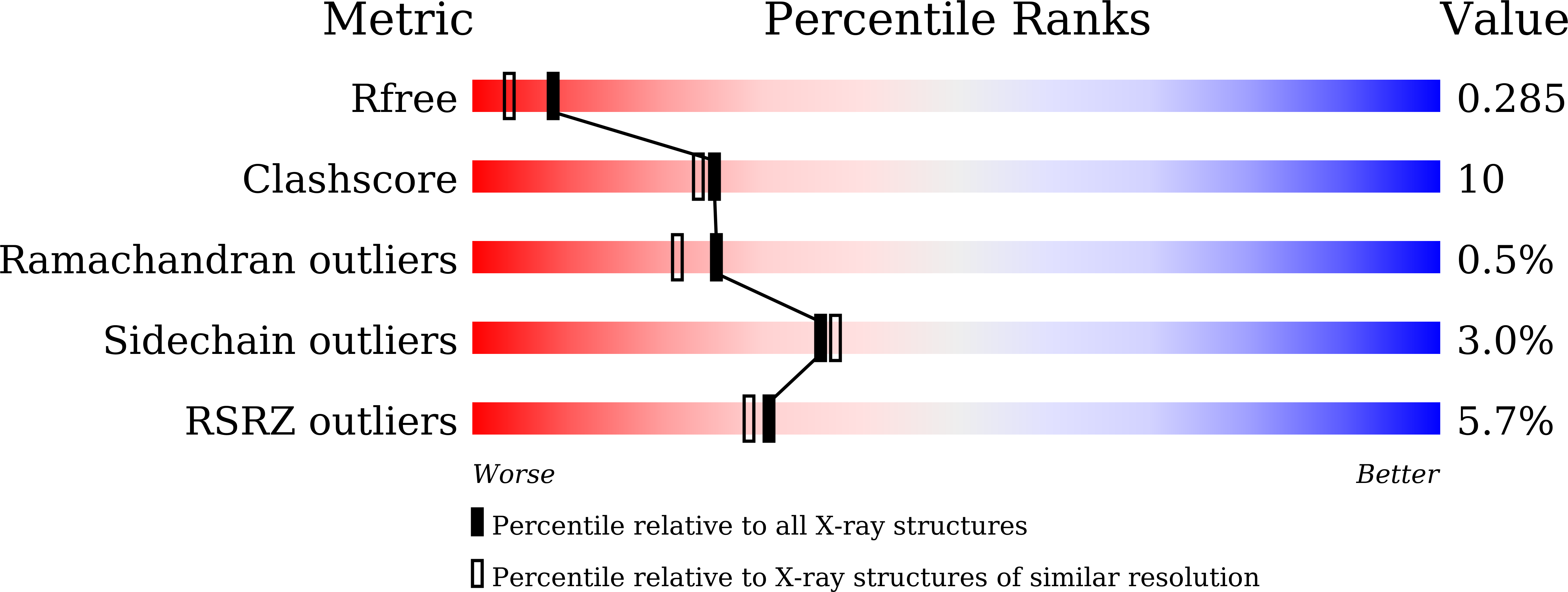
2.00 Å
R-Value Free:
0.28
R-Value Work:
0.22
R-Value Observed:
0.22
Space Group:
P 21 21 2
Macromolecular Entities
Structures with similar UniProt ID
Protein Blast
Polymer Type:polypeptide(L)
Molecule:Shiftless antiviral inhibitor of ribosomal frameshifting protein
Gene (Uniprot):SHFL
Chain IDs:A, B, C, D
Chain Length:291
Number of Molecules:4
Biological Source:Homo sapiens
Modified Residue
Compound ID Chain ID Parent Comp ID Details 2D Image
SEP A SER modified residue
TPO A THR modified residue
Ligand Molecules
Primary Citation
Phosphorylation of shiftless is important for inhibiting the programmed -1 ribosomal frameshift.
Sci Adv 11 eadw7471 eadw7471 (2025)
PMID: 41417896 DOI: 10.1126/sciadv.adw7471

Abstact

Shiftless (SFL) is a broad-spectrum inhibitor of programmed -1 ribosomal frameshift (-1 PRF) and exhibits various antiviral activities. Here, we characterized human SFL structurally and biochemically. The 2.0-angstrom resolution crystal structure of SFL reveals a boat-like module comprising an N-terminal helical bundle and three zinc fingers at the C terminus. A hyperphosphorylation loop (HPL) buried between the helical bundle and the zinc finger 1 harbors four phosphorylated residues (p-S249, p-T250 p-T253, and p-S256), which are important to protein folding. SFL forms monomers in solution and binds the HIV-1 -1 PRF sequence with nanomolar affinity (KD = 5.7 nanomolar). Disruption of HPL phosphorylation decreased the RNA binding affinity and undermined the SFL-mediated -1 PRF inhibition of various viruses. Proximity-dependent biotinylation identified three cellular Ser/Thr kinases-EEF2K, NEK9, and PBK-that phosphorylate SFL in cells. These findings shed light on the mechanisms underlying -1 PRF regulation by SFL and provide insights into the role of SFL in virus inhibition.

Legend

Protein

Chemical

Disease

Primary Citation of related structures
Feedback Form
Name
Email
Institute
Feedback