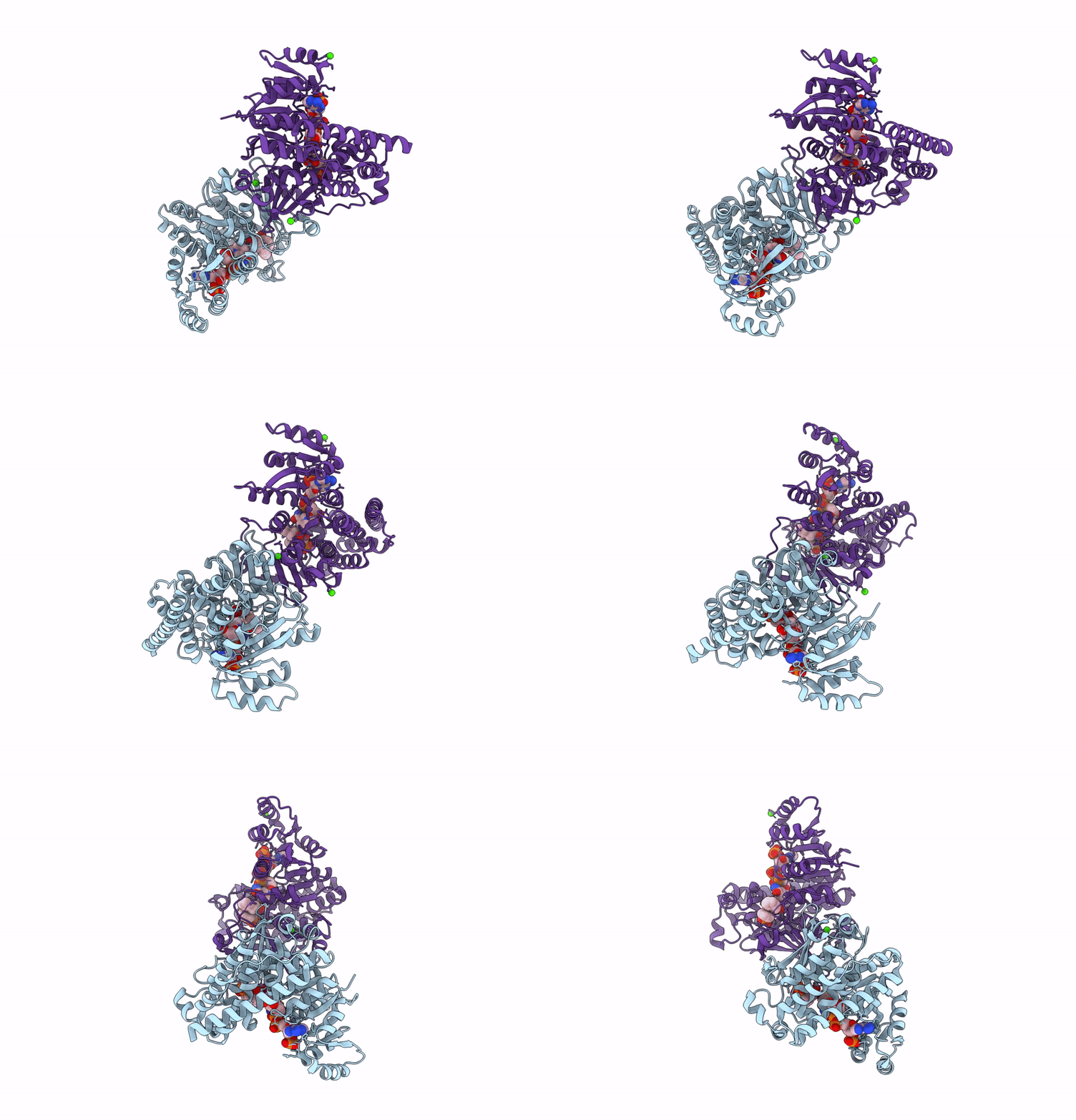
9JZ8 image
Deposition Date 2024-10-14
Release Date 2025-10-22
Last Version Date 2025-10-22
Entry Detail
PDB ID:
9JZ8
Keywords:
Title:
PfDXR - Mn2+ - NADPH - MAMK150 quaternary complex
Biological Source:
Source Organism:
Host Organism:
Method Details:
Experimental Method:
Resolution:
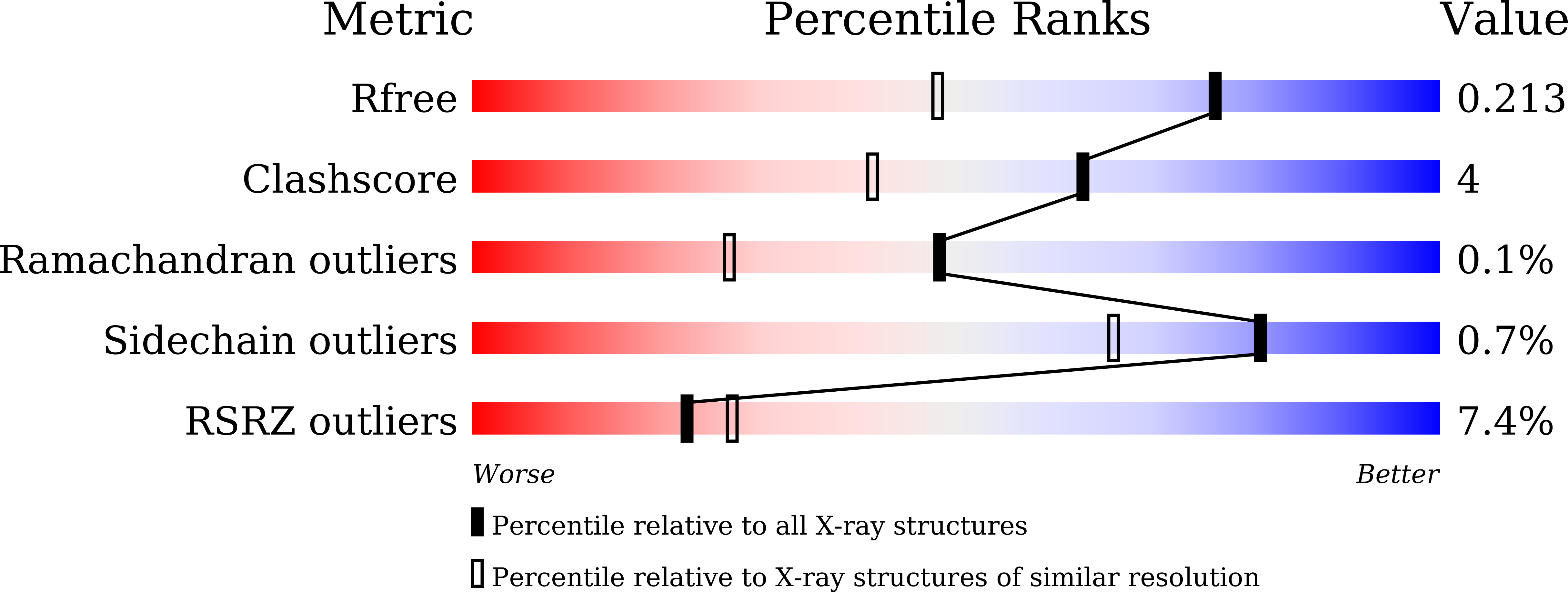
1.53 Å
R-Value Free:
0.20
R-Value Work:
0.18
R-Value Observed:
0.18
Space Group:
P 1 21 1
Macromolecular Entities
Structures with similar UniProt ID
Protein Blast
Polymer Type:polypeptide(L)
Molecule:1-deoxy-D-xylulose 5-phosphate reductoisomerase, apicoplastic
Gene (Uniprot):DXR
Chain IDs:A, B
Chain Length:488
Number of Molecules:2
Biological Source:Plasmodium falciparum
Primary Citation
The Diverse Binding Modes Explain the Nanomolar Levels of Inhibitory Activities Against 1-Deoxy-d-Xylulose 5-Phosphate Reductoisomerase from Plasmodium falciparum Exhibited by Reverse Hydroxamate Analogs of Fosmidomycin with Varying N -Substituents.
Molecules 30 ? ? (2024)
PMID: 39795129 DOI: 10.3390/molecules30010072

Abstact

It is established that reverse hydroxamate analogs of fosmidomycin inhibit the growth of Plasmodium falciparum by inhibiting 1-deoxy-d-xylulose 5-phosphate reductoisomerase (DXR), the second enzyme of the non-mevalonate pathway, which is absent in humans. Recent biochemical studies have demonstrated that novel reverse fosmidomycin analogs with phenylalkyl substituents at the hydroxamate nitrogen exhibit inhibitory activities against PfDXR at the nanomolar level. Moreover, crystallographic analyses have revealed that the phenyl moiety of the N-phenylpropyl substituent is accommodated in a previously unidentified subpocket within the active site of PfDXR. In this study, the crystal structures of PfDXR in complex with a series of reverse N-phenylalkyl derivatives of fosmidomycin were determined to ascertain whether the high inhibitory activities of the derivatives are consistently attributable to the utilization of the subpocket of PfDXR. While all reverse fosmidomycin derivatives with an N-substituted phenylalkyl group exhibit potent inhibitory activity against PfDXR, the present crystal structure analyses revealed that their binding modes to the PfDXR are not uniform. In these compounds, the nanomolar inhibitory activities appear to be driven by binding modes distinct from that observed for the inhibitor containing the N-phenylpropyl group. The structural information obtained in this study will provide a basis for further design of fosmidomycin derivatives.

Legend

Protein

Chemical

Disease

Primary Citation of related structures
Feedback Form
Name
Email
Institute
Feedback