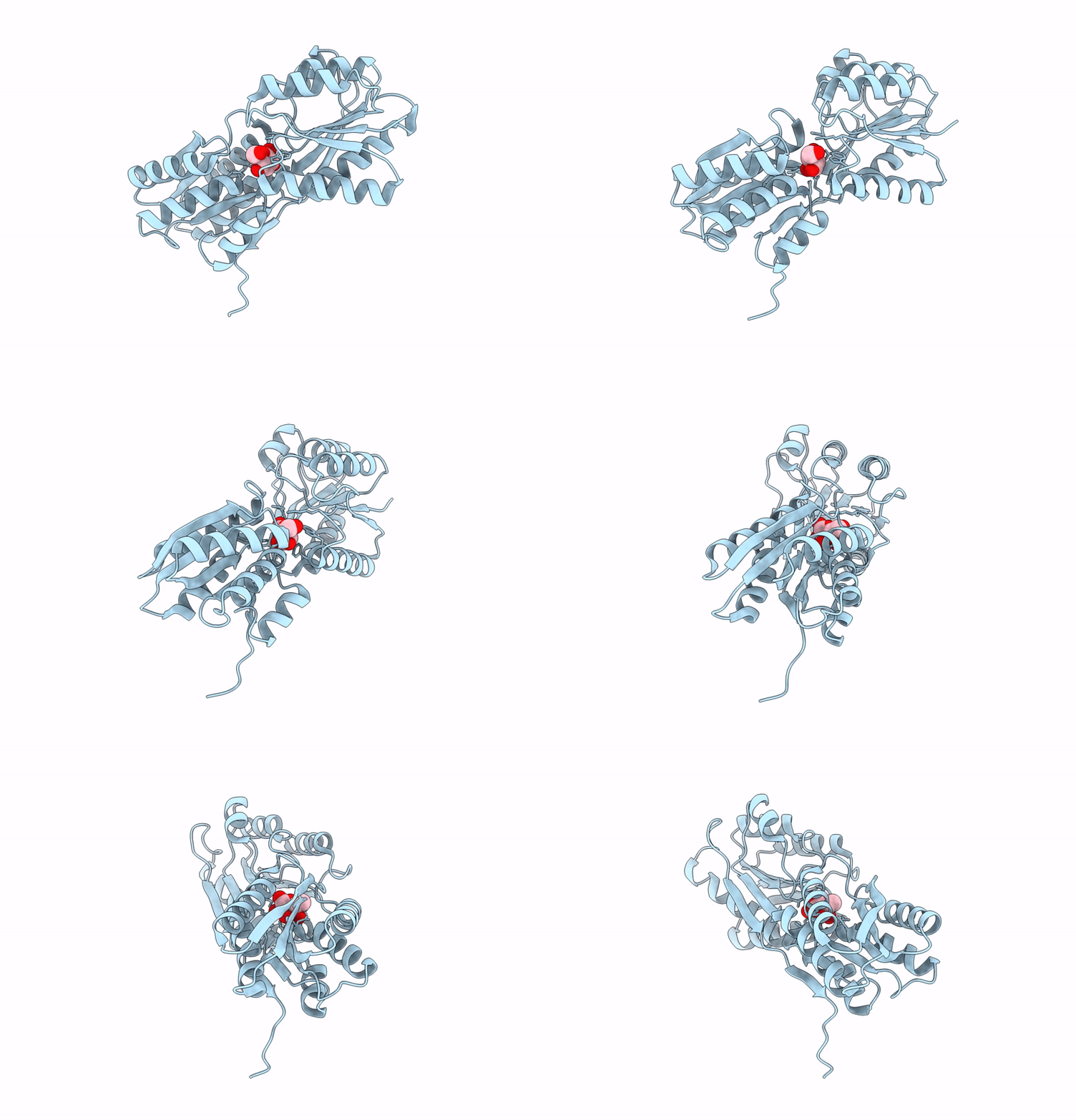
9JWT image
Deposition Date 2024-10-10
Release Date 2025-10-15
Last Version Date 2025-12-31
Entry Detail
PDB ID:
9JWT
Keywords:
Title:
De novo designed D-allose binding protein based on 1rpj
Biological Source:
Source Organism:
Host Organism:
Method Details:
Experimental Method:
Resolution:
1.60 Å
R-Value Free:
0.21
R-Value Work:
0.18
R-Value Observed:
0.18
Space Group:
P 21 21 21

Macromolecular Entities
Polymer Type:polypeptide(L)
Molecule:MSD3-holo
Chain IDs:A
Chain Length:296
Number of Molecules:1
Biological Source:synthetic construct
Ligand Molecules
Primary Citation
Enhancing functional proteins through multimodal inverse folding with ABACUS-T.
Nat Commun 16 10177 10177 (2025)
PMID: 41261139 DOI: 10.1038/s41467-025-65175-3

Abstact

Structure-based sequence redesign or inverse folding can significantly enhance structural stability but often compromises functional activity when performed using existing models. Here, we introduce ABACUS-T, a multimodal inverse folding model that improves precision and minimizes functional loss. ABACUS-T unifies several important features into one framework: detailed atomic sidechains and ligand interactions, a pre-trained protein language model, multiple backbone conformational states, and evolutionary information from multiple sequence alignment (MSA). Redesigned proteins show notable improvements: an allose binding protein achieves 17-fold higher affinity while retaining conformational change; redesigned endo-1,4-β-xylanase and TEM β-lactamase maintain or surpass wild-type activity; and OXA β-lactamase gains altered substrate selectivity. All achieve substantially increase thermostability (∆Tm ≥ 10 °C). In each test case, these enhancements are achieved by testing only a few sequences, each containing dozens of simultaneously mutated residues. ABACUS-T thus offers a promising tool for reengineering functional proteins in biotechnological applications.

Legend

Protein

Chemical

Disease

Primary Citation of related structures
Feedback Form
Name
Email
Institute
Feedback