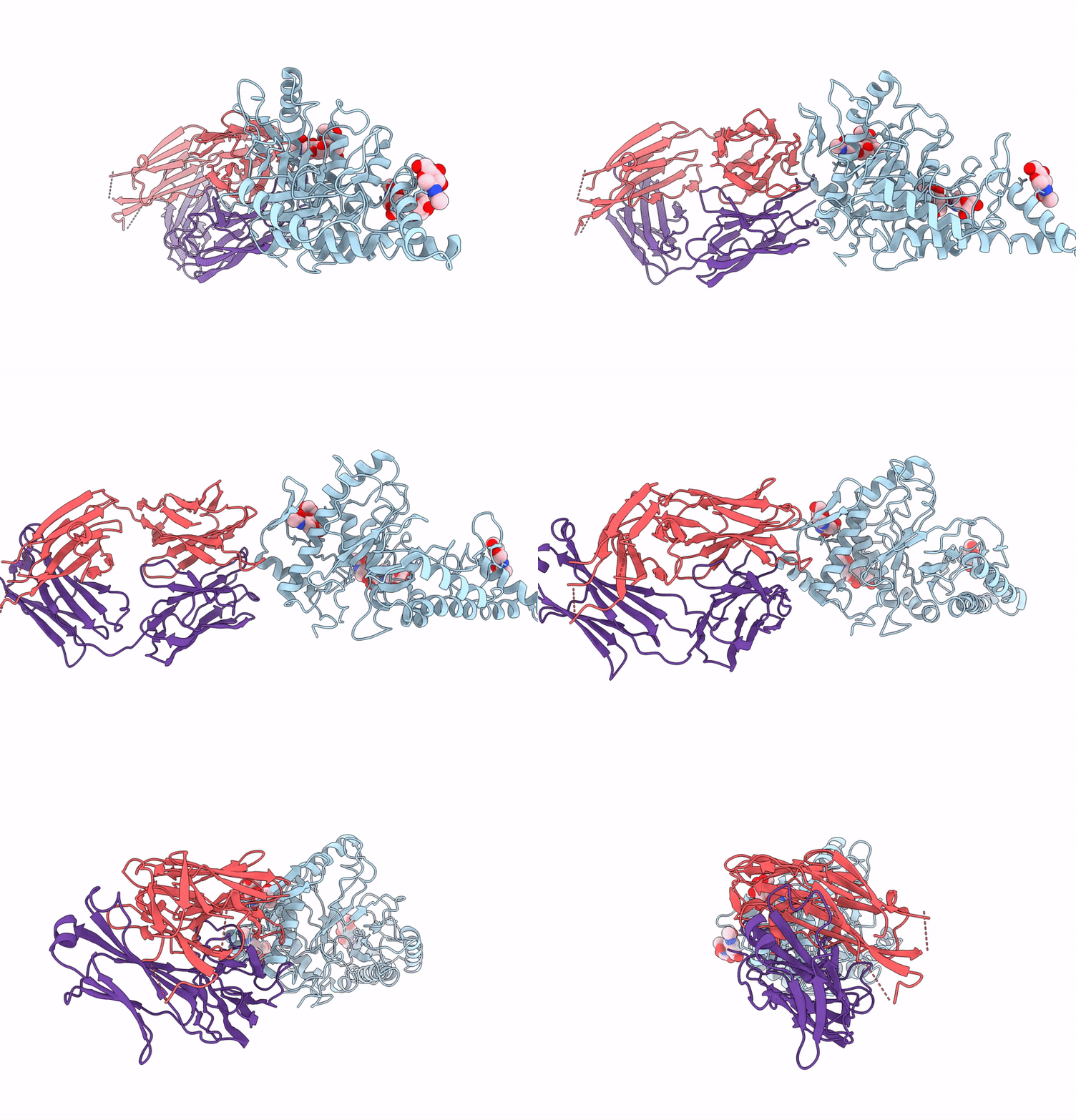
9JUB image
Deposition Date 2024-10-07
Release Date 2024-10-30
Last Version Date 2025-04-16
Entry Detail
PDB ID:
9JUB
Title:
Cryo-EM structure of human hyaluronidase PH-20
Biological Source:
Source Organism:
Host Organism:
Method Details:
Experimental Method:
Resolution:
3.10 Å
Aggregation State:
PARTICLE
Reconstruction Method:
SINGLE PARTICLE

Macromolecular Entities
Structures with similar UniProt ID
Protein Blast
Polymer Type:polypeptide(L)
Molecule:Hyaluronidase PH-20
Gene (Uniprot):SPAM1
Chain IDs:A
Chain Length:406
Number of Molecules:1
Biological Source:Homo sapiens
Polymer Type:polypeptide(L)
Molecule:Heavy chain of 79C11Fab
Chain IDs:B
Chain Length:216
Number of Molecules:1
Biological Source:Oryctolagus cuniculus
Polymer Type:polypeptide(L)
Molecule:Light chain of 79C11Fab
Chain IDs:C
Chain Length:212
Number of Molecules:1
Biological Source:Oryctolagus cuniculus
Ligand Molecules
Primary Citation
Cryo-EM Structure of Human Hyaluronidase PH-20.
Proteins 93 1067 1073 (2025)
PMID: 39722545 DOI: 10.1002/prot.26788

Abstact

PH-20 is a specific type of hyaluronidase that plays a critical role in the fertilization process by facilitating the initial binding of sperm to the glycoprotein layer surrounding the oocyte and subsequently breaking down hyaluronic acid polymers in the cumulus cell layer. PH-20 contains an epidermal growth factor (EGF)-like domain, which may be involved in the recognition of the glycoprotein layer in addition to the catalytic domain. Herein, we report the structure of human PH-20 determined by cryogenic electron microscopy. Comparative analyses of the PH-20 structure with two other available hyaluronidase structures reveal a general similarity in the central catalytic domains, including the conservation of catalytically essential residues at the equivalent spatial positions. However, unique difference is found in the EGF-like domain, characterized by a longer sequence that is likely to form a flexibly anchored β-hairpin containing a disulfide bond.

Legend

Protein

Chemical

Disease

Primary Citation of related structures
Feedback Form
Name
Email
Institute
Feedback