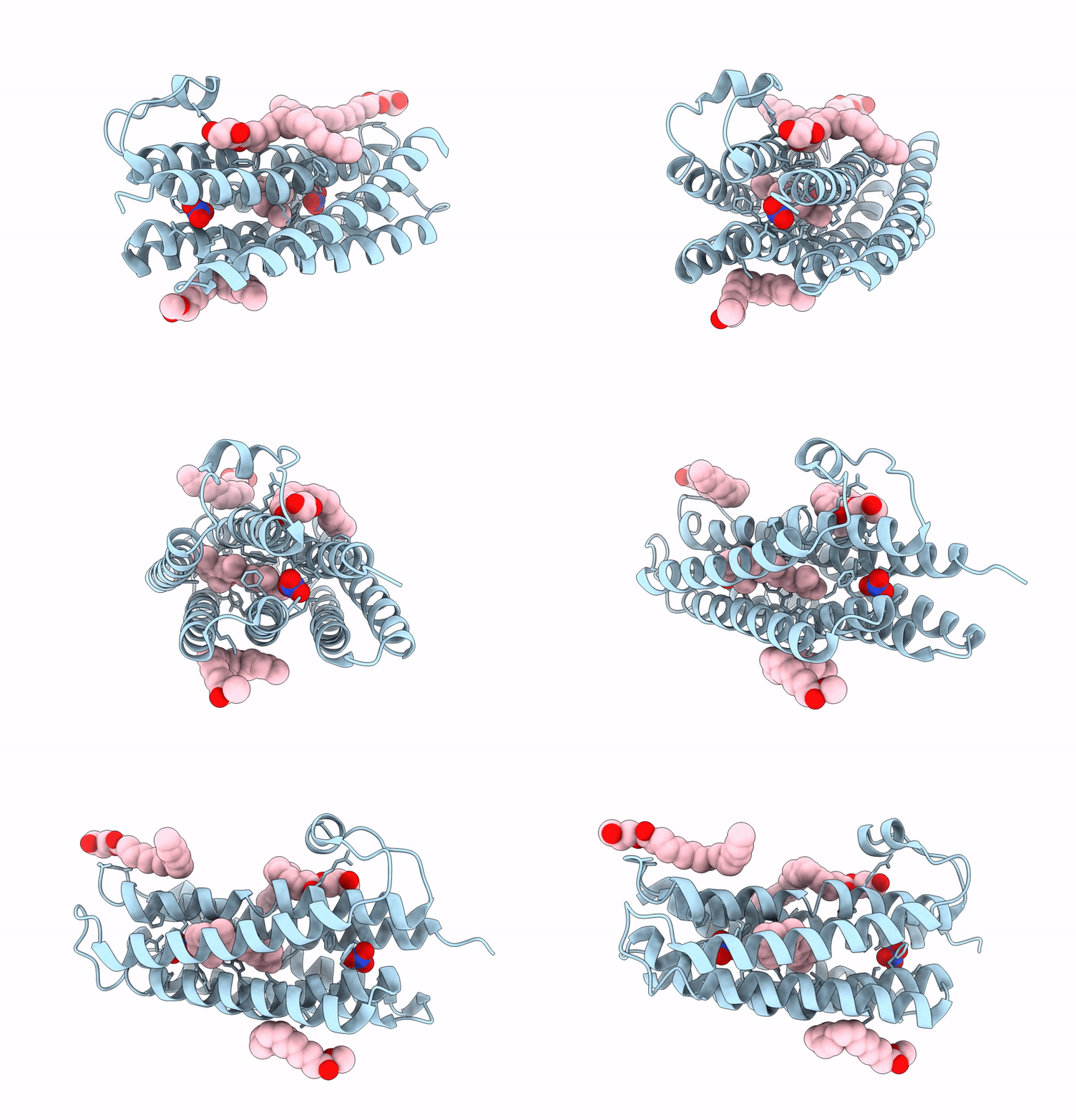
9JTQ image
Deposition Date 2024-10-06
Release Date 2025-04-02
Last Version Date 2025-12-03
Entry Detail
PDB ID:
9JTQ
Title:
Crystal structure of the light-driven proton pump heimdallarchaeial rhodopsin HeimdallR1
Biological Source:
Source Organism:
Method Details:
Experimental Method:
Resolution:
2.00 Å
R-Value Free:
0.23
R-Value Work:
0.20
R-Value Observed:
0.20
Space Group:
P 2 21 21

Macromolecular Entities
Structures with similar UniProt ID
Protein Blast
Polymer Type:polypeptide(L)
Molecule:Rhodopsin
Gene (Uniprot):CME83_04245
Chain IDs:A
Chain Length:254
Number of Molecules:1
Biological Source:Candidatus Heimdallarchaeota archaeon
Primary Citation
Structural insights into light harvesting by antenna-containing rhodopsins in marine Asgard archaea.
Nat Microbiol 10 1484 1500 (2025)
PMID: 40442502 DOI: 10.1038/s41564-025-02016-5

Abstact

Aquatic bacterial rhodopsin proton pumps harvest light energy for photoheterotrophic growth and are known to contain hydroxylated carotenoids that expand the wavelengths of light utilized, but these have not been characterized in marine archaea. Here, by combining a marine chromophore extract with purified archaeal rhodopsins identified in marine metagenomes, we show light energy transfer from diverse hydroxylated carotenoids to heimdallarchaeial rhodopsins (HeimdallRs) from uncultured marine planktonic members of 'Candidatus Kariarchaeaceae' ('Candidatus Asgardarchaeota'). These light-harvesting antennas absorb in the blue-light range and transfer energy to the green-light-absorbing retinal chromophore within HeimdallRs, enabling the use of light that is otherwise unavailable to the rhodopsin. Furthermore, we show elevated proton pumping by the antennas in HeimdallRs under white-light illumination, which better simulates the light conditions encountered by these archaea in their natural habitats. Our results indicate that light-harvesting antennas in microbial rhodopsins exist in families beyond xanthorhodopsins and proteorhodopsins and are present in both marine bacteria and archaea.

Legend

Protein

Chemical

Disease

Primary Citation of related structures
Feedback Form
Name
Email
Institute
Feedback