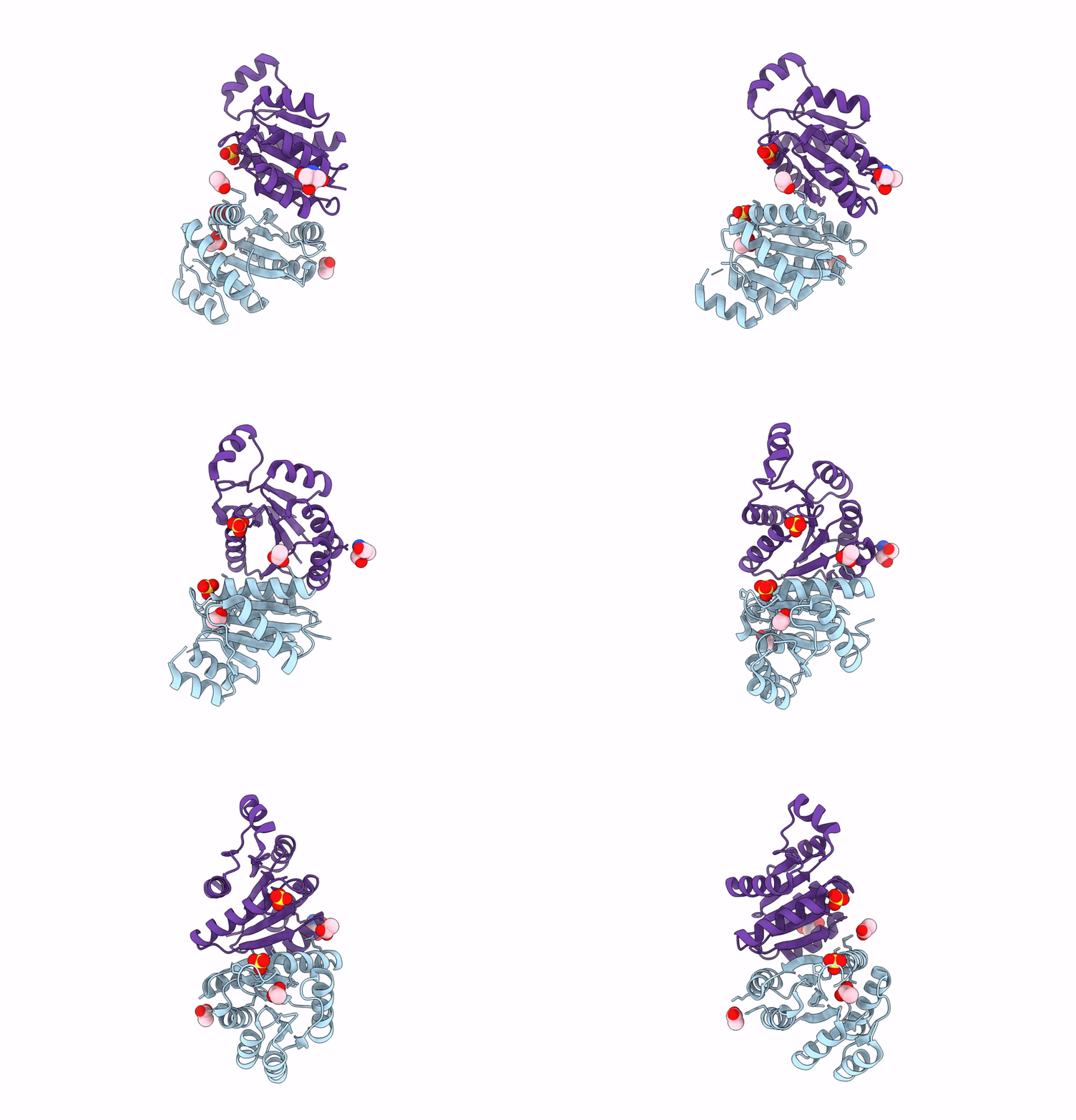
9JIX image
Deposition Date 2024-09-12
Release Date 2025-04-23
Last Version Date 2025-05-28
Entry Detail
PDB ID:
9JIX
Keywords:
Title:
Crystal structure of de novo designed ATPase, PL2x4_2
Biological Source:
Source Organism:
Method Details:
Experimental Method:
Resolution:
2.29 Å
R-Value Free:
0.26
R-Value Work:
0.23
R-Value Observed:
0.23
Space Group:
P 32 2 1

Macromolecular Entities
Polymer Type:polypeptide(L)
Molecule:De Novo Designed ATPase, PL2x4_2
Chain IDs:A, B (auth: C)
Chain Length:158
Number of Molecules:2
Biological Source:synthetic construct
Primary Citation
De novo design of ATPase based on a blueprint optimized for harboring the P-loop motif.
Protein Sci. 34 e70132 e70132 (2025)
PMID: 40364444 DOI: 10.1002/pro.70132

Abstact

De novo design of proteins has seen remarkable recent progress and has provided understanding of folding and functional expression. However, rationally creating enzymes with high activity comparable to most naturally occurring enzymes remains challenging. Here, we attempted to design an ATPase de novo, through the exploration of an optimal backbone blueprint to incorporate a conserved phosphate binding motif, the P-loop, into designed structures. The designed protein, based on the identified blueprint, was found to be a monomer with high thermal stability and exhibited ATPase ability. The crystal structure was closely matched to the design model, both at the overall structure level and within the P-loop motif. Interestingly, AlphaFold 2 was not able to predict the designed structure accurately, indicating the difficulties of predicting folded structures for novel amino acid sequences. Remarkably, the designed protein exhibited ATPase ability even at temperatures around 100°C, with significantly increased activity. However, the ATPase activity was still not comparable to those of naturally occurring enzymes. This suggests that the P-loop motif alone is insufficient to achieve the high ATPase activity seen in naturally occurring enzymes, indicating that other structural components-such as a binding pocket optimized for the adenine or ribose moieties of ATP, additional catalytic residues, or structural dynamics that facilitate hydrolysis-are necessary to reach such activity levels.

Legend

Protein

Chemical

Disease

Primary Citation of related structures
Feedback Form
Name
Email
Institute
Feedback