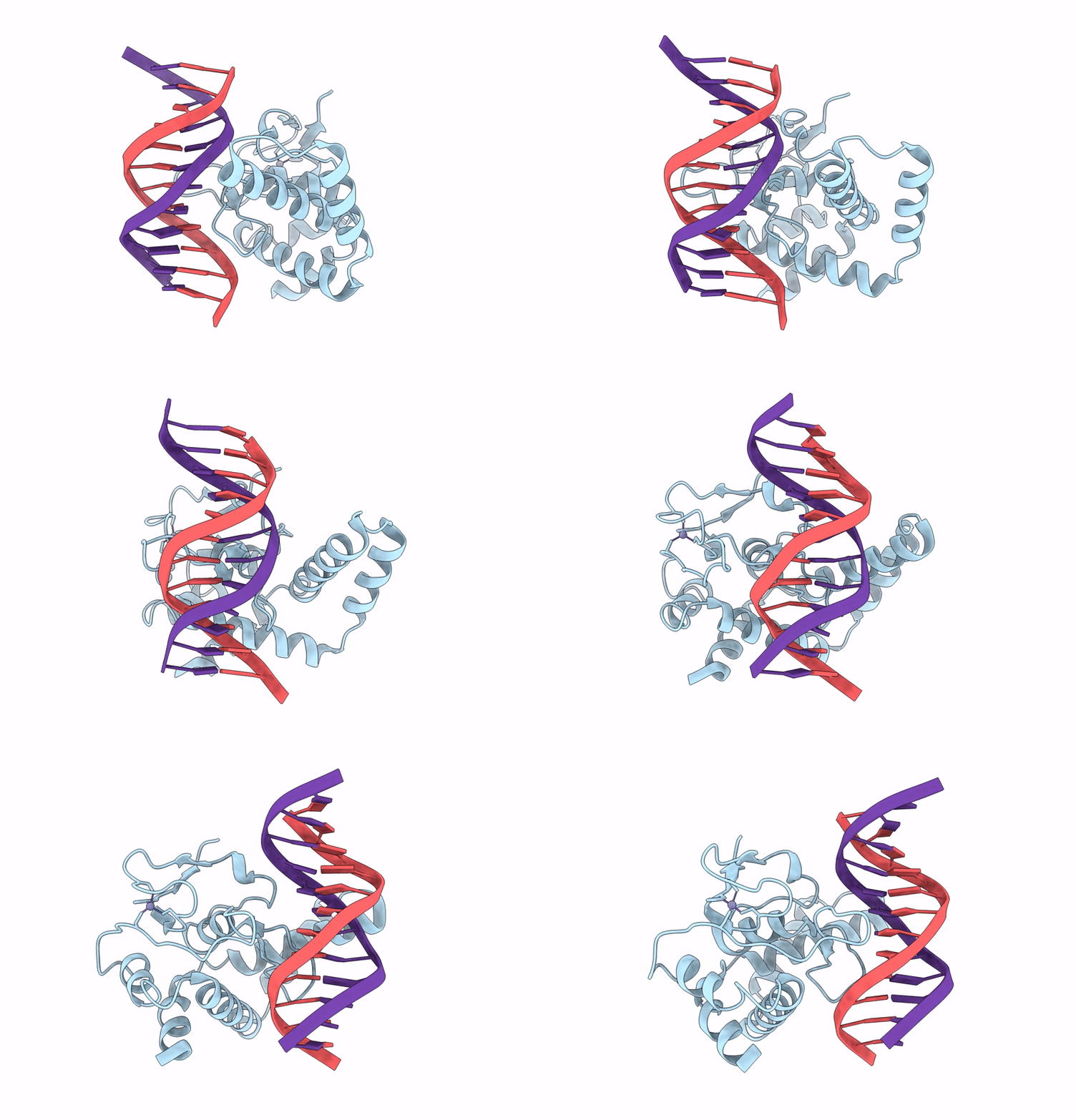
9JH2 image
Deposition Date 2024-09-08
Release Date 2025-12-24
Last Version Date 2025-12-24
Entry Detail
PDB ID:
9JH2
Title:
Crystal Structure of NFIA in Complex with DNA containing the TGGCA Motif
Biological Source:
Source Organism:
Host Organism:
Method Details:
Experimental Method:
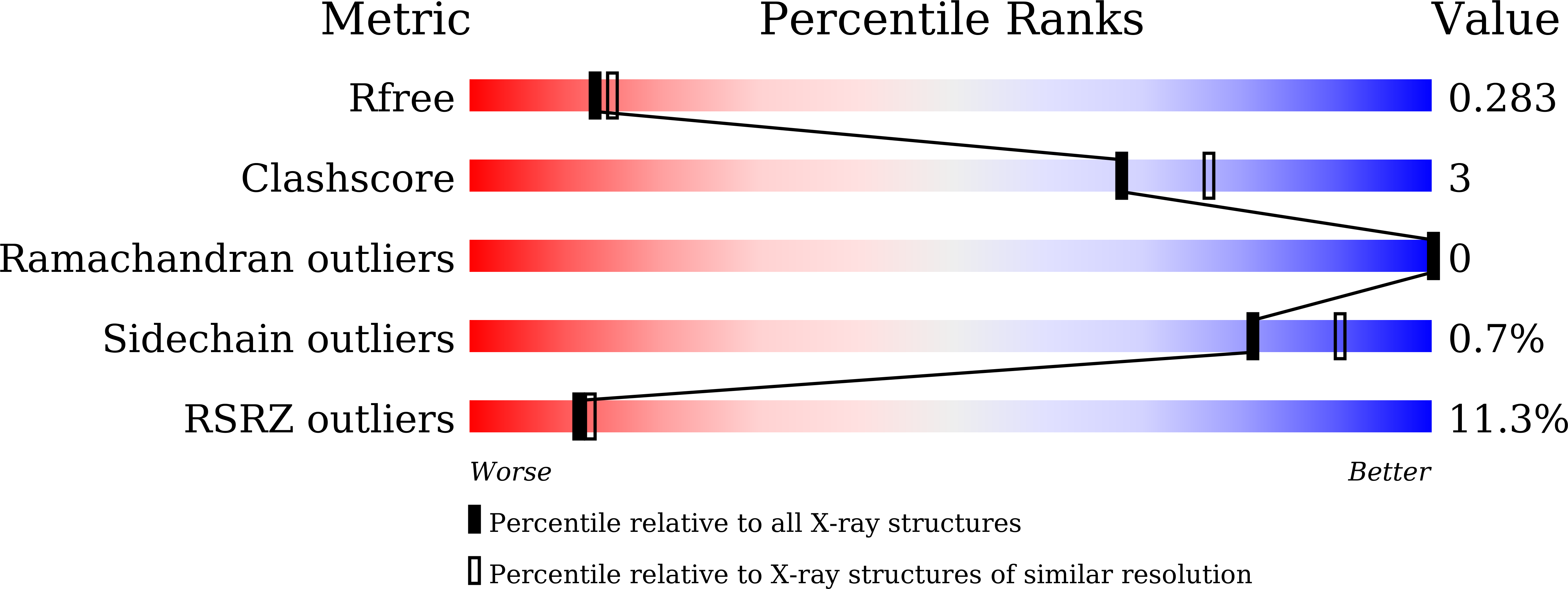
Resolution:
2.30 Å
R-Value Free:
0.28
R-Value Work:
0.24
R-Value Observed:
0.24
Space Group:
C 1 2 1
Macromolecular Entities
Structures with similar UniProt ID
Protein Blast
Polymer Type:polypeptide(L)
Molecule:Nuclear factor 1 A-type
Gene (Uniprot):NFIA
Chain IDs:A
Chain Length:165
Number of Molecules:1
Biological Source:Homo sapiens
Polymer Type:polydeoxyribonucleotide
Molecule:DNA (5'-D(*AP*GP*TP*TP*GP*GP*CP*AP*AP*GP*TP*C)-3')
Chain IDs:B
Chain Length:12
Number of Molecules:1
Biological Source:synthetic construct
Polymer Type:polydeoxyribonucleotide
Molecule:DNA (5'-D(*GP*AP*CP*TP*TP*GP*CP*CP*AP*AP*CP*T)-3')
Chain IDs:C
Chain Length:12
Number of Molecules:1
Biological Source:synthetic construct
Ligand Molecules
Primary Citation
Structural basis for genome-wide site-specific DNA recognition by Nuclear Factor IA.
Nat Commun ? ? ? (2025)
PMID: 41398321 DOI: 10.1038/s41467-025-67641-4

Abstact

Nuclear Factor IA, a member of the long-studied Nuclear Factor I family of DNA-binding proteins, plays pivotal roles in development and metabolism. Dysregulation or loss of Nuclear Factor IA is associated with severe neurological defects in humans and disruptions in fatty acid metabolism linked to conditions such as osteoarthritis. Despite extensive study, the DNA recognition mechanism of Nuclear Factor I family proteins remains unresolved. Previous studies have proposed that these proteins dimerize via their DNA-binding domains to bind TGGCA-containing dyad sequences. In this study, we demonstrate that both full-length Nuclear Factor IA and its isolated DNA-binding domain are monomeric in solution, challenging dimer models. Genome-wide ChIP-Seq analysis shows TGGCA half-sites are enriched among Nuclear Factor IA binding motifs. We determine Nuclear Factor IA's crystal and solution structures bound to half-site and dyad-symmetric DNA motifs, providing a structural basis for its monomeric DNA recognition. Furthermore, functional binding assays show that key residues in Nuclear Factor IA, which facilitate base-specific interactions, are critical for DNA sequence recognition and binding. These findings establish the DNA-binding mechanism of Nuclear Factor IA and provide a detailed molecular framework for understanding the functions of this classic transcription factor family.

Legend

Protein

Chemical

Disease

Primary Citation of related structures
Feedback Form
Name
Email
Institute
Feedback