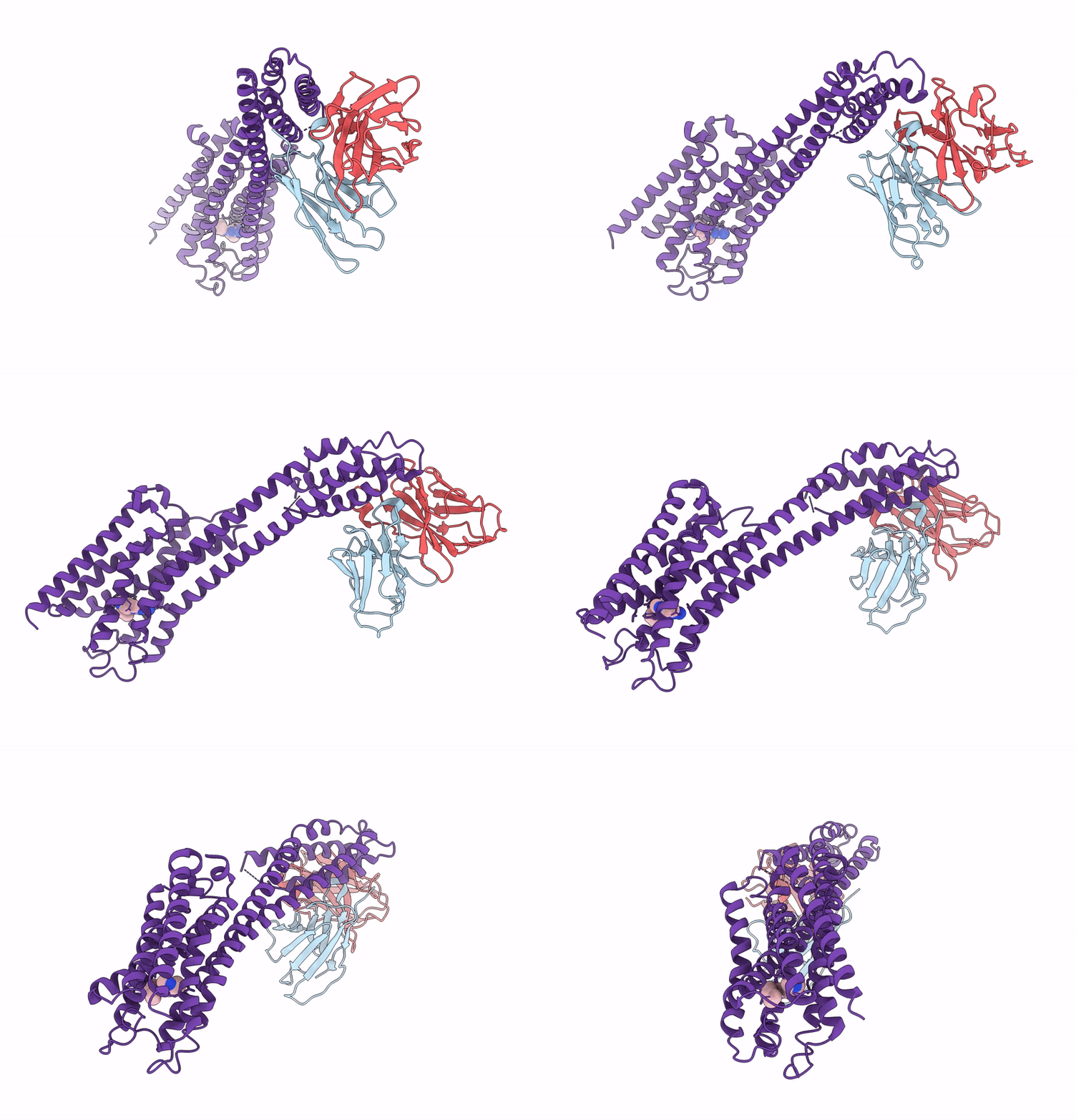
9JG1 image
Deposition Date 2024-09-05
Release Date 2025-12-03
Last Version Date 2025-12-03
Entry Detail
PDB ID:
9JG1
Title:
Cryo-EM structure of Adriforant-bound Histamine receptor 4 H4R at inactive state
Biological Source:
Source Organism:
Homo sapiens (Taxon ID: 9606)
Escherichia coli (Taxon ID: 562)
Host Organism:
Method Details:
Experimental Method:
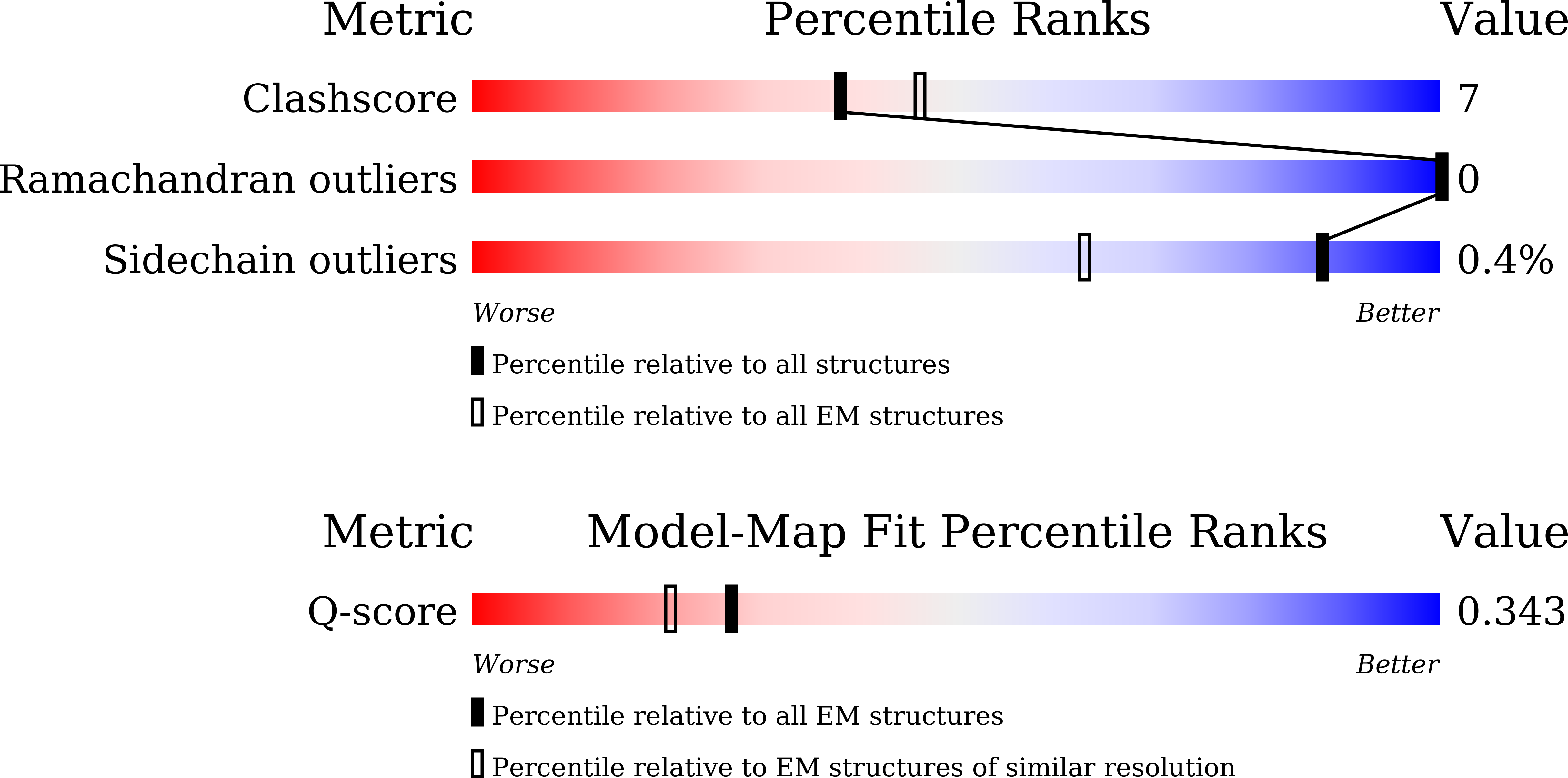
Resolution:
3.62 Å
Aggregation State:
PARTICLE
Reconstruction Method:
SINGLE PARTICLE
Macromolecular Entities
Polymer Type:polypeptide(L)
Molecule:anti-BRIL Fab Heavy chain
Chain IDs:B (auth: H)
Chain Length:222
Number of Molecules:1
Biological Source:Homo sapiens
Polymer Type:polypeptide(L)
Molecule:anti-BRIL Fab Light chain
Chain IDs:C (auth: L)
Chain Length:226
Number of Molecules:1
Biological Source:Homo sapiens
Protein Blast
Polymer Type:polypeptide(L)
Molecule:Histamine H4 receptor,Soluble cytochrome b562
Gene (Uniprot):cybC, HRH4
Chain IDs:A (auth: R)
Chain Length:427
Number of Molecules:1
Biological Source:Homo sapiens, Escherichia coli
Ligand Molecules
Primary Citation
Decoding ligand recognition and constitutive activation of histamine H3 and H4 receptors.
Acta Pharmacol.Sin. ? ? ? (2025)
PMID: 40877594 DOI: 10.1038/s41401-025-01633-4

Abstact

Histamine H3 receptor (H3R) and H4 receptor (H4R) are key members of the histamine receptor family, with H3R as a potential target for narcolepsy treatments and H4R as a candidate for next-generation antihistamines for inflammatory and allergic diseases. Although progress has been made in understanding the structure of histamine receptors, the detailed mechanisms of ligand recognition and receptor antagonism for H3R and H4R remain unclear. In this study, using cryo-electron microscopy, we present an inactive structure of H4R bound to a selective antagonist, adriforant, and two Gi-coupled structures of H3R and H4R in complex with histamine. Our structural and mutagenesis analyses provide insights into the selective binding of adriforant to H4R and the recognition of histamine across histamine receptors. Our findings also uncovered distinct antagonistic mechanisms for H3R and H4R and identified the role of aromatic amino acids on extracellular loop 2 in modulating the constitutive activity of H3R and H4R. These findings advance our knowledge of the functional modulation of histamine receptors, providing a foundation for the development of targeted therapeutics for neurological and immune-related disorders.

Legend

Protein

Chemical

Disease

Primary Citation of related structures
Feedback Form
Name
Email
Institute
Feedback