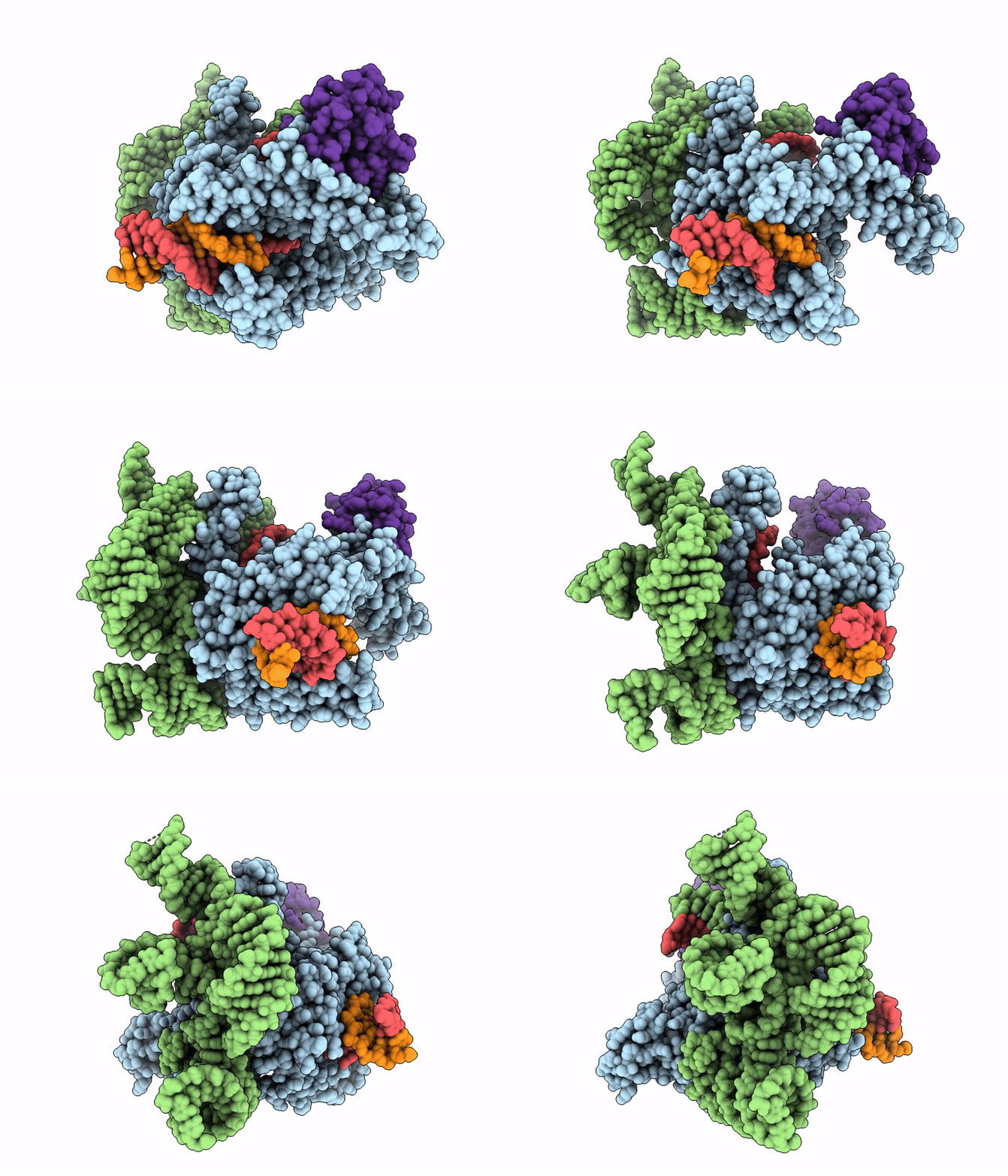
9JFS image
Deposition Date 2024-09-05
Release Date 2025-09-10
Last Version Date 2026-01-21
Entry Detail
PDB ID:
9JFS
Title:
Structure of Cas12p-TrxA-guide RNA-target DNA complex(29nt TS and 11nt NTS)
Biological Source:
Source Organism(s):
Expression System(s):
Method Details:
Experimental Method:
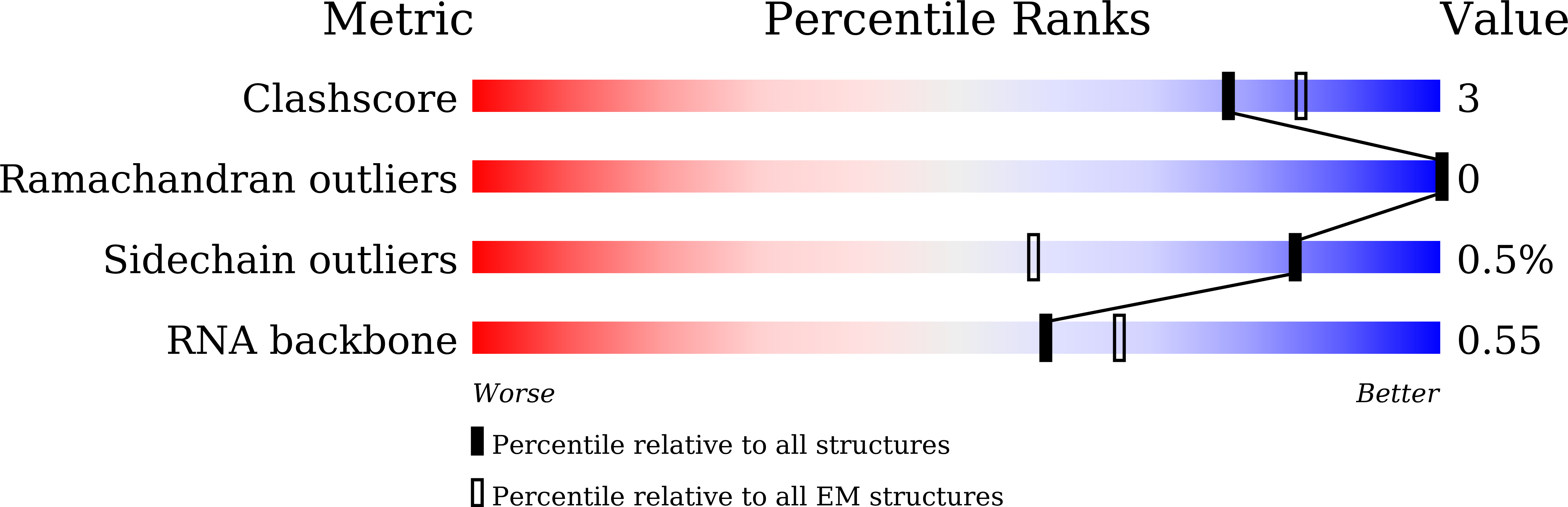
Resolution:
2.67 Å
Aggregation State:
PARTICLE
Reconstruction Method:
SINGLE PARTICLE
Macromolecular Entities
Structures with similar UniProt ID
Protein Blast
Polymer Type:polypeptide(L)
Molecule:Cas12p
Chain IDs:A
Chain Length:741
Number of Molecules:1
Biological Source:unidentified
Polymer Type:polyribonucleotide
Molecule:RNA (246-MER)
Chain IDs:B
Chain Length:246
Number of Molecules:1
Biological Source:unidentified
Polymer Type:polydeoxyribonucleotide
Molecule:DNA (29-MER)
Chain IDs:C
Chain Length:29
Number of Molecules:1
Biological Source:synthetic construct
Polymer Type:polydeoxyribonucleotide
Molecule:DNA (5'-D(P*TP*CP*AP*AP*CP*TP*GP*TP*AP*TP*G)-3')
Chain IDs:D
Chain Length:11
Number of Molecules:1
Biological Source:synthetic construct
Structures with similar UniProt ID
Protein Blast
Polymer Type:polypeptide(L)
Molecule:Thioredoxin
Chain IDs:E
Chain Length:109
Number of Molecules:1
Biological Source:Escherichia coli BL21(DE3)
Ligand Molecules
Primary Citation
Phage-associated Cas12p nucleases require binding to bacterial thioredoxin for activation and cleavage of target DNA.
Nat Microbiol 11 81 93 (2026)
PMID: 41492065 DOI: 10.1038/s41564-025-02224-z

Abstact

The evolutionary competition within phage-host systems led to the emergence of CRISPR-Cas defence mechanisms in bacteria and anti-CRISPR elements in bacteriophages. Although anti-CRISPR elements are well characterized, the role of bacterial factors that influence CRISPR-Cas efficacy has been comparatively overlooked. Type V CRISPR-Cas12 systems display striking functional and mechanistic diversity for nucleic acid targeting. Here we use a bioinformatic approach to identify Cas12p, a phage-associated nuclease that forms complexes with the bacterial thioredoxin protein TrxA to enable target DNA degradation. This represents an unexpected phage-bacteria interaction, in which the bacteriophage co-opts a bacterial factor to augment its own genome degradation machinery, potentially against competing phages. Biochemical characterization, cryo-EM-based structural analysis of the Cas12p-TrxA-sgRNA-dsDNA complex at 2.67 Å and bacterial defence assays reveal that TrxA directly binds and activates Cas12p, enabling its nuclease activity and subsequent CRISPR immunity. These findings expand our understanding of the multilayered intricacies of phage-bacteria molecular interactions.

Legend

Protein

Chemical

Disease

Primary Citation of related structures
Feedback Form
Name
Email
Institute
Feedback