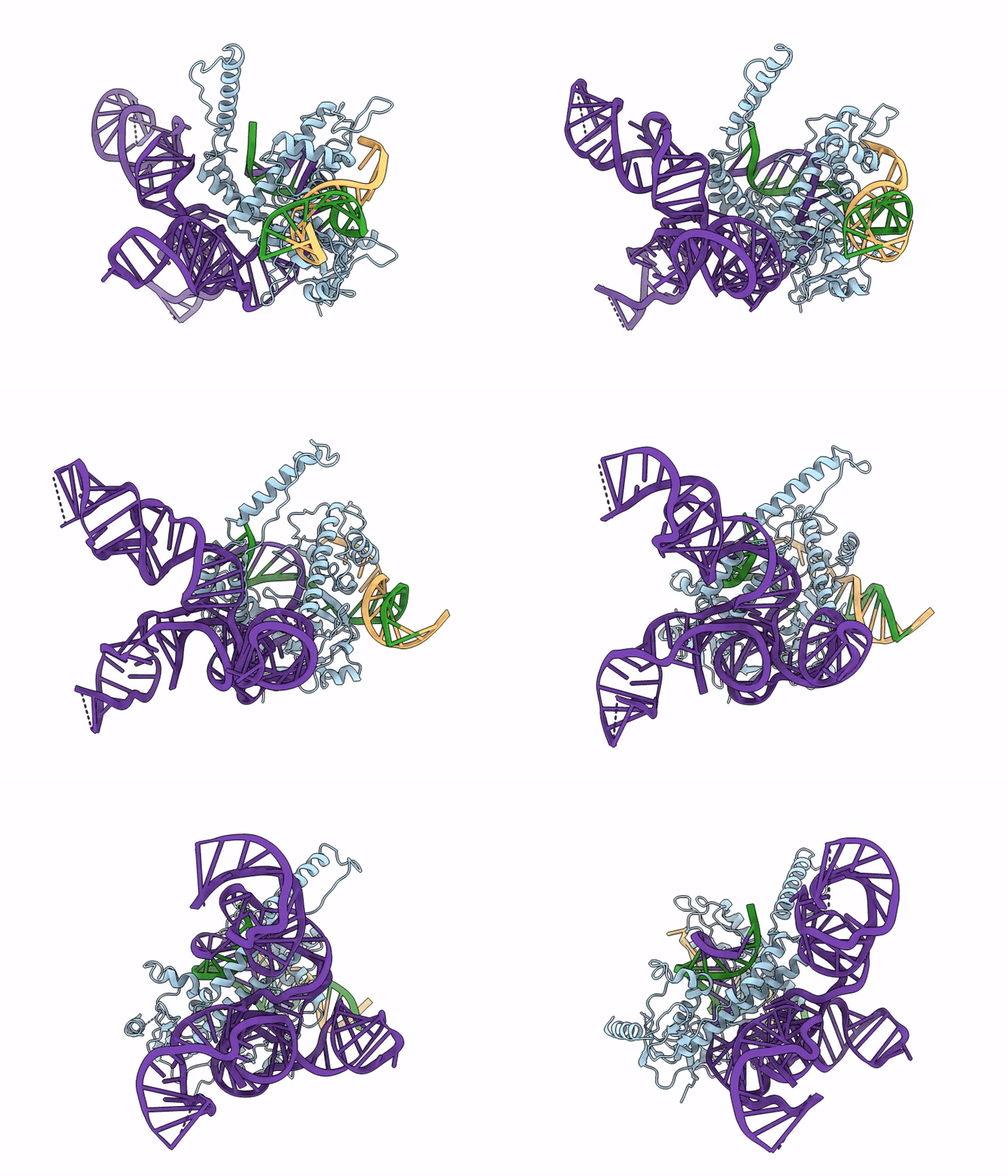
9JFO image
Deposition Date 2024-09-05
Release Date 2025-10-08
Last Version Date 2025-11-26
Entry Detail
PDB ID:
9JFO
Title:
Structure of LaTranC complex bound to 27nt complementary DNA substrate, conformation 1
Biological Source:
Method Details:
Experimental Method:
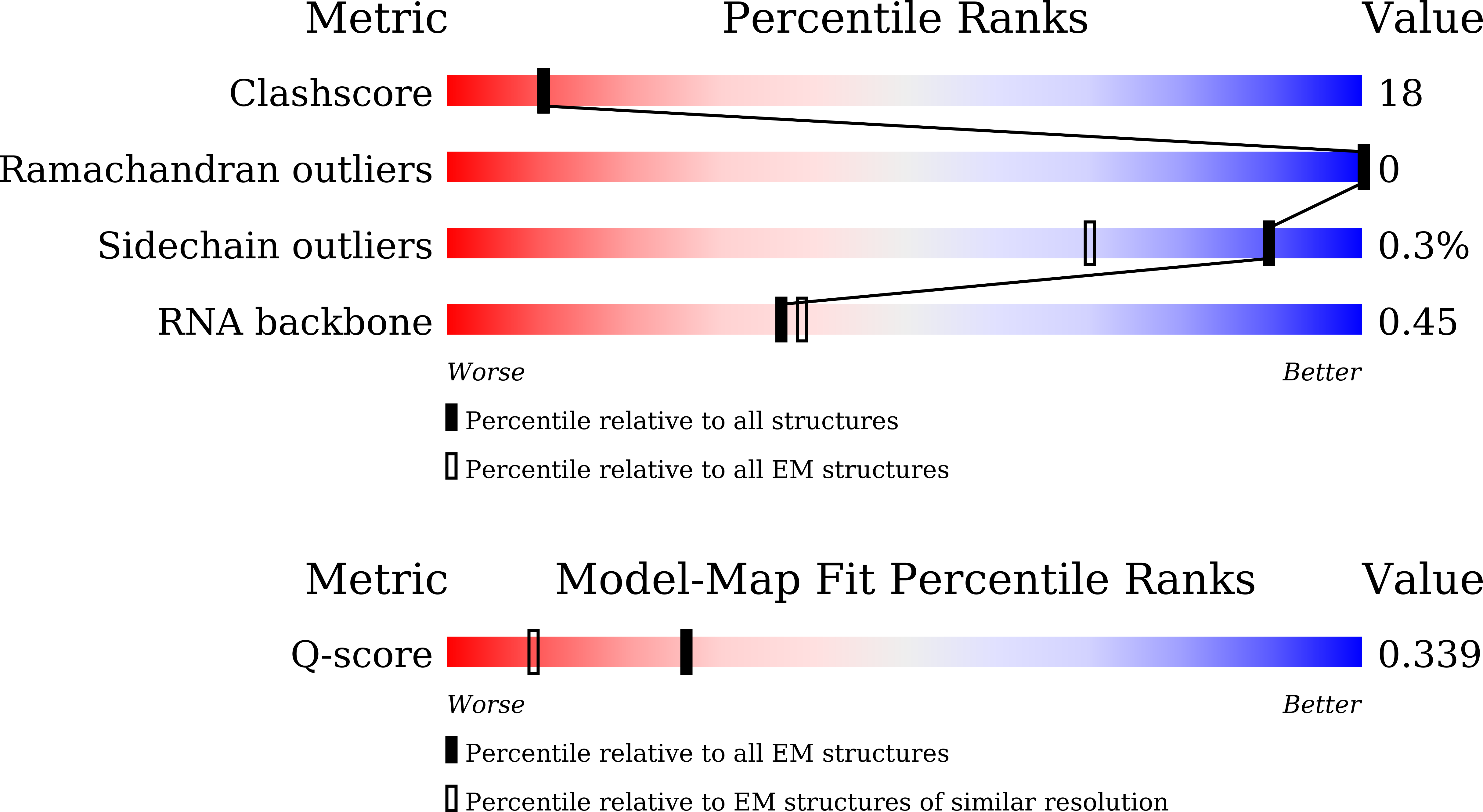
Resolution:
3.25 Å
Aggregation State:
PARTICLE
Reconstruction Method:
SINGLE PARTICLE
Macromolecular Entities
Polymer Type:polypeptide(L)
Molecule:LaTranC
Chain IDs:A
Chain Length:478
Number of Molecules:1
Biological Source:Lawsonibacter sp.
Polymer Type:polydeoxyribonucleotide
Molecule:DNA (42-MER)
Chain IDs:B (auth: C)
Chain Length:42
Number of Molecules:1
Biological Source:Lawsonibacter sp.
Polymer Type:polydeoxyribonucleotide
Molecule:DNA (42-MER)
Chain IDs:C (auth: D)
Chain Length:42
Number of Molecules:1
Biological Source:Lawsonibacter sp.
Polymer Type:polyribonucleotide
Molecule:RNA (195-MER)
Chain IDs:D (auth: F)
Chain Length:195
Number of Molecules:1
Biological Source:Lawsonibacter sp.
Ligand Molecules
Primary Citation
Functional RNA splitting drove the evolutionary emergence of type V CRISPR-Cas systems from transposons.
Cell 188 6283 6300.e22 (2025)
PMID: 41027434 DOI: 10.1016/j.cell.2025.09.004

Abstact

Transposon-encoded TnpB nucleases gave rise to type V CRISPR-Cas12 effectors through multiple independent domestication events. These systems use different RNA molecules as guides for DNA targeting: transposon-derived right-end RNAs (reRNAs or omega RNAs) for TnpB and CRISPR RNAs for type V CRISPR-Cas systems. However, the molecular mechanisms bridging transposon activity and CRISPR immunity remain unclear. We identify TranCs (transposon-CRISPR intermediates) derived from distinct IS605- or IS607-TnpB lineages. TranCs utilize both CRISPR RNAs and reRNAs to direct DNA cleavage. The cryoelectron microscopy (cryo-EM) structure of LaTranC from Lawsonibacter sp. closely resembles that of the ISDra2 TnpB complex; however, unlike a single-molecule reRNA, the LaTranC guide RNA is functionally split into a tracrRNA and crRNA. An engineered RNA split of ISDra2 TnpB enabled activity with a CRISPR array. These findings indicate that functional RNA splitting was the primary molecular event driving the emergence of diverse type V CRISPR-Cas systems from transposons.

Legend

Protein

Chemical

Disease

Primary Citation of related structures
Feedback Form
Name
Email
Institute
Feedback