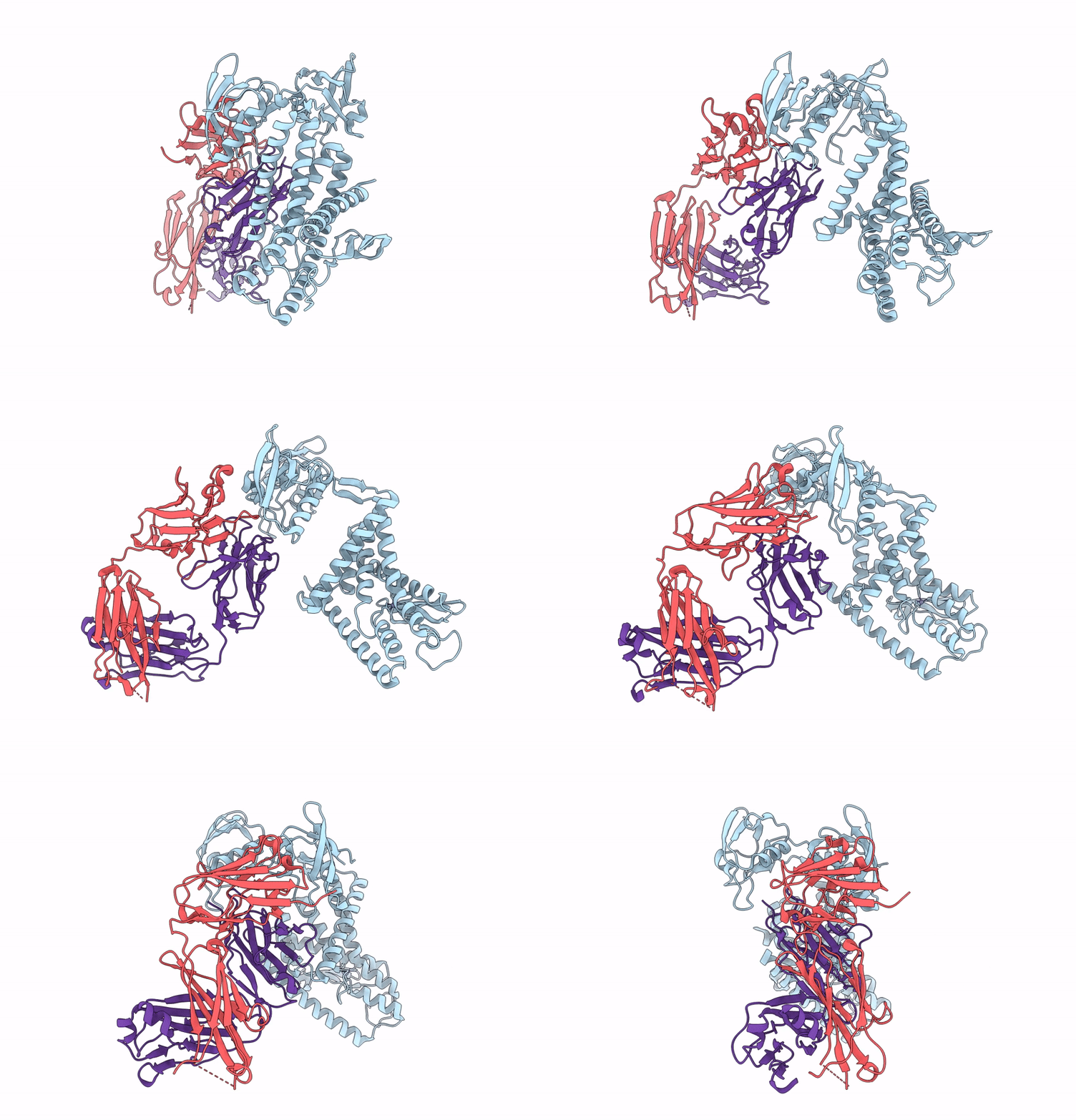
9J82 image
Deposition Date 2024-08-20
Release Date 2025-03-05
Last Version Date 2025-03-19
Entry Detail
PDB ID:
9J82
Keywords:
Title:
Cryo-EM structure of wild type Aquifex aeolicus RseP in complex with Fab
Biological Source:
Source Organism:
Host Organism:
Method Details:
Experimental Method:
Resolution:
3.95 Å
Aggregation State:
PARTICLE
Reconstruction Method:
SINGLE PARTICLE

Macromolecular Entities
Structures with similar UniProt ID
Protein Blast
Polymer Type:polypeptide(L)
Molecule:Putative zinc metalloprotease aq_1964
Gene (Uniprot):aq_1964
Chain IDs:A
Chain Length:441
Number of Molecules:1
Biological Source:Aquifex aeolicus VF5
Polymer Type:polypeptide(L)
Molecule:VH-CH1 region of mouse monoclonal antibody IgG 4A9
Chain IDs:B (auth: H)
Chain Length:239
Number of Molecules:1
Biological Source:Mus musculus
Polymer Type:polypeptide(L)
Molecule:L chain of mouse monoclonal antibody IgG 4A9
Chain IDs:C (auth: L)
Chain Length:214
Number of Molecules:1
Biological Source:Mus musculus
Modified Residue
Compound ID Chain ID Parent Comp ID Details 2D Image
FME A MET modified residue
SNN A ASN modified residue
Ligand Molecules
Primary Citation
Cryo-EM structure of the bacterial intramembrane metalloprotease RseP in the substrate-bound state.
Sci Adv 11 eadu0925 eadu0925 (2025)
PMID: 40009668 DOI: 10.1126/sciadv.adu0925

Abstact

Site-2 proteases (S2Ps), conserved intramembrane metalloproteases that maintain cellular homeostasis, are associated with chronic infection and persistence leading to multidrug resistance in bacterial pathogens. A structural model of how S2Ps discriminate and accommodate substrates could help us develop selective antimicrobial agents. We previously proposed that the Escherichia coli S2P RseP unwinds helical substrate segments before cleavage, but the mechanism for accommodating a full-length membrane-spanning substrate remained unclear. Our present cryo-EM analysis of Aquifex aeolicus RseP (AaRseP) revealed that a substrate-like membrane protein fragment from the expression host occupied the active site while spanning a transmembrane cavity that is inaccessible via lateral diffusion. Furthermore, in vivo photocrosslinking supported that this substrate accommodation mode is recapitulated on the cell membrane. Our results suggest that the substrate accommodation by threading through a conserved membrane-associated region stabilizes the substrate-complex and contributes to substrate discrimination on the membrane.

Legend

Protein

Chemical

Disease

Primary Citation of related structures
Feedback Form
Name
Email
Institute
Feedback