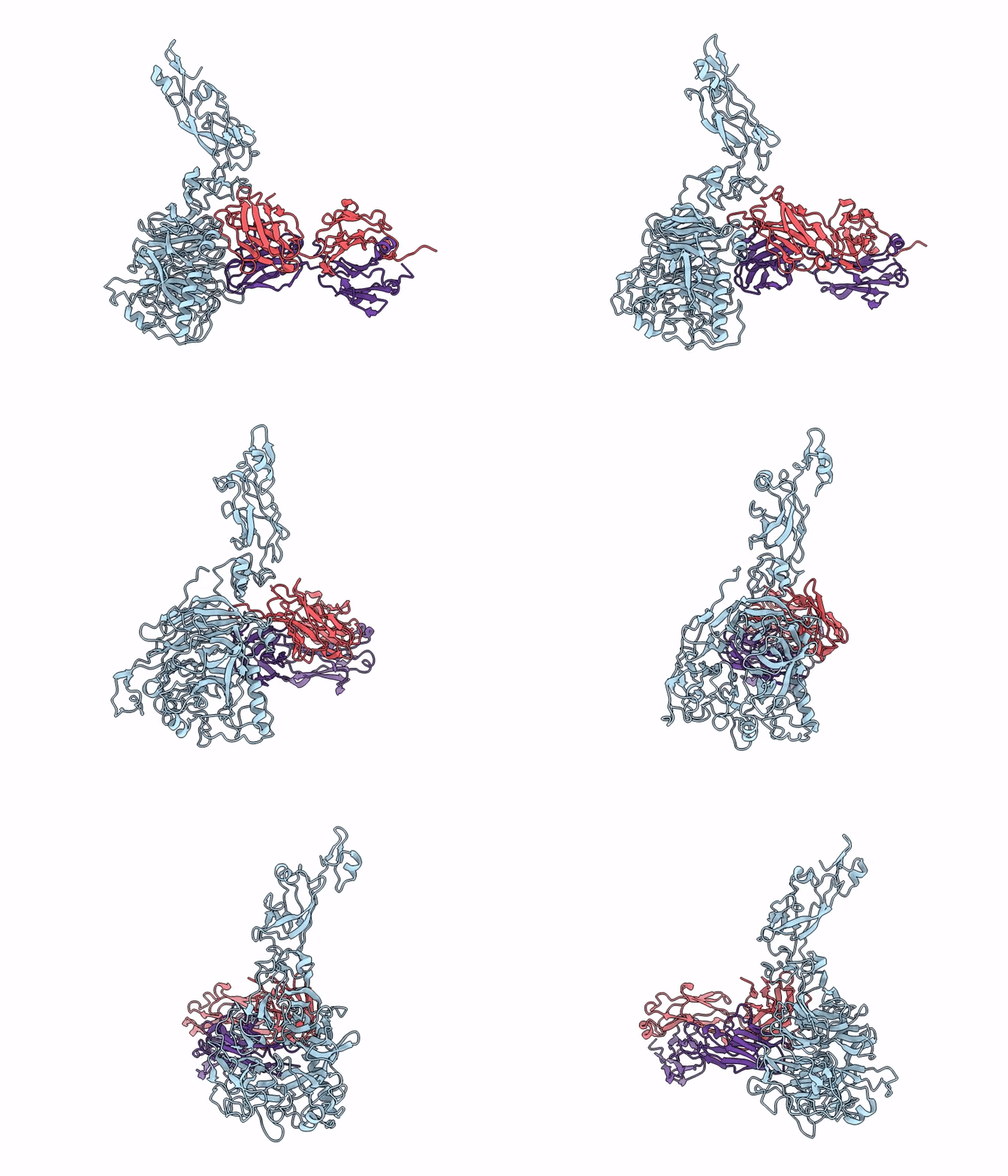
9J4C image
Deposition Date 2024-08-09
Release Date 2026-01-21
Last Version Date 2026-01-21
Entry Detail
PDB ID:
9J4C
Title:
Cryo-EM structure of aPlexinA1-19-43 Fab in complex with PlexinA1 dimer
Biological Source:
Source Organism(s):
Homo sapiens (Taxon ID: 9606)
Mus musculus (Taxon ID: 10090)
Expression System(s):
Method Details:
Experimental Method:
Resolution:
3.33 Å
Aggregation State:
PARTICLE
Reconstruction Method:
SINGLE PARTICLE
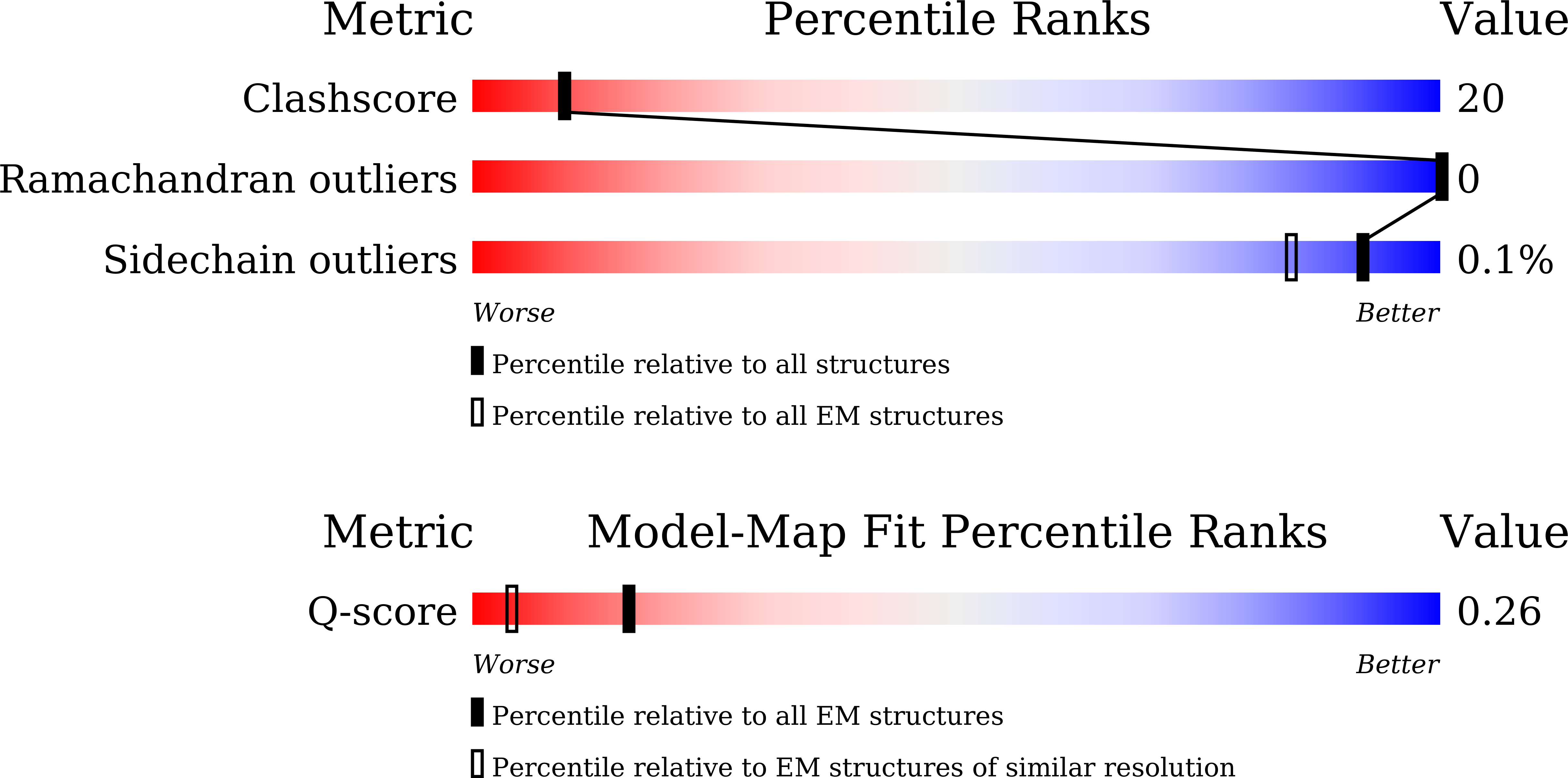
Macromolecular Entities
Structures with similar UniProt ID
Protein Blast
Polymer Type:polypeptide(L)
Molecule:Plexin-A1
Gene (Uniprot):PLXNA1
Chain IDs:A
Chain Length:690
Number of Molecules:1
Biological Source:Homo sapiens
Polymer Type:polypeptide(L)
Molecule:Heavy chain of aPlexinA1-19-43 Fab
Chain IDs:C (auth: H)
Chain Length:233
Number of Molecules:1
Biological Source:Mus musculus
Polymer Type:polypeptide(L)
Molecule:Light chain of aPlexinA1-19-43 Fab
Chain IDs:B (auth: L)
Chain Length:213
Number of Molecules:1
Biological Source:Mus musculus
Ligand Molecules
Primary Citation
A bispecific antibody designed to act as a NRP2/PLXNA1 agonist mimics anticancer activity of SEMA3F.
J.Biol.Chem. 302 111056 111056 (2025)
PMID: 41391772 DOI: 10.1016/j.jbc.2025.111056

Abstact

Neuropilin-2 (NRP2) is a pleiotropic receptor with diverse roles across biological systems. Recent work detailed its role as an immunomodulatory receptor target that is currently being explored in clinical development for interstitial lung diseases, establishing it as a viable therapeutic target. To mediate its diverse effects, NRP2 interacts with endogenous ligands, including semaphorins (SEMAs) and vascular endothelial growth factors, signaling via ligand-induced heterodimerization with various receptor families. One of these ligands, SEMA3F exhibits well-documented tumor-suppressive activities mediated through NRP2 and plexinA1 (PLXNA1). Despite its observed benefits, SEMA3F is not therapeutically viable due to the multifaceted nature of its functions through non-NRP2-mediated interactions, leading to concerns around potential toxicity. Here, we describe development of bispecific antibodies (bsAbs) that dimerize PLXNA1 and NRP2, selectively mimicking the beneficial aspects of SEMA3F signaling as a basis for a novel anticancer therapy. Using a single B cell-based mAb discovery platform, anti-PLXNA1 mAbs with diverse lineages were generated and combined with anti-NRP2 mAbs to produce over 200 PLXNA1-NRP2 bsAbs. Antibodies were screened in cell-based assays (receptor dimerization, phospho-AKT, oncogene expression, and cell proliferation), yielding one bsAb capable of mimicking NRP2-mediated SEMA3F activities in all assays. Structural studies revealed that this bsAb binds to PLXNA1/NRP2 at sites distinct from the SEMA3F-binding site, but in a manner that allows proper spacing for receptor complex formation and flexibility of conformational changes for signaling. This study demonstrates the potential of these receptors as targets for agonistic bsAbs development and provides the groundwork for further exploration in tumor models.

Legend

Protein

Chemical

Disease

Primary Citation of related structures
Feedback Form
Name
Email
Institute
Feedback