9IXU image
Deposition Date 2024-07-29
Release Date 2025-06-18
Last Version Date 2025-12-03
Entry Detail
PDB ID:
9IXU
Keywords:
Title:
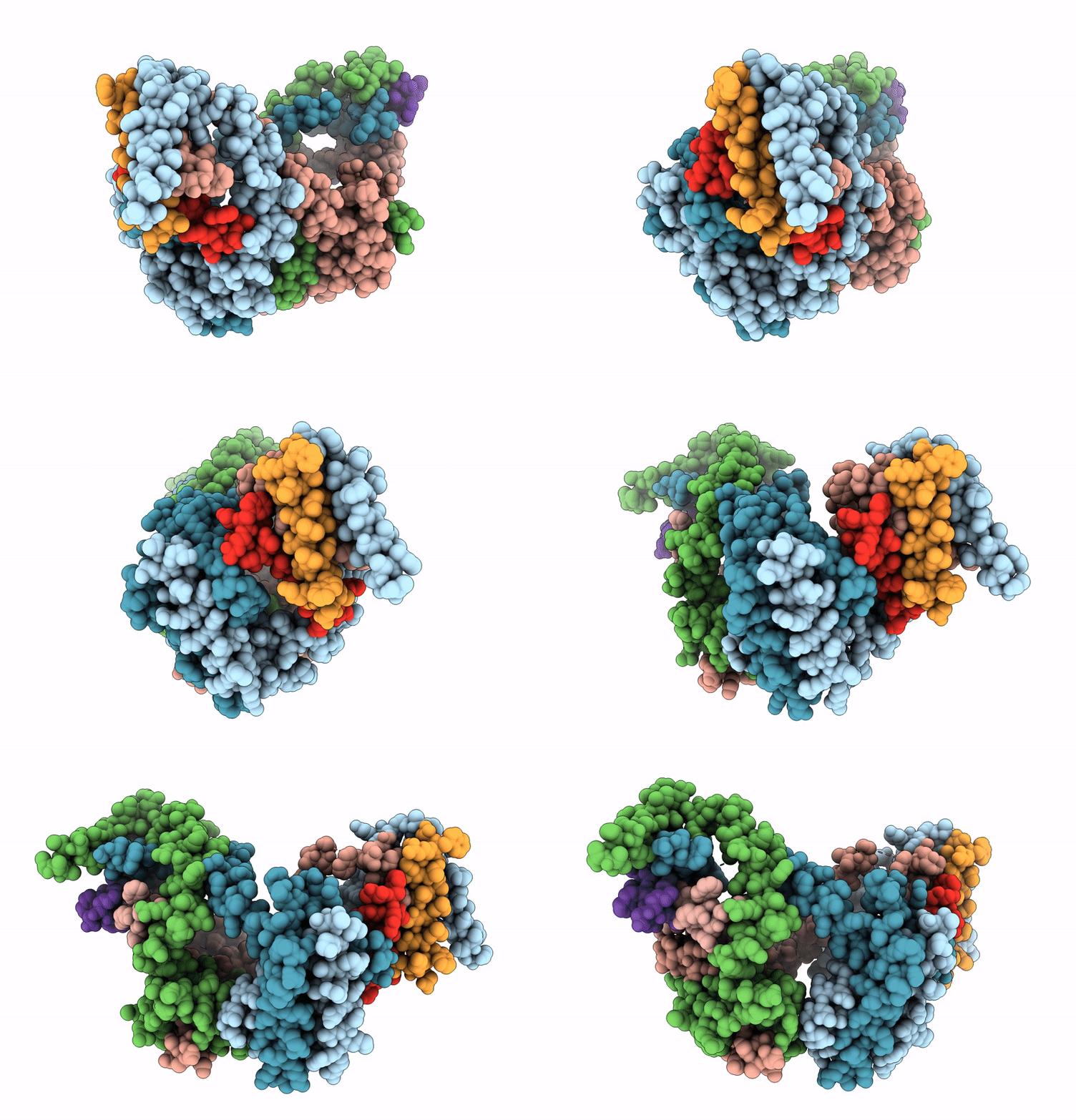
Overall reconstruction of the Bax line
Biological Source:
Source Organism:
Homo sapiens (Taxon ID: 9606)
Host Organism:
Method Details:
Experimental Method:
Resolution:
3.19 Å
Aggregation State:
FILAMENT
Reconstruction Method:
SINGLE PARTICLE
Macromolecular Entities
Structures with similar UniProt ID
Protein Blast
Polymer Type:polypeptide(L)
Molecule:Apoptosis regulator BAX
Gene (Uniprot):BAX
Chain IDs:A, B, C (auth: E), D (auth: F), E (auth: C), F (auth: D), G, H
Chain Length:192
Number of Molecules:8
Biological Source:Homo sapiens
Ligand Molecules
Primary Citation
Structural basis of BAX pore formation.
Science 388 eadv4314 eadv4314 (2025)
PMID: 40570108 DOI: 10.1126/science.adv4314

Abstact

During apoptosis, cytosolic BAX monomers are translocated to the mitochondria to permeabilize the outer membrane. Here, we identified a dimer of BAX dimers as the basic repeating unit of its various oligomeric forms: arcs, lines, and rings. Cryo-electron microscopy structure of the BAX repeating unit at 3.2-angstrom resolution revealed the interactions within and between dimers. End-to-end stacking of the repeating units through the protruding α9 pairs yielded lines, arcs, polygons, and rings. We structurally characterized the tetragon, pentagon, hexagon, and heptagon, which comprise 16, 20, 24, and 28 BAX protomers, respectively. Missense mutations at the BAX inter-protomer interface damage pore formation and cripple its proapoptotic function. The assembly principle of the various BAX oligomers reported here provides the structural basis of membrane permeabilization by BAX.

Legend

Protein

Chemical

Disease

Primary Citation of related structures
Feedback Form
Name
Email
Institute
Feedback