9ISA image
Deposition Date 2024-07-17
Release Date 2025-01-22
Last Version Date 2025-01-22
Entry Detail
PDB ID:
9ISA
Keywords:
Title:
Dimeric amylosucrase from Deinococcus geothermalis
Biological Source:
Method Details:
Experimental Method:
Resolution:
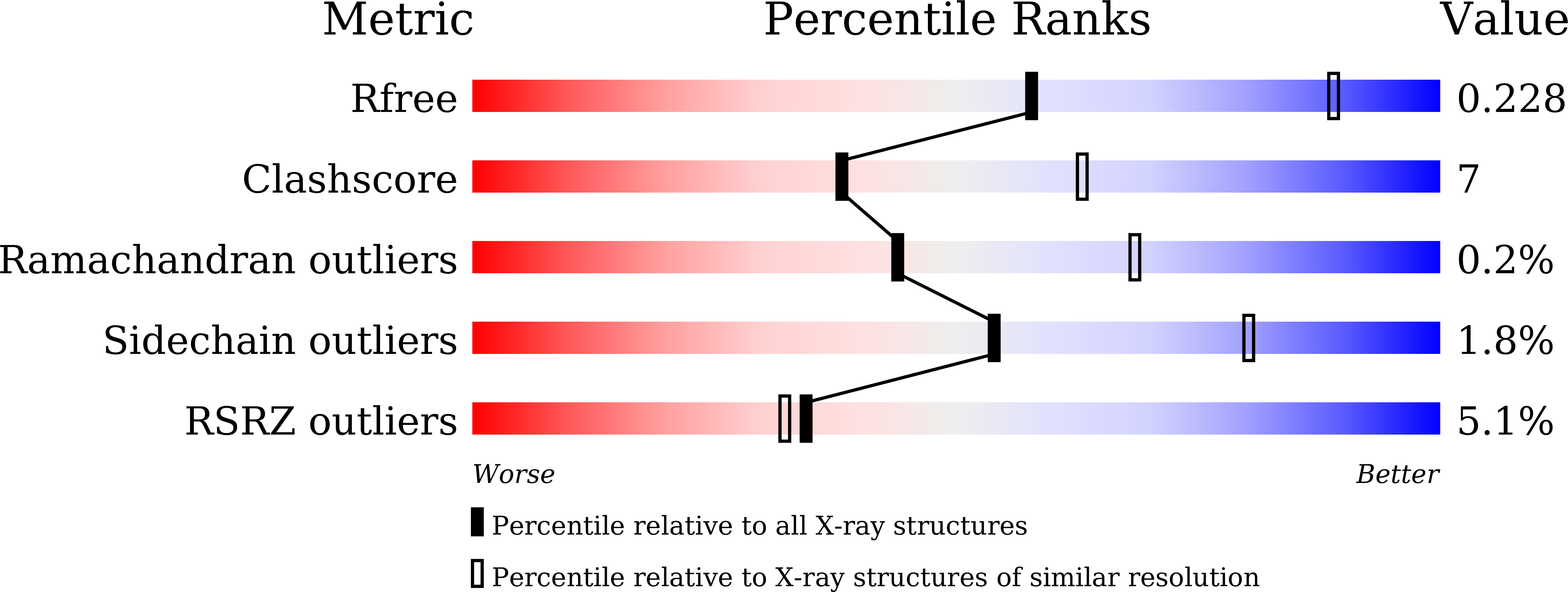
2.69 Å
R-Value Free:
0.21
R-Value Work:
0.17
R-Value Observed:
0.17
Space Group:
P 41 21 2
Macromolecular Entities
Structures with similar UniProt ID
Protein Blast
Polymer Type:polypeptide(L)
Molecule:Amylosucrase
Gene (Uniprot):Dgeo_0572
Chain IDs:A, B
Chain Length:645
Number of Molecules:2
Biological Source:Deinococcus geothermalis (strain DSM 11300 / CIP 105573 / AG-3a)
Primary Citation
Construction and enzymatic characterization of a monomeric variant of dimeric amylosucrase from Deinococcus geothermalis.
Int.J.Biol.Macromol. 285 138249 138249 (2025)
PMID: 39631600 DOI: 10.1016/j.ijbiomac.2024.138249

Abstact

Amylosucrase (ASase; E.C. 2.4.1.4), a member of glycoside hydrolase family 13 (GH13), produces α-1,4-glucans and sucrose isomers using sucrose as its sole substrate. This study identifies and characterizes the dimeric structure of ASase from Deinococcus geothermalis (DgAS), highlighting essential amino acid residues for maintaining the dimeric state. The monomeric form, DgAS R30A, exhibited a higher affinity for sucrose compared to the wild-type (WT), especially during the formation of the ASase-glucose intermediate complex and subsequent hydrolysis. Notably, DgAS R30A produced a higher proportion of α-glucans with a degree of polymerization (DP) of ≤20 and fewer α-glucans with a DP of ≥31. This suggested that the reduced surface area of the oligosaccharide binding site in the monomeric form led to decreased binding of longer-chain maltooligosaccharides, favoring the formation of shorter DP α-glucans. Kinetic analysis revealed significantly lower Michaelis constants (Km) for DgAS R30A's total and hydrolysis activities, with the overall performance (kcat/Km) values for DgAS R30A exceeded those of the WT at all sucrose concentrations. Here, we report the first high-resolution homodimeric DgAS structure, revealing conserved active site residues and a unique dimerization interface. This study enhances our understanding of the molecular factors influencing the oligomeric state and enzyme activities.

Legend

Protein

Chemical

Disease

Primary Citation of related structures
Feedback Form
Name
Email
Institute
Feedback