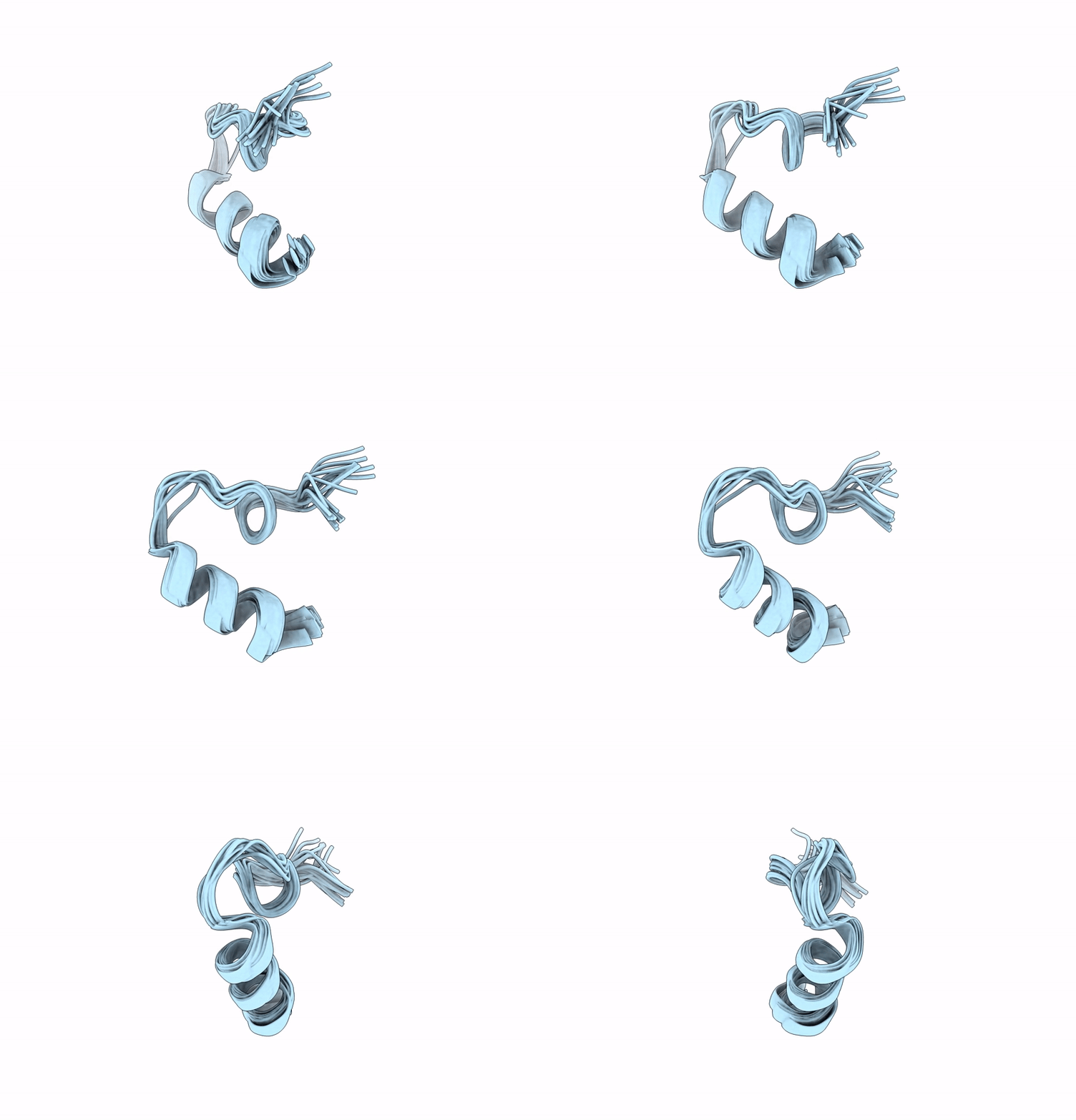
9IO3 image
Deposition Date 2024-07-08
Release Date 2025-07-16
Last Version Date 2026-01-28
Entry Detail
PDB ID:
9IO3
Title:
D-Amino Acid Substituted Antimicrobial Peptides Derived from Tilapia piscidin 4
Biological Source:
Source Organism(s):
Method Details:
Experimental Method:
Conformers Calculated:
100
Conformers Submitted:
20
Selection Criteria:
structures with the lowest energy

Macromolecular Entities
Polymer Type:polypeptide(L)
Molecule:Tilapia piscidin 4 alpha
Chain IDs:A
Chain Length:25
Number of Molecules:1
Biological Source:Oreochromis niloticus
Ligand Molecules
Primary Citation
Optimization of sequence and chiral content enhances therapeutic potential of tilapia piscidin peptides.
Eur.J.Med.Chem. 265 116083 116083 (2024)
PMID: 38150960 DOI: 10.1016/j.ejmech.2023.116083

Abstact

Because antimicrobial peptides (AMPs) often exhibit broad-spectrum bactericidal potency, we sought to develop peptide-based antimicrobials for potential clinical use against drug-resistant pathogens. To accomplish this goal, we first optimized the amino acid sequence of a broad-spectrum AMP known as Tilapia Piscidin 4 (TP4). Then, we used the optimized sequence to create a pair of heterochiral variants (TP4-α and TP4-β) with different percentages of D-enantiomers, as poly-L peptides often exhibit poor pharmacokinetic profiles. The conformations of the peptide pair exhibited inverted chirality according to CD and NMR spectroscopic analyses. Both heterochiral peptides displayed enhanced stability and low hemolysis activities. Irrespective of their different d-enantiomer contents, both heterochiral peptides exhibited bactericidal activities in the presence of human serum or physiological enzymes. However, the peptide with higher d-amino acid content (TP4-β) caused better bacterial clearance when tested in mice infected with NDM-1 K. pneumoniae. In addition, we observed a relatively higher hydrogen bonding affinity in a simulation of the interaction between TP4-β and a model bacterial membrane. In sum, our results demonstrate that the current design strategy may be applicable for development of new molecules with enhanced stability and in vivo antimicrobial activity.

Legend

Protein

Chemical

Disease

Primary Citation of related structures
Feedback Form
Name
Email
Institute
Feedback