9IH0 image
Deposition Date 2025-02-20
Release Date 2025-10-08
Last Version Date 2025-10-08
Entry Detail
PDB ID:
9IH0
Keywords:
Title:
Crystal structure of Vaspin with PolyP45
Biological Source:
Source Organism:
Homo sapiens (Taxon ID: 9606)
Host Organism:
Method Details:
Experimental Method:
Resolution:
2.26 Å
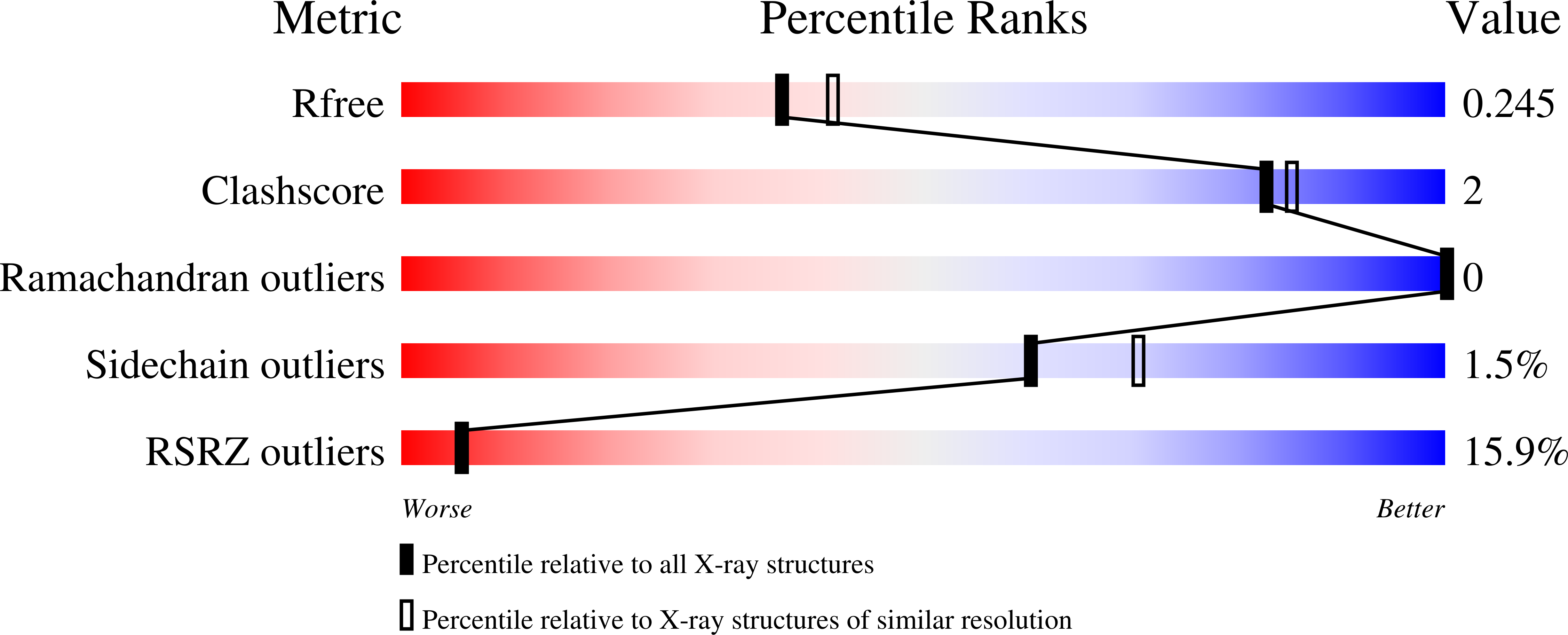
R-Value Free:
0.24
R-Value Work:
0.21
R-Value Observed:
0.21
Space Group:
C 1 2 1
Macromolecular Entities
Structures with similar UniProt ID
Protein Blast
Polymer Type:polypeptide(L)
Molecule:Serpin A12
Gene (Uniprot):SERPINA12
Chain IDs:A, B
Chain Length:414
Number of Molecules:2
Biological Source:Homo sapiens
Primary Citation
Vaspin identified as a DNA-binding serpin with functional consequences for protease inhibition.
Febs J. ? ? ? (2025)
PMID: 40975878 DOI: 10.1111/febs.70270

Abstact

Vaspin is highly expressed not only in the skin but also in the liver and adipose tissue. It counteracts inflammation and oxidative stress in inflammatory skin diseases, obesity, and associated metabolic disorders, in part by inhibiting the kallikrein proteases KLK7 and KLK14. Vaspin binds the cell-surface low-density lipoprotein receptor-related protein 1 (LRP1) with nanomolar affinity, and is rapidly internalized into adipocytes and other cells. We found intracellular vaspin partially localized in the nucleus. Since vaspin binds heparin and inorganic polyphosphates, we investigated the DNA binding of vaspin. Using DNA-affinity chromatography and differential radial capillary action of ligand assays, we found high-affinity binding to random sequences of single- and double-stranded DNA for both vaspin and KLK7. Furthermore, KLK7 inhibition was accelerated fivefold in the presence of DNA molecules at least 40 bases in length. We previously identified the heparin-binding site at a basic patch on the central beta-sheet A of vaspin. In the current work, we determined the crystal structure of polyphosphate P45-bound vaspin, which confirmed previously identified residues mutated to generate a nonheparin-binding (NHB) vaspin variant. While NHB vaspin failed to bind heparin and polyP45, it still bound DNA with high affinity and accelerated protease inhibition. Mutation of closely spaced basic residues in helix A and helix G did not significantly alter DNA binding. In conclusion, we have identified vaspin as the second human DNA-binding serpin. While the exact mode of the nonspecific interaction remains unclear, it accelerates protease inhibition and likely contributes to the nuclear localization observed for internalized vaspin and may allow for intracellular effects.

Legend

Protein

Chemical

Disease

Primary Citation of related structures
Feedback Form
Name
Email
Institute
Feedback