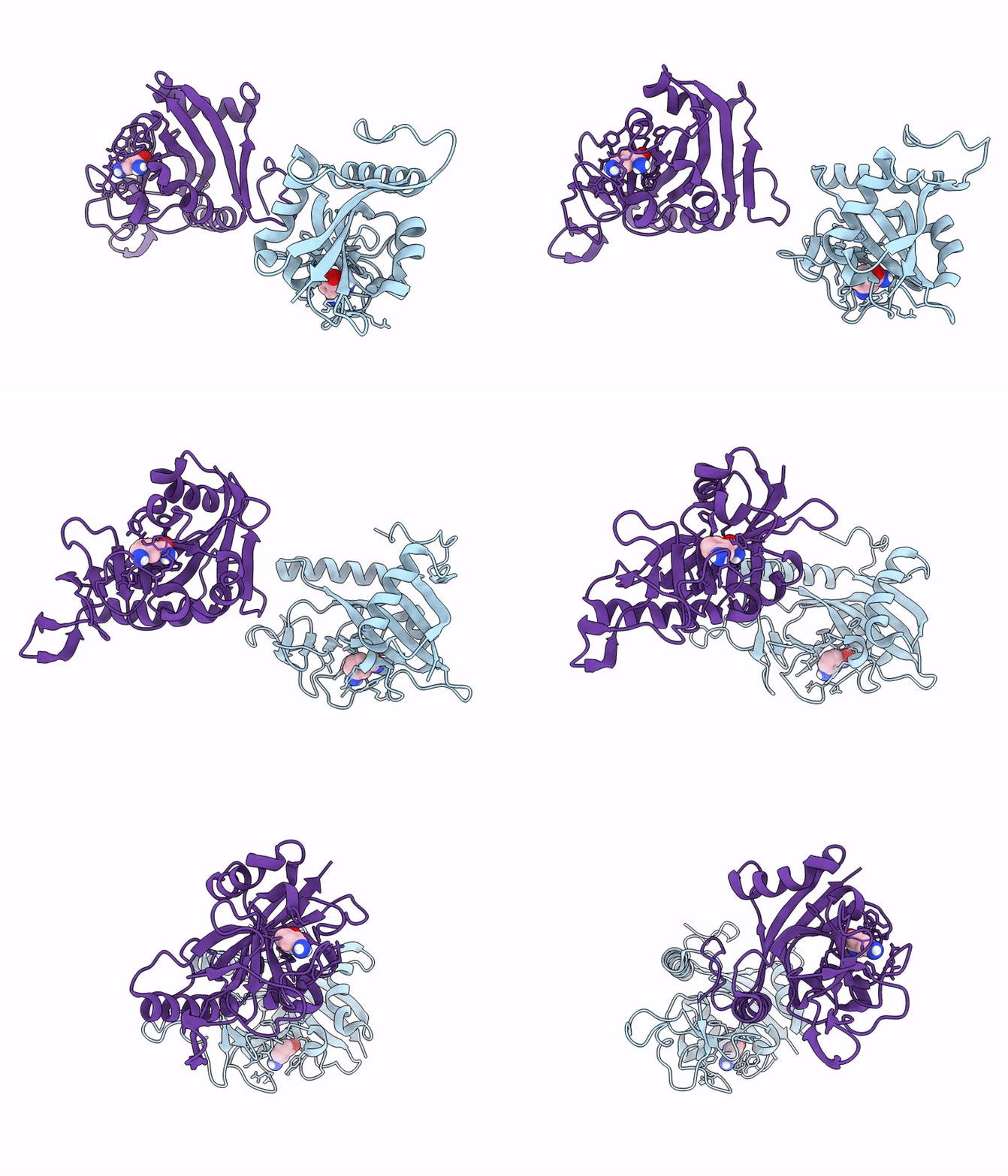
9IFV image
Deposition Date 2025-02-18
Release Date 2025-10-08
Last Version Date 2025-11-12
Entry Detail
PDB ID:
9IFV
Keywords:
Title:
PARP15 catalytic domain mutant (R576E) in complex with 3-aminobenzamide
Biological Source:
Source Organism:
Homo sapiens (Taxon ID: 9606)
Host Organism:
Method Details:
Experimental Method:
Resolution:
1.43 Å
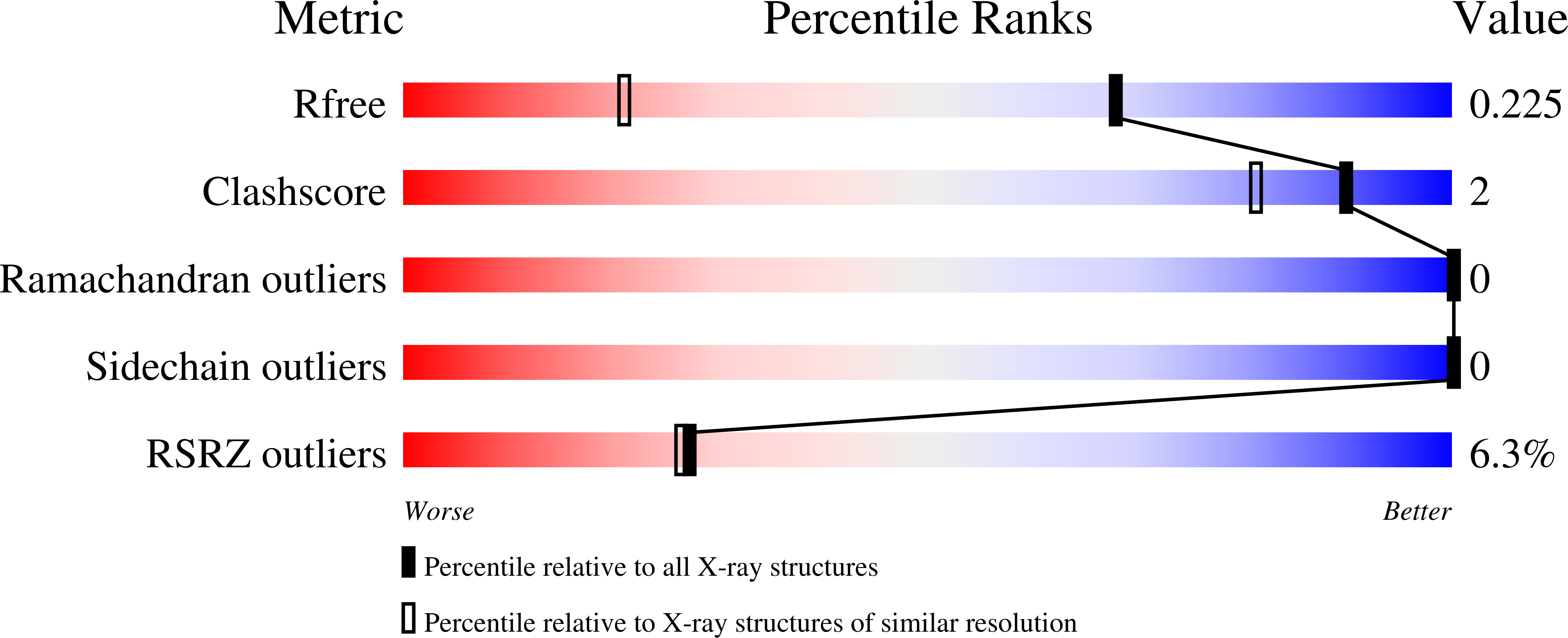
R-Value Free:
0.22
R-Value Work:
0.19
R-Value Observed:
0.19
Space Group:
C 2 2 21
Macromolecular Entities
Structures with similar UniProt ID
Protein Blast
Polymer Type:polypeptide(L)
Molecule:Protein mono-ADP-ribosyltransferase PARP15
Gene (Uniprot):PARP15
Mutagens:R576E
Chain IDs:A, B
Chain Length:221
Number of Molecules:2
Biological Source:Homo sapiens
Ligand Molecules
Primary Citation
Regulation of ADP-ribosyltransferase activity by ART domain dimerization in PARP15.
Nat Commun 16 9567 9567 (2025)
PMID: 41162413 DOI: 10.1038/s41467-025-65315-9

Abstact

PARP15 is a mono-ADP-ribosyltransferase that targets an unknown set of proteins as well as RNA. Its evolutionary relationship with PARP14 suggests roles in antiviral defence; its localization to stress granules points to functions in the regulation of translation. Here we show that the transferase domain of PARP15 dimerizes in solution; the formation of dimers is a prerequisite for catalytic activity and monomeric mutant variants of the domain are inactive. In cells, dimer-disrupting mutations abrogate catalytic activity and alter the subcellular localization of the full-length protein. Using biophysical methods, including X-ray crystallography and HDX-MS, we provide evidence for a regulatory mechanism by which dimerization enables correct target engagement rather than NAD+ co-substrate binding, and by which the two protomers of the dimer operate independently of one another. Together, our results uncover a regulatory mechanism in a PARP family enzyme.

Legend

Protein

Chemical

Disease

Primary Citation of related structures
Feedback Form
Name
Email
Institute
Feedback