9IFR image
Deposition Date 2025-02-18
Release Date 2025-11-26
Last Version Date 2025-11-26
Entry Detail
PDB ID:
9IFR
Keywords:
Title:
CLIPPER domain from the Gram-negative fibrillar adhesin "B9T28_05395
Biological Source:
Source Organism:
Method Details:
Experimental Method:
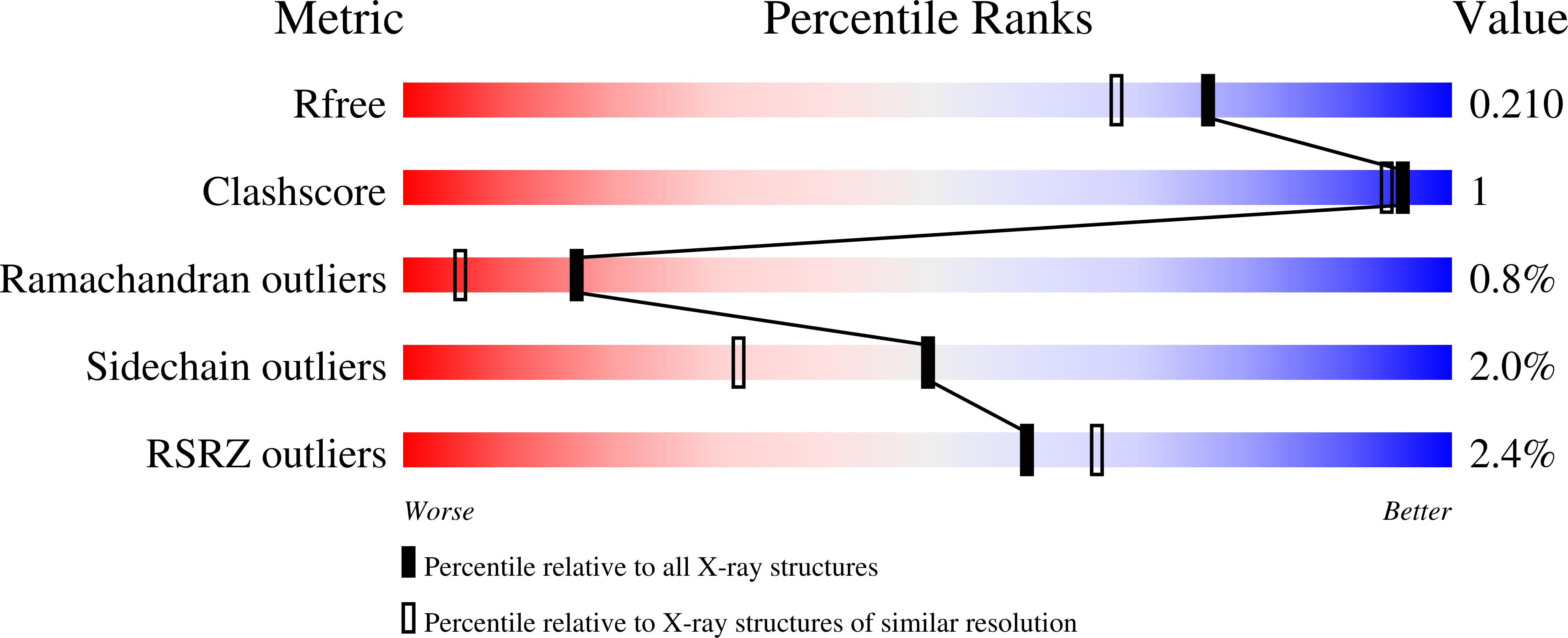
Resolution:
1.77 Å
R-Value Free:
0.20
R-Value Work:
0.20
Space Group:
P 63
Macromolecular Entities
Structures with similar UniProt ID
Protein Blast
Polymer Type:polypeptide(L)
Molecule:OmpA-like domain-containing protein
Gene (Uniprot):B9T28_05395
Chain IDs:A
Chain Length:123
Number of Molecules:1
Biological Source:Acinetobacter silvestris
Ligand Molecules
Primary Citation
A global survey of intramolecular isopeptide bonds.
Protein Sci. 34 e70342 e70342 (2025)
PMID: 41236442 DOI: 10.1002/pro.70342

Abstact

Many proteins harbor covalent intramolecular bonds that enhance their stability and resistance to thermal, mechanical, and proteolytic insults. Intramolecular isopeptide bonds represent one such covalent interaction, yet their distribution across protein domains and organisms has been largely unexplored. Here, we sought to address this by employing a large-scale prediction of intramolecular isopeptide bonds in the AlphaFold database using the structural template-based software Isopeptor. Our findings reveal an extensive phyletic distribution in bacterial and archaeal surface proteins resembling fibrillar adhesins and pilins. All identified intramolecular isopeptide bonds are found in two structurally distinct folds, CnaA-like or CnaB-like, from a relatively small set of related Pfam families, including 10 novel families that we predict to contain intramolecular isopeptide bonds. One CnaA-like domain of unknown function, DUF11 (renamed here to "CLIPPER") is broadly distributed in cell-surface proteins from Gram-positive bacteria, Gram-negative bacteria, and archaea, and is structurally and biophysically characterized in this work. Using x-ray crystallography, we resolve a CLIPPER domain from a Gram-negative fibrillar adhesin that contains an intramolecular isopeptide bond and further demonstrate that it imparts thermostability and resistance to proteolysis. Our findings demonstrate the extensive distribution of intramolecular isopeptide bond-containing protein domains in nature and structurally resolve the previously cryptic CLIPPER domain.

Legend

Protein

Chemical

Disease

Primary Citation of related structures
Feedback Form
Name
Email
Institute
Feedback