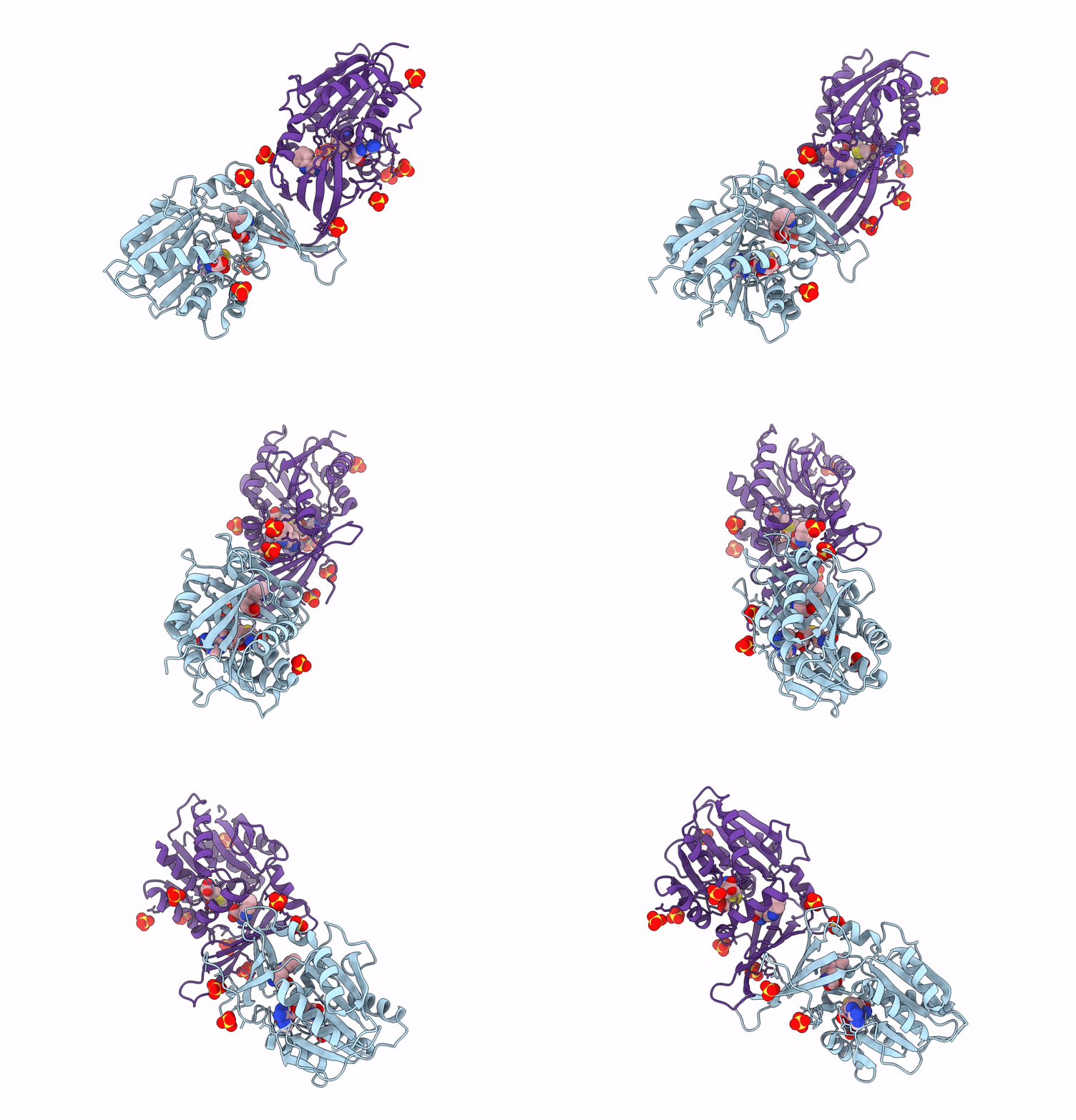
9ICZ image
Deposition Date 2025-02-14
Release Date 2025-12-10
Last Version Date 2025-12-10
Entry Detail
PDB ID:
9ICZ
Keywords:
Title:
C-Methyltransferase SeMT from Saccharopolyspora erythraea
Biological Source:
Source Organism:
Method Details:
Experimental Method:
Resolution:
1.58 Å
R-Value Free:
0.19
R-Value Work:
0.17
R-Value Observed:
0.17
Space Group:
C 2 2 21

Macromolecular Entities
Structures with similar UniProt ID
Protein Blast
Polymer Type:polypeptide(L)
Molecule:S-adenosylmethionine (SAM)-dependent methyltransferase
Gene (Uniprot):SACE_3471
Chain IDs:A, B
Chain Length:277
Number of Molecules:2
Biological Source:Saccharopolyspora erythraea
Primary Citation
Re-engineering a transferase scaffold for indole C3 methylation in diketopiperazines.
Protein Sci. 34 e70254 e70254 (2025)
PMID: 40878043 DOI: 10.1002/pro.70254

Abstact

The pyrroloindole (hexahydropyrrolo[2,3-b]indole, HPI) structural motif is present in a wide range of natural products with various biological activities, yet its chemical synthesis poses a challenge, particularly regarding methylation at the indole C3 position. In nature, S-adenosyl methionine (SAM)-dependent methyltransferases efficiently catalyze this reaction with high stereoselectivity. This study presents the investigation and rational re-design of a potential methyltransferase, termed SeMT, from the actinomycete Saccharopolyspora erythraea. While its three-dimensional structure elucidated via X-ray crystallography confirmed extensive structural similarity to cyclic dipeptide-processing methyltransferases such as SgMT, its putative catalytic center is clearly divergent. Accordingly, wild-type SeMT displayed minimal activity with diketopiperazine (DKP) substrates, triggering an extensive mutagenesis effort aimed at iteratively enhancing this methyltransferase function. This work yielded a variant with appreciable activity, which was comprehensively characterized. Notably, a specific mutation within the catalytic triad of SeMT proved critical not only for its own function but also for the temperature-activity profile of its homolog protein SgMT. Beyond the specific properties of SeMT, these findings hence provide important insights into the active center architecture of indole C3-methyltransferases, supporting further development of these enzymes into refined biocatalysts for synthetic applications.

Legend

Protein

Chemical

Disease

Primary Citation of related structures
Feedback Form
Name
Email
Institute
Feedback