9IAQ image
Deposition Date 2025-02-11
Release Date 2026-01-14
Last Version Date 2026-02-25
Entry Detail
PDB ID:
9IAQ
Title:
Arbitrium controls lysis-lysogeny through the activation of a small antirepressor protein in the majority of arbitrium-coding phages
Biological Source:
Source Organism(s):
Expression System(s):
Method Details:
Experimental Method:
Resolution:
1.89 Å
R-Value Free:
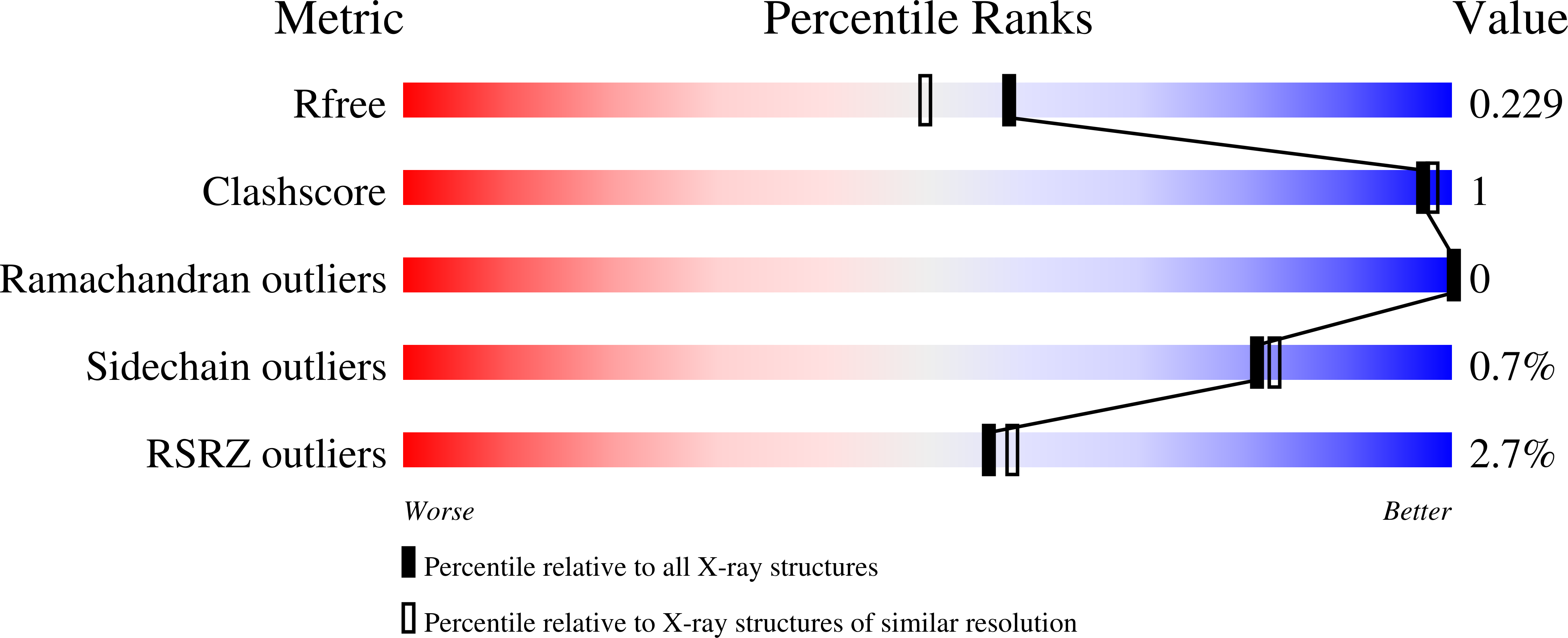
0.22
R-Value Work:
0.19
Space Group:
P 1 21 1
Macromolecular Entities
Structures with similar UniProt ID
Protein Blast
Polymer Type:polypeptide(L)
Molecule:HTH cro/C1-type domain-containing protein
Gene (Uniprot):BMBtpLA2_19
Chain IDs:A, B, C, D
Chain Length:142
Number of Molecules:4
Biological Source:Bacillus phage vB_BtS_BMBtp14
Ligand Molecules
Primary Citation
A widespread extended arbitrium system controls lysis/lysogeny through antirepression.
Cell Host Microbe 34 278 ? (2026)
PMID: 41619737 DOI: 10.1016/j.chom.2026.01.007

Abstact

Many temperate Bacillus phages use the arbitrium peptide-based signaling system to regulate lysis-lysogeny decisions. In this system, the secreted AimP peptide inhibits the AimR receptor to promote lysogeny. However, the downstream mechanism of AimR-mediated lysis control remains unclear for most systems. Here, we identify that ∼75% of arbitrium systems possess an extended five-gene module, including the aimX, aimC, and aimL genes. AimX encodes a small AimR-regulated antirepressor protein that binds the phage repressor AimC, preventing its oligomerization and DNA binding, thereby activating the pro-lytic aimL gene and additional lytic genes. This mechanism was validated across multiple phages and structurally characterized, revealing that AimX mimics the AimC oligomerization domain to prevent oligomerization and inhibit repressor function. These findings elucidate the predominant molecular strategy by which arbitrium systems control phage lysis-lysogeny transitions and highlight the central role of small proteins in phage decision-making.

Legend

Protein

Chemical

Disease

Primary Citation of related structures
Feedback Form
Name
Email
Institute
Feedback