9I9C image
Deposition Date 2025-02-06
Release Date 2025-12-10
Last Version Date 2026-01-07
Entry Detail
PDB ID:
9I9C
Keywords:
Title:
CRYSTAL STRUCTURE OF HUMAN MONOACYLGLYCEROL LIPASE WITH COMPOUND 29
Biological Source:
Source Organism(s):
Homo sapiens (Taxon ID: 9606)
Expression System(s):
Method Details:
Experimental Method:
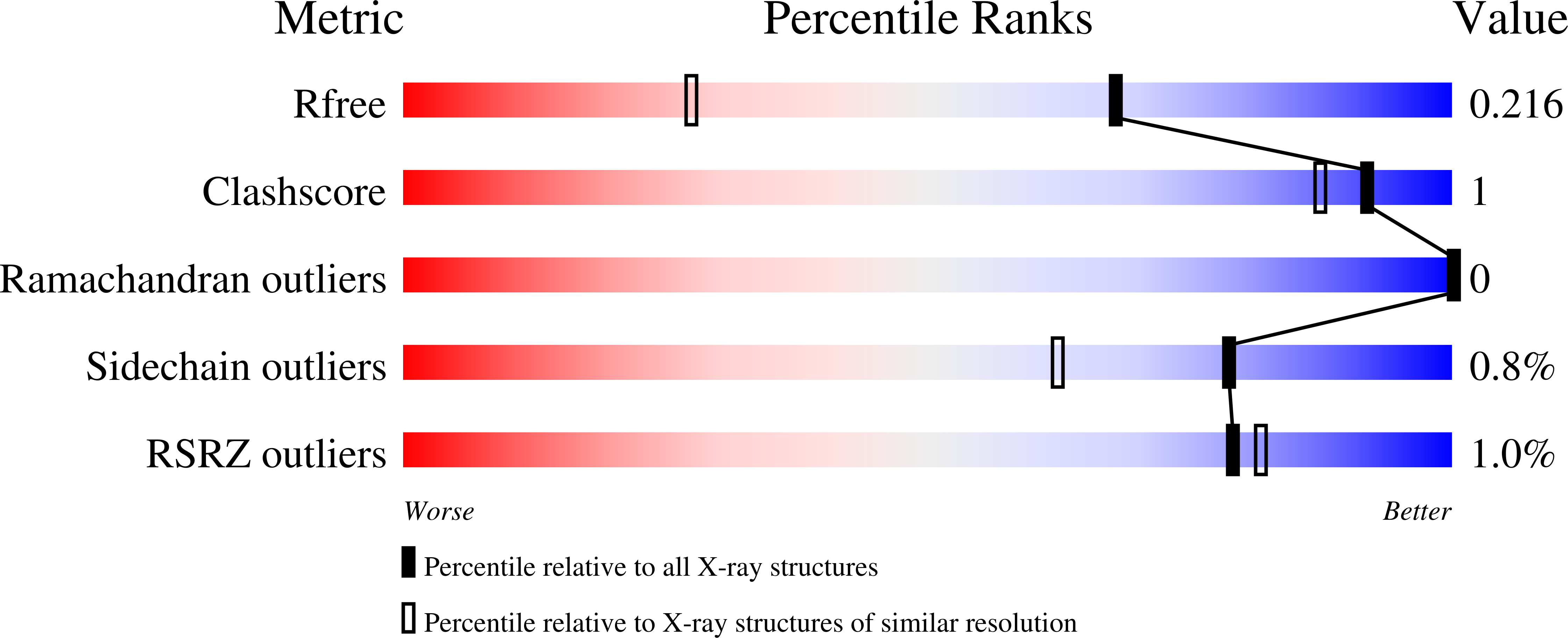
Resolution:
1.49 Å
R-Value Free:
0.21
R-Value Work:
0.17
R-Value Observed:
0.17
Space Group:
C 2 2 21
Macromolecular Entities
Structures with similar UniProt ID
Protein Blast
Polymer Type:polypeptide(L)
Molecule:Monoglyceride lipase
Gene (Uniprot):MGLL
Chain IDs:A
Chain Length:323
Number of Molecules:1
Biological Source:Homo sapiens
Primary Citation
Expediting hit-to-lead progression in drug discovery through reaction prediction and multi-dimensional optimization.
Nat Commun 16 11646 11646 (2025)
PMID: 41290653 DOI: 10.1038/s41467-025-66324-4

Abstact

The rapid and economical synthesis of novel bioactive compounds remains a hurdle in drug discovery efforts. This study demonstrates an integrated medicinal chemistry workflow that effectively diversifies hit and lead structures, enabling an acceleration of the critical hit-to-lead optimization phase. Employing high-throughput experimentation (HTE), we generated a comprehensive data set encompassing 13,490 novel Minisci-type C-H alkylation reactions. These data served as the foundation for training deep graph neural networks to accurately predict reaction outcomes. Scaffold-based enumeration of potential Minisci reaction products, starting from moderate inhibitors of monoacylglycerol lipase (MAGL), yielded a virtual library containing 26,375 molecules. This virtual chemical library was evaluated using reaction prediction, physicochemical property assessment, and structure-based scoring, identifying 212 MAGL inhibitor candidates. Of these, 14 compounds were synthesized and exhibited subnanomolar activity, representing a potency improvement of up to 4500 times over the original hit compound. These ligands also showed favorable pharmacological profiles. Co-crystallization of three computationally designed ligands with the MAGL protein provided structural insights into their binding modes. This study demonstrates the potential of combining miniaturized HTE with deep learning and optimization of molecular properties to reduce cycle times in hit-to-lead progression.

Legend

Protein

Chemical

Disease

Primary Citation of related structures
Feedback Form
Name
Email
Institute
Feedback