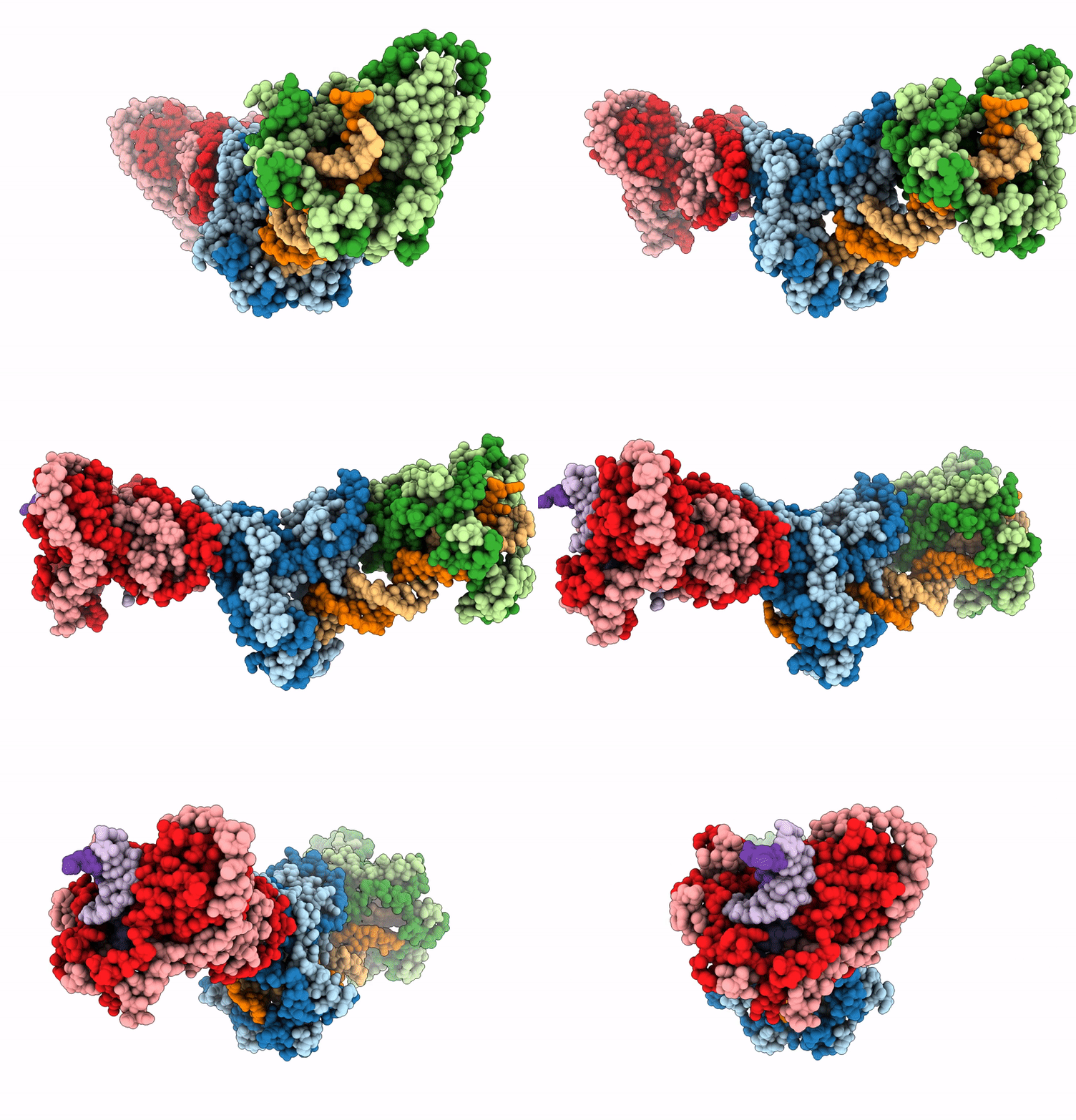
9I91 image
Deposition Date 2025-02-06
Release Date 2025-12-10
Last Version Date 2025-12-10
Entry Detail
PDB ID:
9I91
Title:
Ku from Mycobacterium tuberculosis bound to DNA
Biological Source:
Source Organism:
Host Organism:
Method Details:
Experimental Method:
Resolution:
2.96 Å
Aggregation State:
FILAMENT
Reconstruction Method:
SINGLE PARTICLE
Macromolecular Entities
Structures with similar UniProt ID
Protein Blast
Polymer Type:polypeptide(L)
Molecule:Non-homologous end joining protein Ku
Gene (Uniprot):mku
Chain IDs:A, B, C, D, E, F
Chain Length:296
Number of Molecules:6
Biological Source:Mycobacterium tuberculosis
Polymer Type:polydeoxyribonucleotide
Molecule:DNA 1
Chain IDs:G, I
Chain Length:32
Number of Molecules:2
Biological Source:DNA molecule
Polymer Type:polydeoxyribonucleotide
Molecule:DNA 2
Chain IDs:H, J
Chain Length:32
Number of Molecules:2
Biological Source:DNA molecule
Primary Citation
Oligomerisation of Ku from Mycobacterium tuberculosis promotes DNA synapsis.
Nat Commun 16 10568 10568 (2025)
PMID: 41298423 DOI: 10.1038/s41467-025-65609-y

Abstact

Mycobacterium tuberculosis (Mtb), the causative agent of tuberculosis (TB), is estimated to infect nearly one-quarter of the global population. A key factor in its resilience and persistence is its robust DNA repair capacity. Non-homologous end joining (NHEJ) is the primary pathway for repairing DNA double-strand breaks (DSBs) in many organisms, including Mtb, where it is mediated by the Ku protein and the multifunctional LigD enzyme. In this study, we demonstrate that Ku is essential for mycobacterial survival under DNA-damaging conditions. Using cryogenic electron microscopy (cryo-EM), we solved high-resolution structures of both the apo and DNA-bound forms of the Ku-Mtb homodimer. Our structural and biophysical analyses reveal that Ku forms an extended proteo-filament upon binding DNA. We identify critical residues involved in filament formation and DNA synapsis and show that their mutation severely impairs bacterial viability. Furthermore, we propose a model in which the C-terminus of Ku regulates DNA binding and loading and facilitates subsequent recruitment of LigD. These findings provide unique insights into bacterial DNA repair and guide future therapeutics.

Legend

Protein

Chemical

Disease

Primary Citation of related structures
Feedback Form
Name
Email
Institute
Feedback