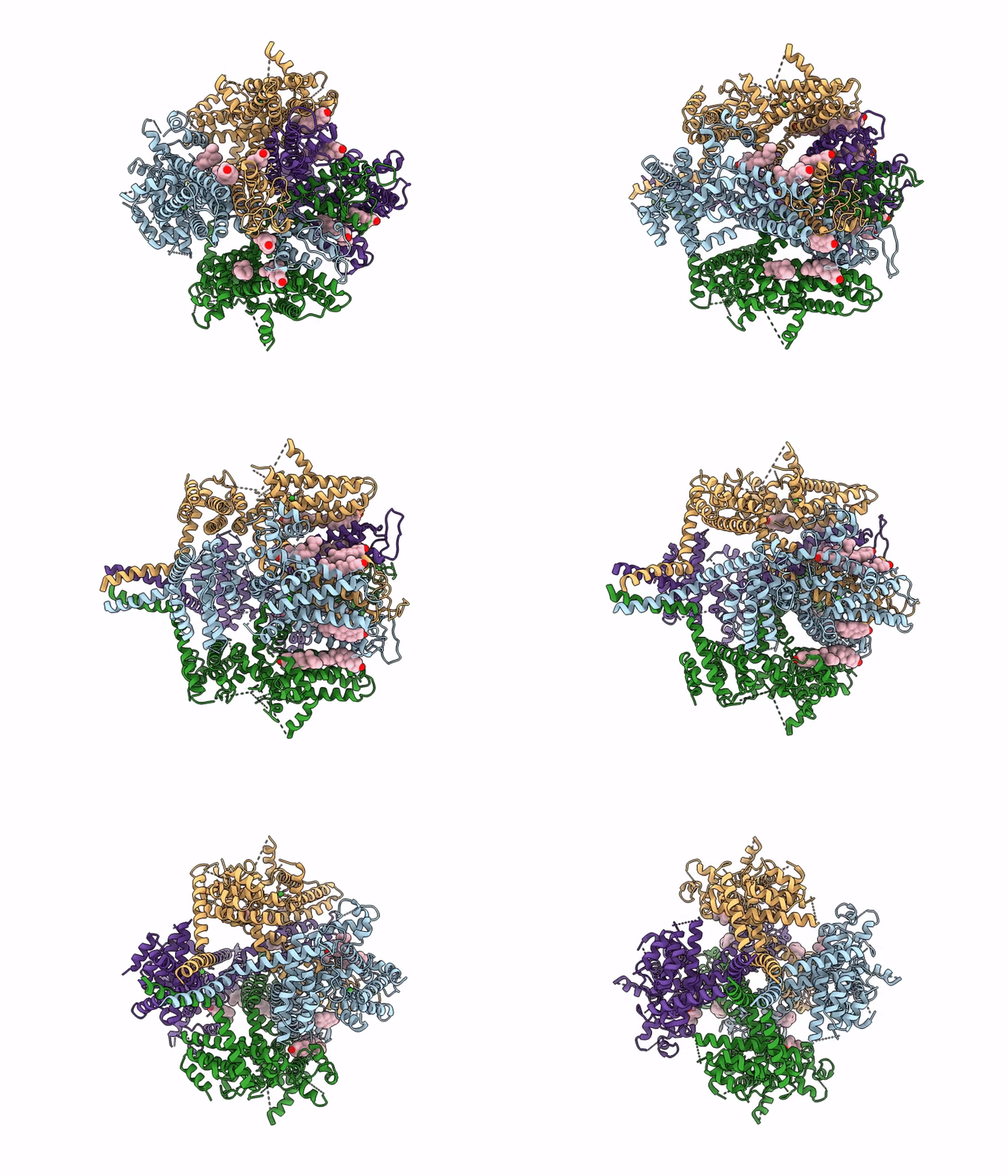
9I3R image
Deposition Date 2025-01-23
Release Date 2026-01-28
Last Version Date 2026-01-28
Entry Detail
PDB ID:
9I3R
Title:
Human TRPM4 ion channel in MAASTY copolymer lipid nanodisc in a calcium-bound state
Biological Source:
Source Organism(s):
Homo sapiens (Taxon ID: 9606)
Expression System(s):
Method Details:
Experimental Method:
Resolution:
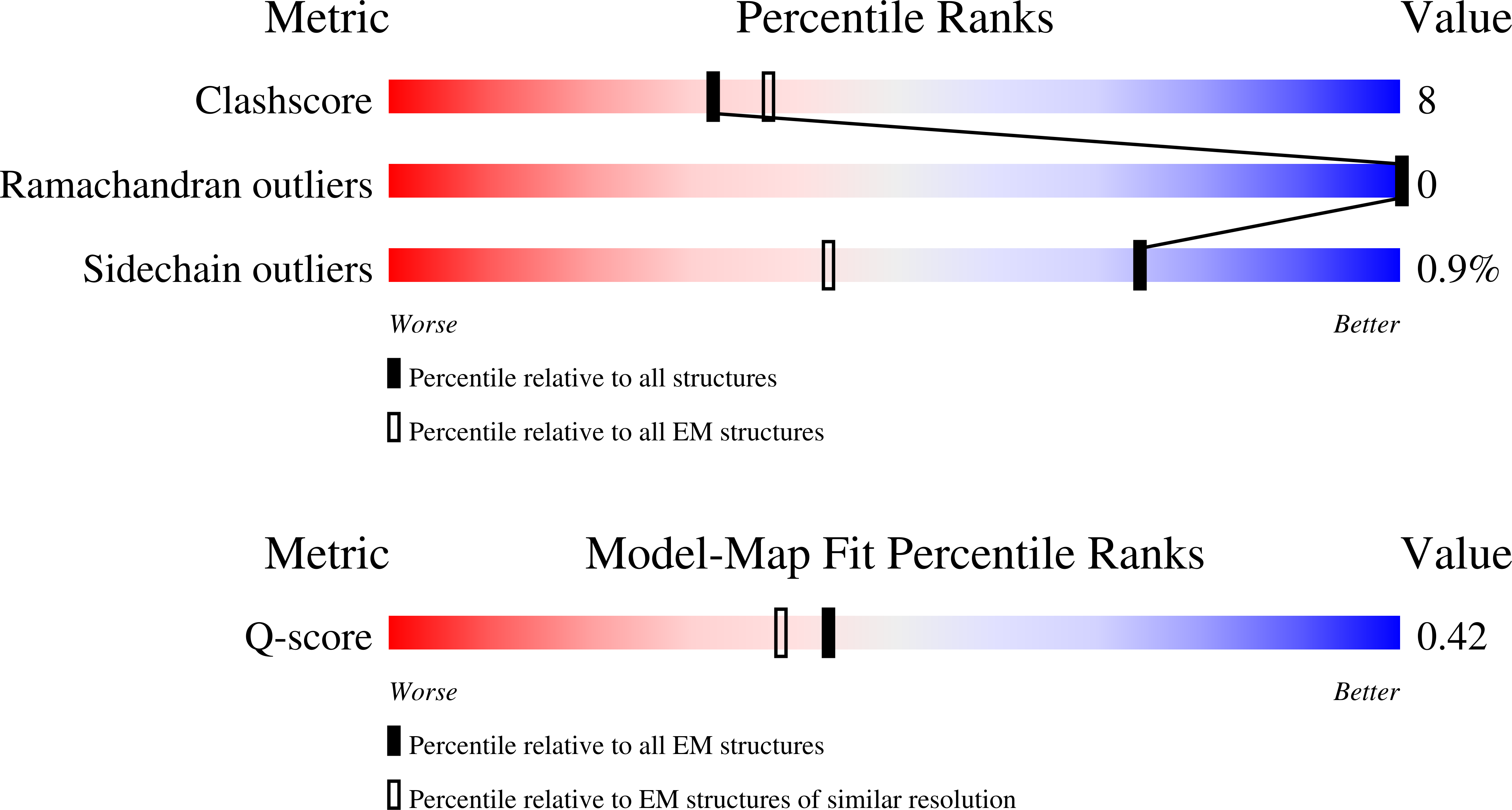
3.46 Å
Aggregation State:
PARTICLE
Reconstruction Method:
SINGLE PARTICLE
Macromolecular Entities
Structures with similar UniProt ID
Protein Blast
Polymer Type:polypeptide(L)
Molecule:Transient receptor potential cation channel subfamily M member 4
Gene (Uniprot):TRPM4
Chain IDs:A, B, C, D
Chain Length:1218
Number of Molecules:4
Biological Source:Homo sapiens
Primary Citation
MAASTY: a (dis)ordered copolymer for structural determination of human membrane proteins in native nanodiscs.
Nat Commun 16 11399 11399 (2025)
PMID: 41372170 DOI: 10.1038/s41467-025-66208-7

Abstact

Amphiphilic copolymers capable of extracting membrane proteins directly from cellular membranes into "native nanodiscs" offer a simplified approach for preparing membrane proteins in lipid nanodiscs compared to approaches that rely on detergent. Copolymer amphiphilicity, length, and composition influence their performance, in addition to the protein itself and the purification conditions used. Here, we report a copolymer composed of methacrylic acid and styrene, which we term MAASTY, leveraging the inherent monomer reactivity ratios to create an anionic copolymer with a statistical distribution of monomers. We show that MAASTY can be used for high-resolution structural determination of a human membrane protein by single particle cryo-electron microscopy, preserving endogenous lipids including cholesterol and exhibiting an enrichment of phosphatidylinositol. Moreover, MAASTY copolymers effectively solubilize a broad range of lipid species and a wide range of different, eukaryotic membrane proteins from mammalian cells. We find that MAASTY copolymers are promising as effective solubilizers of membrane proteins and offer a chemical platform for structural and functional characterization of membrane proteins in native nanodiscs.

Legend

Protein

Chemical

Disease

Primary Citation of related structures
Feedback Form
Name
Email
Institute
Feedback