9I1M image
Deposition Date 2025-01-16
Release Date 2025-07-16
Last Version Date 2026-01-28
Entry Detail
PDB ID:
9I1M
Title:
Structure of AauA, a sugar-binding protein with its substrate
Biological Source:
Source Organism(s):
Escherichia coli (Taxon ID: 562)
Expression System(s):
Method Details:
Experimental Method:
Resolution:
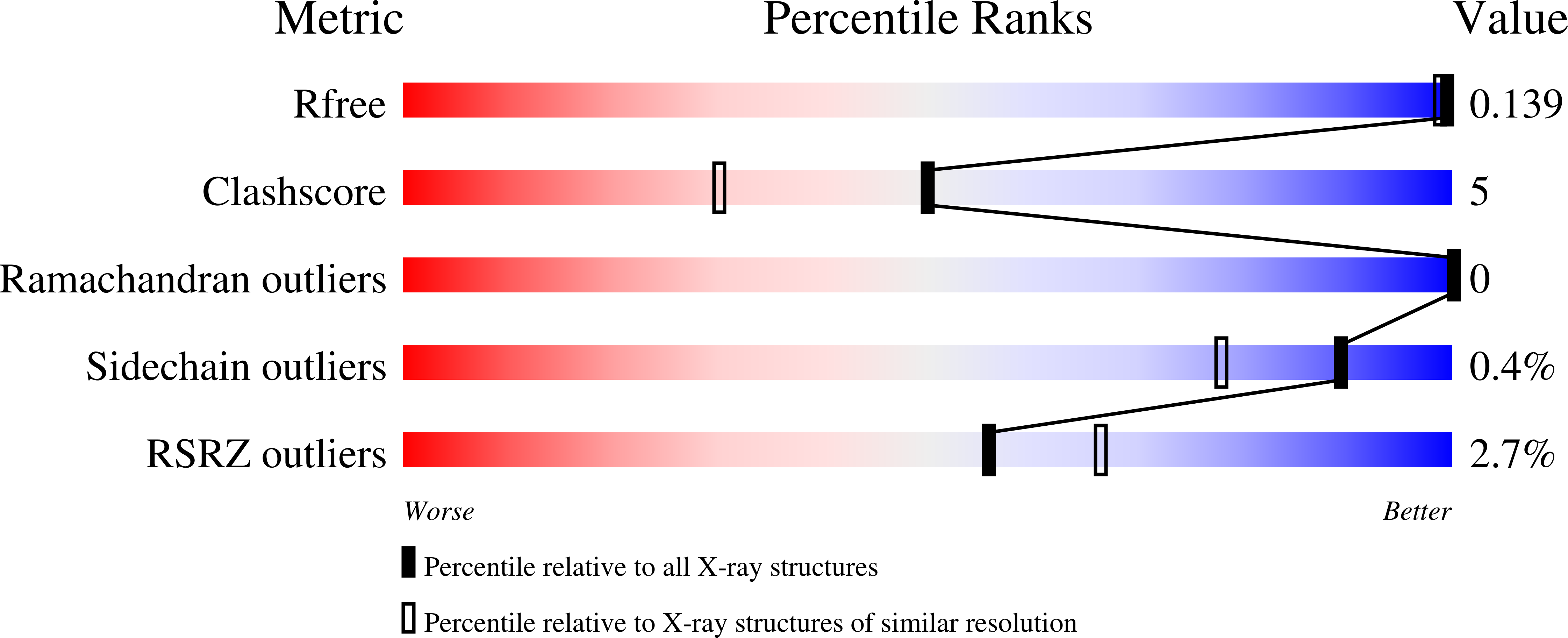
1.35 Å
R-Value Free:
0.14
R-Value Work:
0.12
R-Value Observed:
0.12
Space Group:
C 1 2 1
Macromolecular Entities
Structures with similar UniProt ID
Protein Blast
Polymer Type:polypeptide(L)
Molecule:Sugar-binding protein
Gene (Uniprot):ECs_0374
Chain IDs:A
Chain Length:328
Number of Molecules:1
Biological Source:Escherichia coli
Primary Citation
Convergent evolution of distinct D-ribulose utilisation pathways in attaching and effacing pathogens.
Nat Commun 16 6976 6976 (2025)
PMID: 40730545 DOI: 10.1038/s41467-025-62476-5

Abstact

Attaching and effacing pathogens overcome colonisation resistance by competing with metabolically similar organisms for limited resources. Enterohaemorrhagic E. coli (EHEC) utilises the pathogenicity island-encoded Accessory ʟ-arabinose Uptake (Aau) transporter to effectively colonise the mouse gut, hypothesised to be achieved via an enhanced capacity to scavenge ʟ-arabinose. Aau is regulated exclusively in response to ʟ-arabinose, but it is unclear how this system specifically benefits EHEC in vivo. Here, we show that Aau displays a > 200-fold higher affinity for the monosaccharide D-ribulose, over ʟ-arabinose. EHEC cannot grow on D-ribulose as a sole carbon source and this sugar does not trigger aau transcription. However, Aau effectively transports D-ribulose into the cell only in the presence of ʟ-arabinose, where it feeds into the pentose phosphate pathway, after phosphorylation by the ʟ-ribulokinase AraB, thus providing EHEC a significant fitness advantage. EHEC has therefore evolved a mechanism of hijacking the canonical ʟ-arabinose utilisation machinery to promote D-ribulose utilisation in vivo. Furthermore, Citrobacter rodentium encodes an analogous system that exclusively transports D-ribulose and metabolises it via a dedicated D-ribulokinase. These unique mechanisms of D-ribulose utilisation suggest that convergent evolution has driven the ability of distinct pathogenic species to exploit this nutrient during invasion of the gut niche.

Legend

Protein

Chemical

Disease

Primary Citation of related structures
Feedback Form
Name
Email
Institute
Feedback