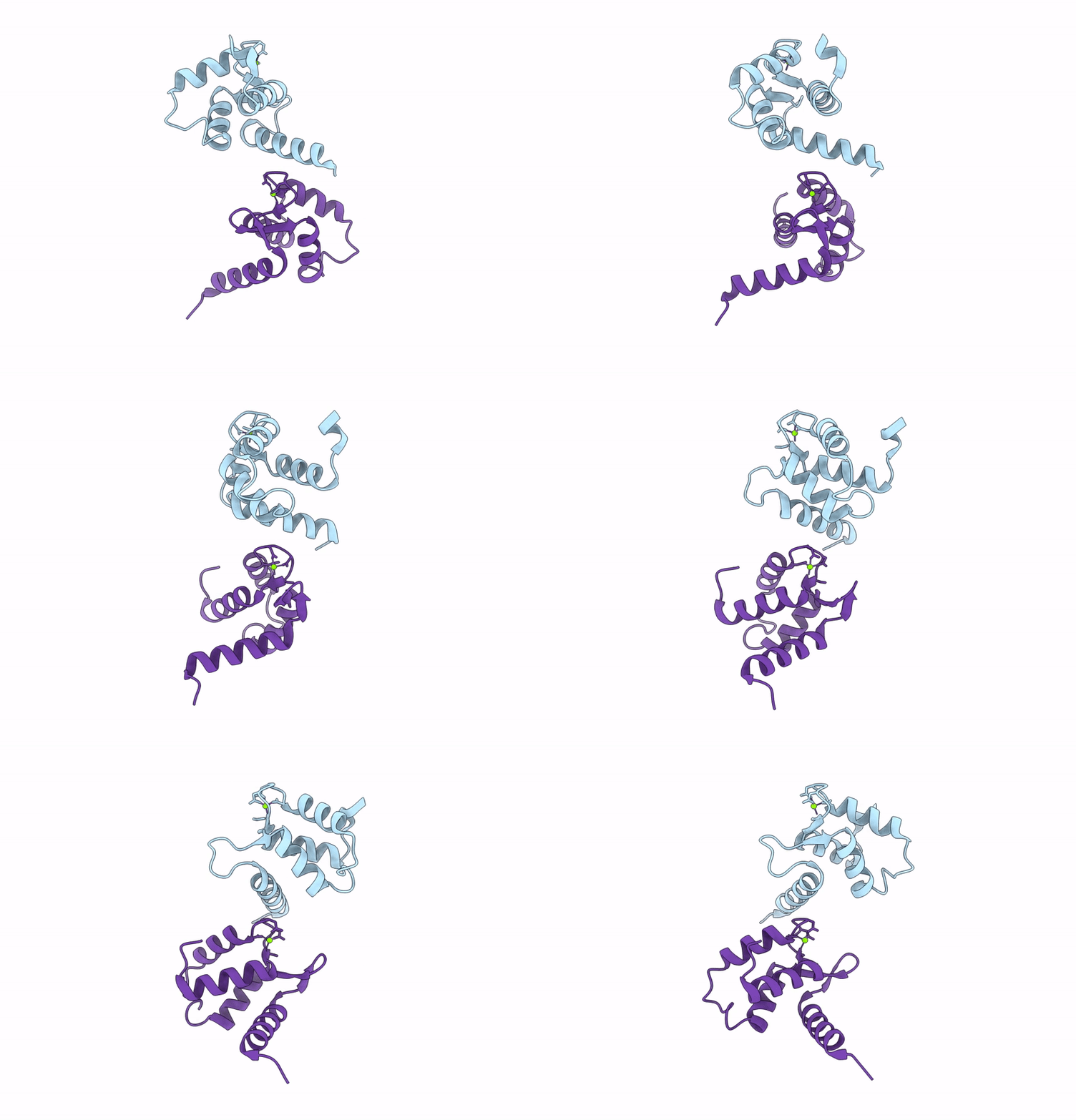
9I1G image
Deposition Date 2025-01-16
Release Date 2025-12-03
Last Version Date 2025-12-10
Entry Detail
PDB ID:
9I1G
Title:
Crystal structure of zebrafish S100I2 in Mg2+-bound form
Biological Source:
Source Organism(s):
Danio rerio (Taxon ID: 7955)
Expression System(s):
Method Details:
Experimental Method:
Resolution:
1.60 Å
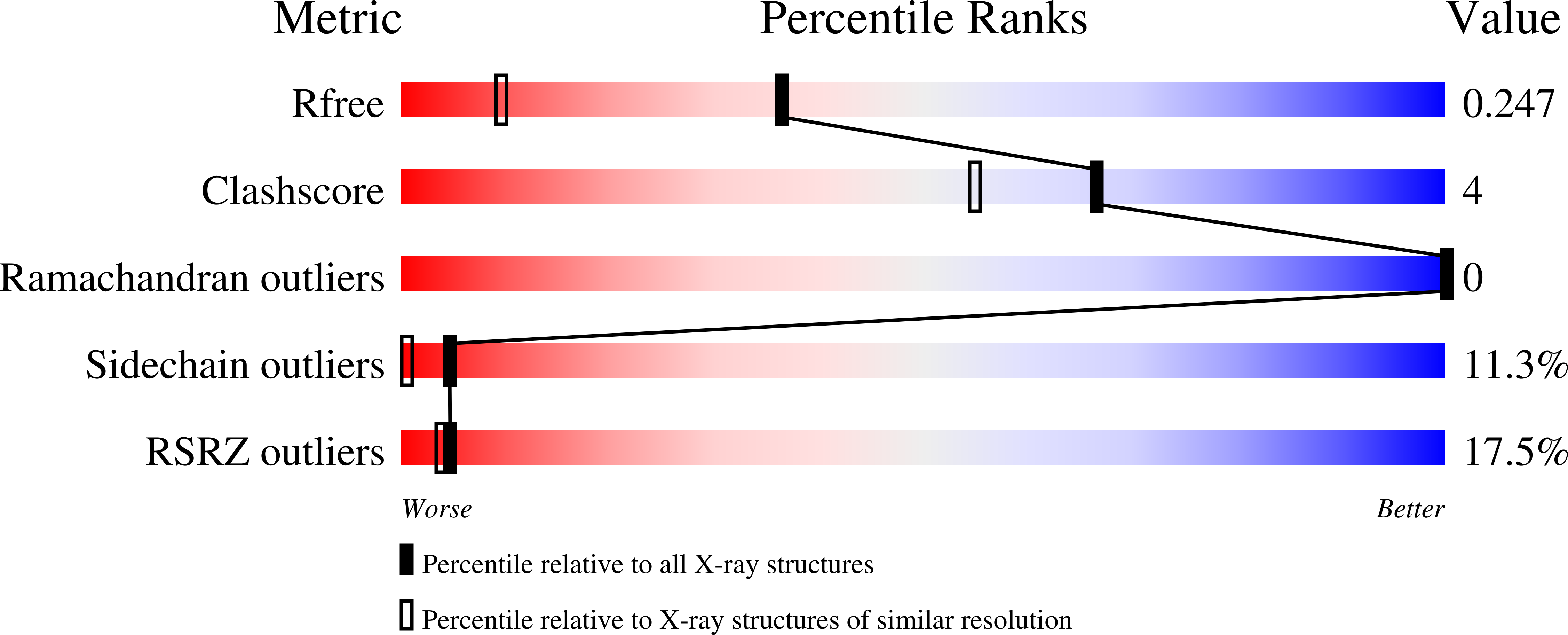
R-Value Free:
0.24
R-Value Work:
0.22
R-Value Observed:
0.22
Space Group:
P 1 2 1
Macromolecular Entities
Structures with similar UniProt ID
Protein Blast
Polymer Type:polypeptide(L)
Molecule:Protein S100
Gene (Uniprot):icn2
Chain IDs:A, B
Chain Length:99
Number of Molecules:2
Biological Source:Danio rerio
Ligand Molecules
Primary Citation
Teleost-specific ictacalcins exhibit similar structural organization, cation-dependent activation, and transcriptional regulation as human S100 proteins.
Febs J. ? ? ? (2025)
PMID: 41313715 DOI: 10.1111/febs.70354

Abstact

S100 proteins are highly versatile calcium-binding proteins from vertebrates. Following extracellular release, they become essential in immune and antimicrobial defenses, initiating the inflammatory response through receptor signaling and providing direct control of bacterial invaders via nutritional immunity. While mammalian S100s have been extensively studied, very little is known about the more recently discovered S100 proteins from teleost fish, including those with no strict orthologs in mammals. Comparable functioning between both clades would allow us to expand their study into the highly popular zebrafish model, which is particularly suited for live imaging and mechanistic exploration of immune and inflammatory processes. To fill the gap of knowledge on teleost S100s, we here provide detailed structural and biochemical characterization of S100i1 and S100i2 from Danio rerio, two teleost-specific S100s absent in mammals. We demonstrate that they nevertheless share conserved tertiary and quaternary organization with mammalian S100s. In addition, they exhibit comparable calcium binding properties and undergo a similar calcium-dependent activation mechanism. Furthermore, they display analogous expression patterns, being enriched in tissues highly exposed to the environment such as gills and skin, the latter constituting an important reservoir of S100 proteins in mammals. Finally, our results show, for the very first time, that s100i2/i2 gene expression is differentially modulated in sterile disease conditions associated with sustained inflammation or a high hypoxic state. Altogether, these findings underline the strong parallelism existing between mammalian and teleost-specific S100 proteins despite their divergent evolution, opening up new avenues to explore their biology in the zebrafish model.

Legend

Protein

Chemical

Disease

Primary Citation of related structures
Feedback Form
Name
Email
Institute
Feedback