9HVN image
Deposition Date 2024-12-31
Release Date 2025-02-05
Last Version Date 2025-12-17
Entry Detail
PDB ID:
9HVN
Keywords:
Title:
Atomic resolution crystal structure of the hexameric antimicrobial peptide Magainin-2
Biological Source:
Source Organism(s):
Xenopus laevis (Taxon ID: 8355)
Method Details:
Experimental Method:
Resolution:
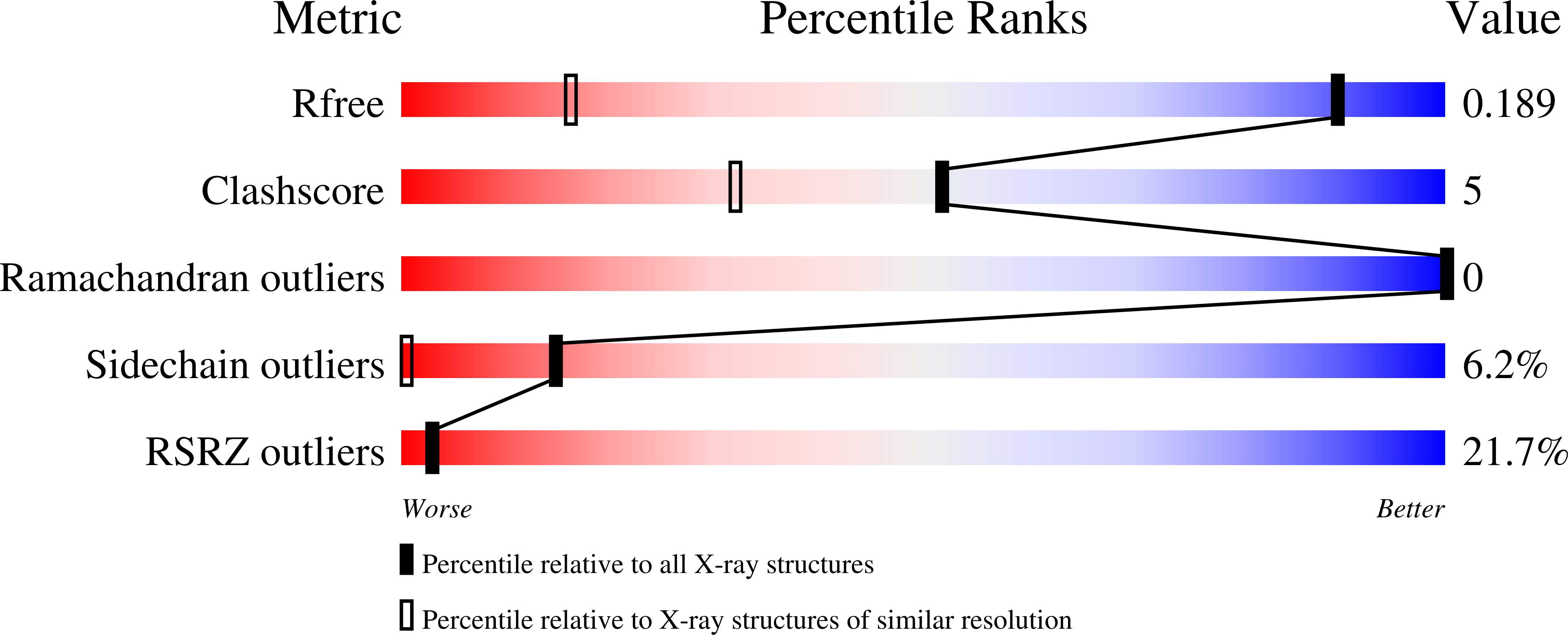
1.05 Å
R-Value Free:
0.17
R-Value Work:
0.16
Space Group:
P 63 2 2
Macromolecular Entities
Structures with similar UniProt ID
Protein Blast
Polymer Type:polypeptide(L)
Molecule:Magainins
Gene (Uniprot):magainins
Chain IDs:A
Chain Length:23
Number of Molecules:1
Biological Source:Xenopus laevis
Primary Citation
Structure of a barrel-stave pore formed by magainin-2 reveals anion selectivity and zipper-mediated assembly.
Sci Rep 15 39830 39830 (2025)
PMID: 41233432 DOI: 10.1038/s41598-025-23539-1

Abstact

Antimicrobial peptides (AMPs) are ubiquitous weapons of all higher organisms to suppress antimicrobial growth. Despite intensive research, the killing mechanism of these peptides after interaction with the bacterial cell wall and cytoplasm is not well understood. To investigate this mechanism at a molecular level, we chose a well-studied AMP, Magainin-2 (Mag-2), for biophysical and structural studies. Circular dichroism experiments showed that the folding propensity of Mag-2 is strongly altered towards fully folded molecules in the presence of detergent. To study the pore-forming properties of Mag-2 in membranes, we crystallized the wild-type peptide in the presence of the membrane-mimicking dodecylphosphocholine detergent and obtained crystals diffracting to atomic resolution. Mag-2 structure shows an antiparallel arrangement of monomers, which is stabilised by a phenylalanine zipper motif spanning the hydrophobic interaction surface of this dimer. Trimerization of dimers leads to the formation of a hexameric peptide channel complex with a positively charged pore and a hydrophobic membrane-exposed belt. Using molecular dynamics simulations, a spontaneous flow of ions through this channel was observed, demonstrating anion-selectivity induced by the electrostatic potential characteristics of Mag-2. This first atomic-resolution structure of wild-type Mag-2 showing oligomerization will allow the rational design of improved Mag-2 peptide channels.

Legend

Protein

Chemical

Disease

Primary Citation of related structures
Feedback Form
Name
Email
Institute
Feedback